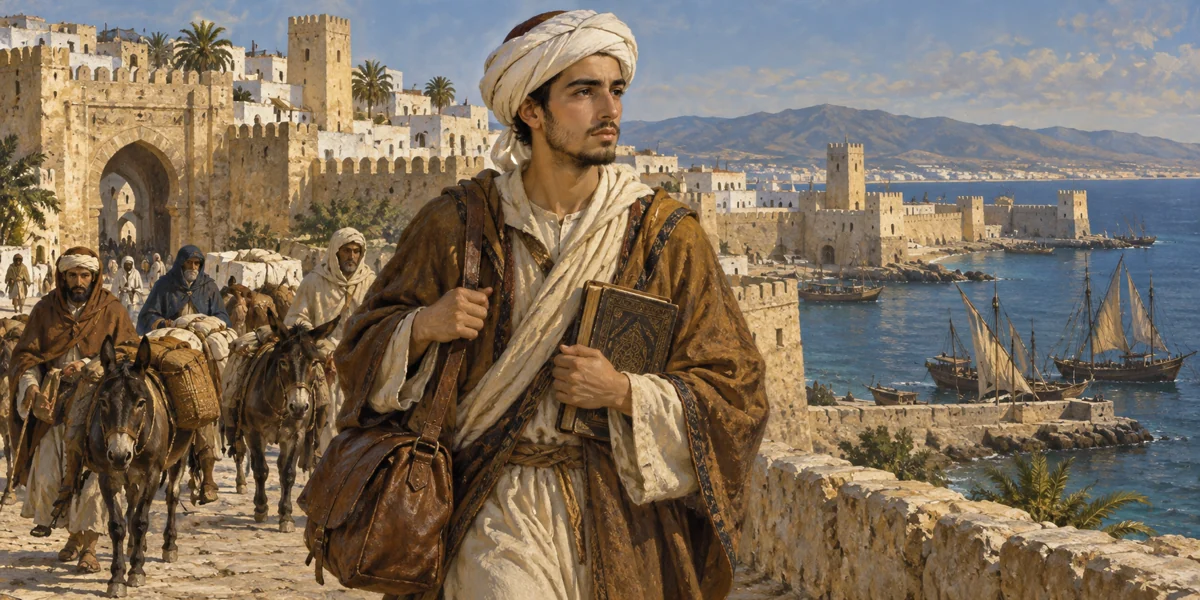
AI-generated imagined likeness and illustrative Tangier setting; no verified contemporary portrait. Built-in image generation · 2026.
Ibn Battuta was a Moroccan Muslim scholar who left Tangier in 1325 to make the pilgrimage to Mecca. He expected a religious journey, but kept travelling for almost three decades, reaching courts, trading ports and communities across Africa and Asia. His account, written down after his return, describes an interconnected medieval world. It also reveals his ambitions and prejudices. We will follow selected journeys, and distinguish what he reports from what historians can confidently reconstruct.
Historical dates and route context
Selected journeys from the retrospective Rihla, composed with Ibn Juzayy in 1354–55. Most intermediate months are editorial animation anchors; dates and corridors are approximate. Reconstructions disagree on the East African and embassy chronology. Modern country boundaries do not imply medieval sovereignty. The Constantinople detour and several local journeys are omitted. China is a reported itinerary, not independently verified daily travel; no confirmed Beijing route is drawn.
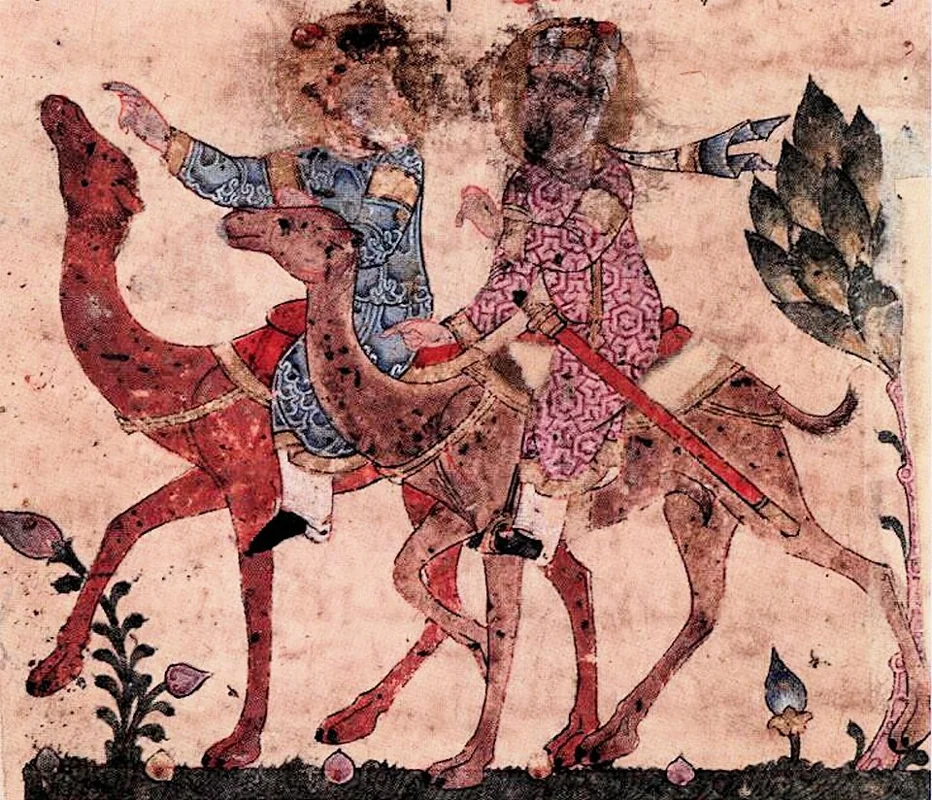
Two camel riders in a late thirteenth-century Syrian Maqamat manuscript; medieval travel context, not a depiction of Ibn Battuta or his Tangier departure. Anonymous thirteenth-century artist · Public domain.
At twenty-one, Ibn Battuta leaves his parents in Tangier and sets out towards Mecca. He begins without a travelling companion, then joins merchants and other travellers along the North African roads. Companionship brings protection, news and help finding provisions. This first journey follows routes used by many pilgrims before him, through communities that offer hospitality, work and introductions.
Historical dates and route context
Selected journeys from the retrospective Rihla, composed with Ibn Juzayy in 1354–55. Most intermediate months are editorial animation anchors; dates and corridors are approximate. Reconstructions disagree on the East African and embassy chronology. Modern country boundaries do not imply medieval sovereignty. The Constantinople detour and several local journeys are omitted. China is a reported itinerary, not independently verified daily travel; no confirmed Beijing route is drawn.
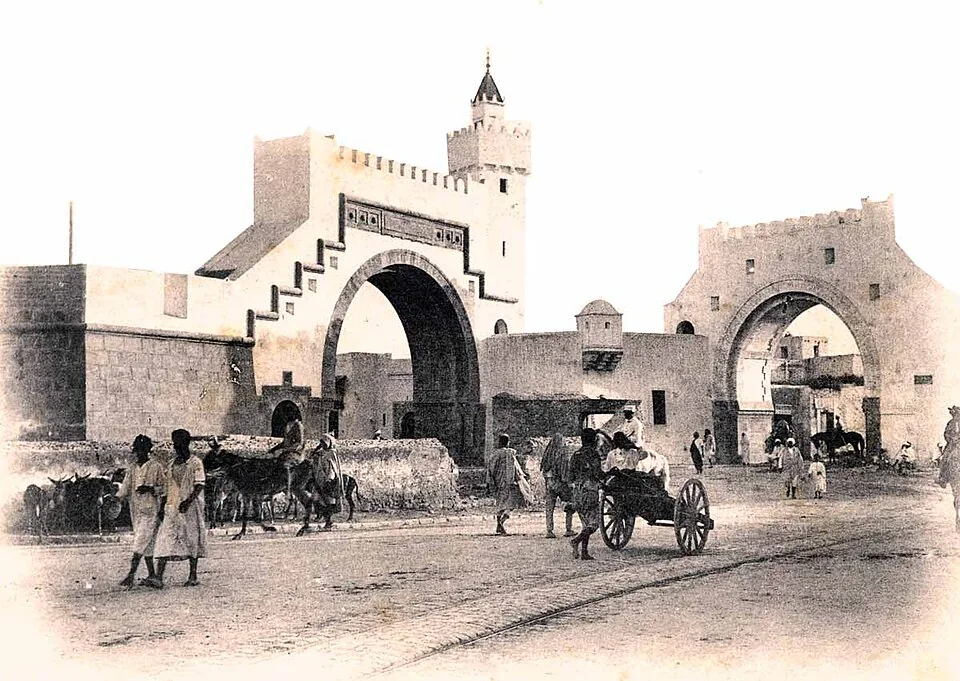
Bab el Khadra in Tunis, photographed around 1890; a later view of the city, not its fourteenth-century gate. Unknown photographer; Bertrand Bouret collection · Public domain.
The road to Tunis has been exhausting. Ibn Battuta describes fever at Bijaya and another attack that leaves him so weak he ties himself into the saddle. At Tunis, nobody initially knows him, and loneliness brings him to tears. A pilgrim approaches with a kind greeting. Scholarly contacts follow, and in November he leaves with the annual caravan, serving as its judge.
Historical dates and route context
Selected journeys from the retrospective Rihla, composed with Ibn Juzayy in 1354–55. Most intermediate months are editorial animation anchors; dates and corridors are approximate. Reconstructions disagree on the East African and embassy chronology. Modern country boundaries do not imply medieval sovereignty. The Constantinople detour and several local journeys are omitted. China is a reported itinerary, not independently verified daily travel; no confirmed Beijing route is drawn.
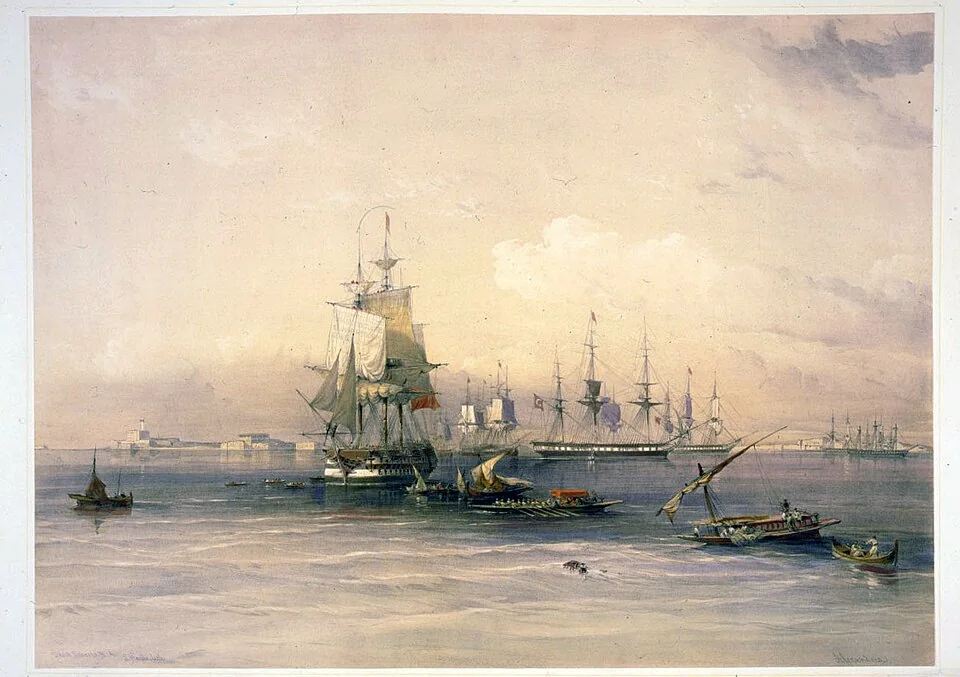
Alexandria in a nineteenth-century print by David Roberts; a later view of the Mediterranean port. David Roberts · Public domain.
In April 1326, the caravan reaches Alexandria. Ibn Battuta describes its fortified gates and busy harbour, where Egypt meets the Mediterranean trading world. He visits scholars and holy men, building connections that will support later journeys. Ahead lies Cairo, a great city on the Nile. The pilgrimage is becoming a way to enter a much wider network of learning and hospitality.
Historical dates and route context
Selected journeys from the retrospective Rihla, composed with Ibn Juzayy in 1354–55. Most intermediate months are editorial animation anchors; dates and corridors are approximate. Reconstructions disagree on the East African and embassy chronology. Modern country boundaries do not imply medieval sovereignty. The Constantinople detour and several local journeys are omitted. China is a reported itinerary, not independently verified daily travel; no confirmed Beijing route is drawn.
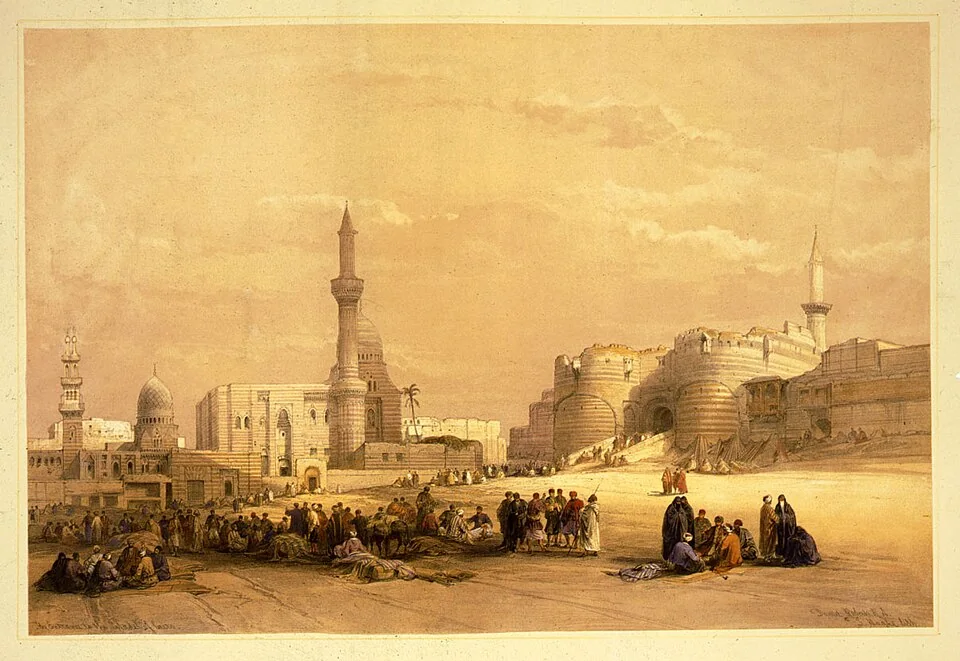
Entrance to Cairo in a print published in 1845–1849; a later view of the city that Ibn Battuta visited. David Roberts · Public domain.
Cairo astonishes him with its crowds, institutions and trade. His first plan is to go south beside the Nile and cross the Red Sea towards Arabia. A revolt near the intended port prevents the crossing. He turns north again and chooses the route through Syria. Even an experienced caravan network cannot remove political uncertainty; reaching Mecca requires a different road.
Historical dates and route context
Selected journeys from the retrospective Rihla, composed with Ibn Juzayy in 1354–55. Most intermediate months are editorial animation anchors; dates and corridors are approximate. Reconstructions disagree on the East African and embassy chronology. Modern country boundaries do not imply medieval sovereignty. The Constantinople detour and several local journeys are omitted. China is a reported itinerary, not independently verified daily travel; no confirmed Beijing route is drawn. The failed Aydhab/Red Sea attempt is narrated but not drawn as a successful crossing.
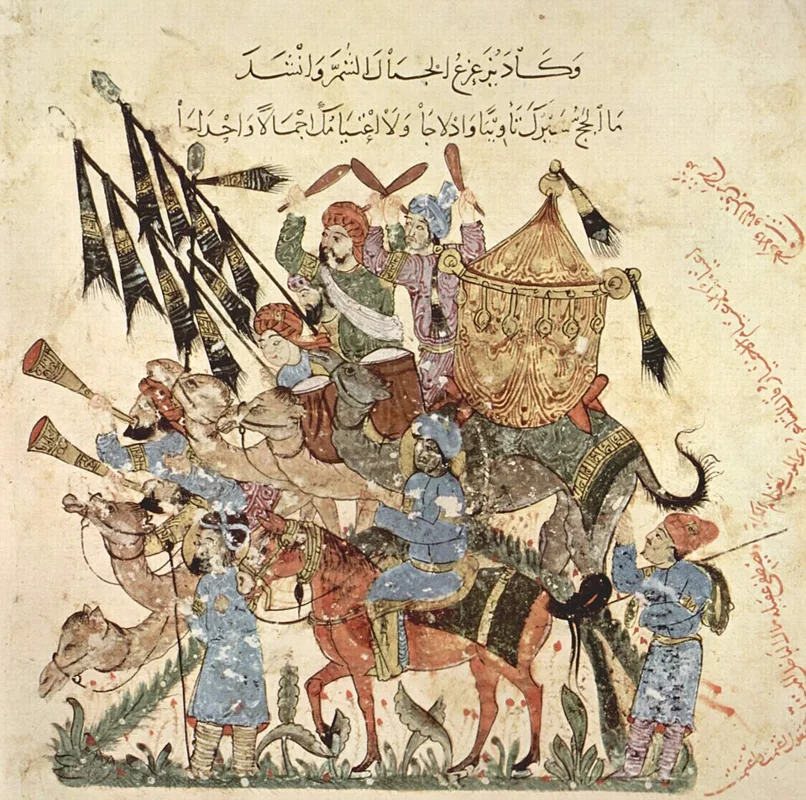
A pilgrim caravan at Ramleh in a Maqamat manuscript of 1237; medieval caravan context, not Ibn Battuta’s own party. Yahya ibn Mahmud al-Wasiti · Public domain.
At Damascus, he finds the organized pilgrimage caravan that will carry him south. Its progress depends on timed halts and supplies. His account describes water carriers, hide tanks and provisions prepared along the way. Medina is an important stop before Mecca. The desert crossing is a collective undertaking, supported by guides, officials, traders and the communities that maintain the route.
Historical dates and route context
Selected journeys from the retrospective Rihla, composed with Ibn Juzayy in 1354–55. Most intermediate months are editorial animation anchors; dates and corridors are approximate. Reconstructions disagree on the East African and embassy chronology. Modern country boundaries do not imply medieval sovereignty. The Constantinople detour and several local journeys are omitted. China is a reported itinerary, not independently verified daily travel; no confirmed Beijing route is drawn.
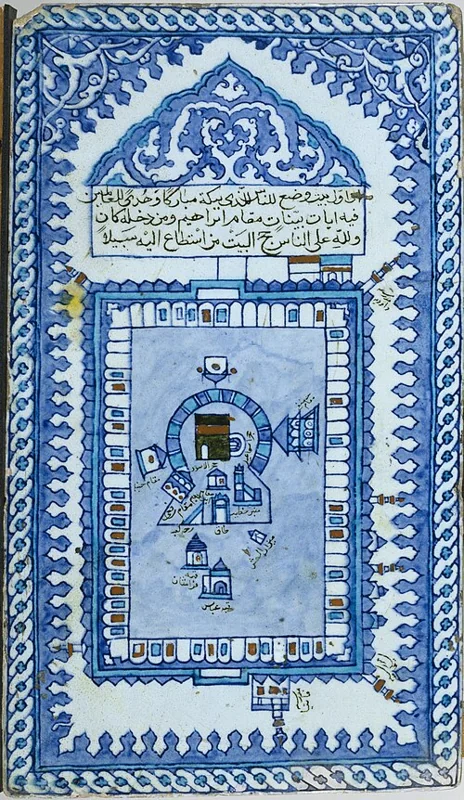
Mecca’s Great Mosque on a seventeenth-century Ottoman tile; later devotional art, not an eyewitness view of the 1326 pilgrimage. Anonymous Ottoman artist; The Walters Art Museum · Public domain.
At Mecca, Ibn Battuta completes the pilgrimage that first drew him away from home. Worship and study connect him with people from distant regions. Returning to Morocco is possible, but curiosity and opportunity pull him onwards. Later that month, he joins a caravan heading towards Iraq. Mecca will become a place he returns to between journeys, rather than the end of his travels.
Historical dates and route context
Selected journeys from the retrospective Rihla, composed with Ibn Juzayy in 1354–55. Most intermediate months are editorial animation anchors; dates and corridors are approximate. Reconstructions disagree on the East African and embassy chronology. Modern country boundaries do not imply medieval sovereignty. The Constantinople detour and several local journeys are omitted. China is a reported itinerary, not independently verified daily travel; no confirmed Beijing route is drawn.
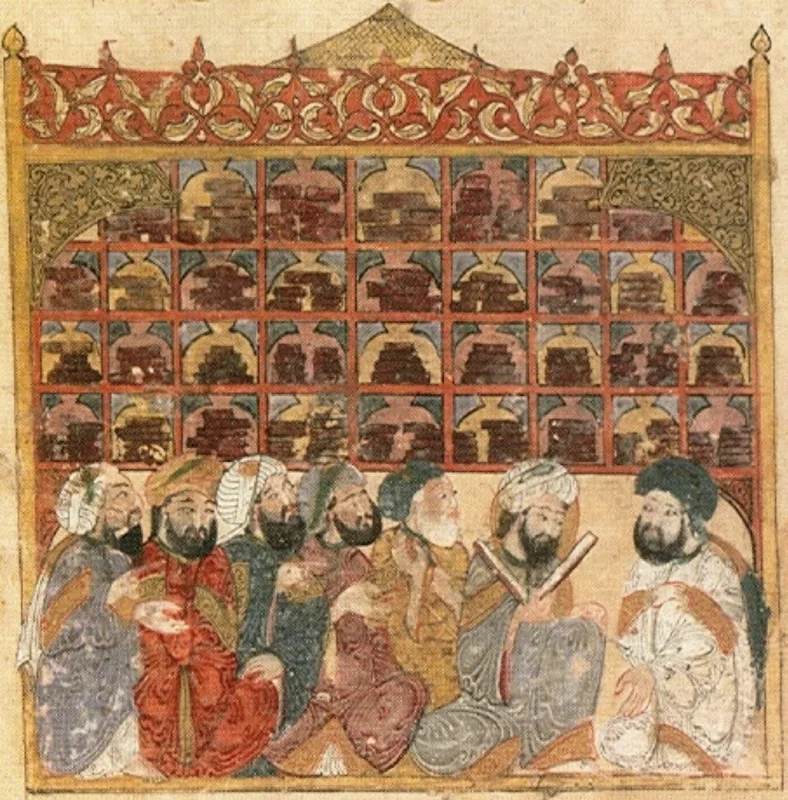
Scholars in a library in a Maqamat manuscript of 1237; earlier context for the learned world of Iraq. Yahya ibn Mahmud al-Wasiti · Public domain.
Leaving Mecca, Ibn Battuta joins returning pilgrims on the road towards Najaf and Basra. Later journeys will take him through Shiraz to Baghdad. This is an organized desert crossing, supported by wells and watering tanks established along the road. He describes travelling at night by torchlight. A wealthy official gives him a place in a camel litter, a covered seat carried by the animal.
Ahead is Najaf, where the tomb of Ali draws pilgrims, particularly from Shia Muslim communities. Religious travel brings together people whose beliefs and practices do not always match his own. He encounters Sufi communities, whose devotional gatherings make a strong impression.
The journey continues through Basra and towards Persia. Around the waterways near Basra, his account describes palms, fruit gardens and sellers offering food beside the river. These productive landscapes support travellers as well as the towns. In Shiraz, he admires gardens, markets and religious life. Hospitality gives him lodging and access to people he wants to meet.
Baghdad, once the Abbasid capital, still bears the consequences of the Mongol conquest. Yet learning and daily life continue. Ibn Battuta describes its public baths and meets people who connect him with powerful patrons. Eventually he returns to Mecca for further pilgrimage and study. The pilgrimage has become the centre of a widening circle of journeys.
Historical dates and route context
Selected journeys from the retrospective Rihla, composed with Ibn Juzayy in 1354–55. Most intermediate months are editorial animation anchors; dates and corridors are approximate. Reconstructions disagree on the East African and embassy chronology. Modern country boundaries do not imply medieval sovereignty. The Constantinople detour and several local journeys are omitted. China is a reported itinerary, not independently verified daily travel; no confirmed Beijing route is drawn.
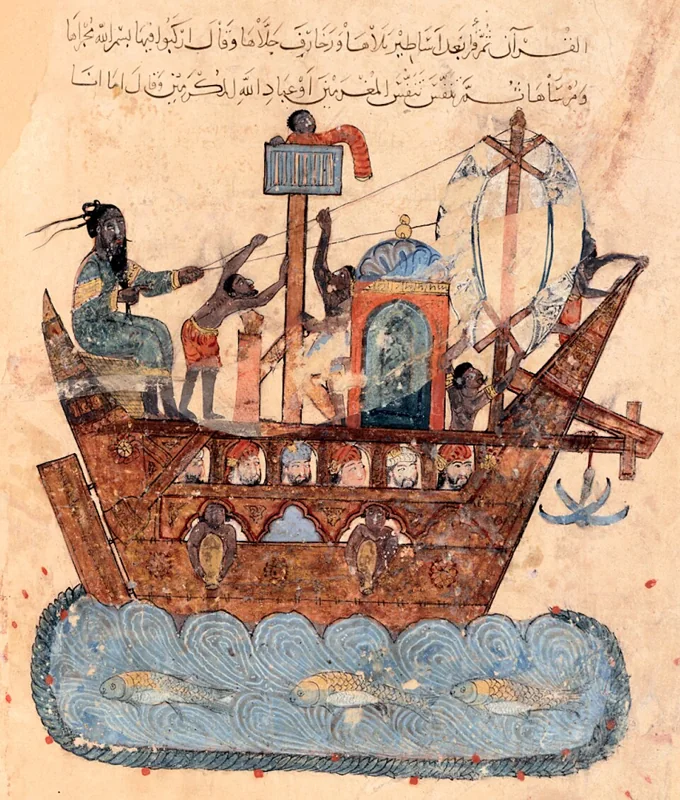
A sailing vessel in a thirteenth-century Maqamat manuscript; medieval maritime context, not Ibn Battuta’s own ship. Thirteenth-century manuscript artist · Public domain.
From Mecca, another journey carries Ibn Battuta towards Yemen and the ports of the Indian Ocean. On the Red Sea he describes a cramped vessel, changing winds and waves washing aboard. Seasick passengers eventually return to land and continue south with rented camels. Travel changes between road and water whenever circumstances demand it.
Aden, ahead, is a trading gateway. Cargo passes between Africa, Arabia and India: cloth, spices and other valuable goods link communities separated by long stretches of sea. A passenger depends on the experience of sailors who know the winds, coasts and harbours.
From Aden he takes passage south towards the African ports. At Mogadishu, he finds a prosperous town with its own ruler and established customs of hospitality. Merchants and officials welcome visitors, but the city is much more than a foreign trading station. Its people and languages belong to Africa. Farther south, Mombasa and Kilwa form part of the same coastal world. The sea connects these places without making their societies identical.
Historical dates and route context
Selected journeys from the retrospective Rihla, composed with Ibn Juzayy in 1354–55. Most intermediate months are editorial animation anchors; dates and corridors are approximate. Reconstructions disagree on the East African and embassy chronology. Modern country boundaries do not imply medieval sovereignty. The Constantinople detour and several local journeys are omitted. China is a reported itinerary, not independently verified daily travel; no confirmed Beijing route is drawn.
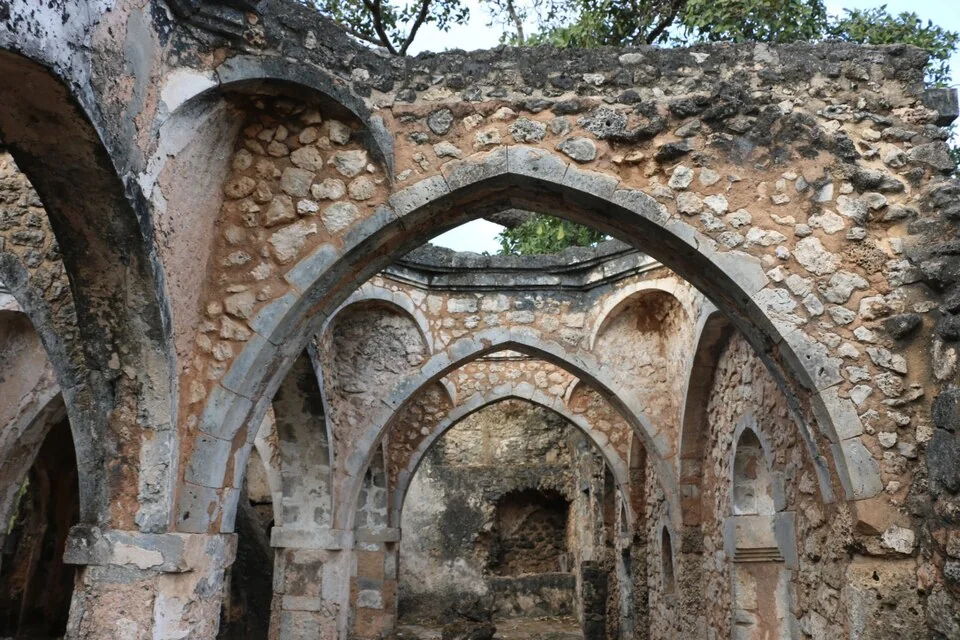
The ruins of the Great Mosque at Kilwa Kisiwani, photographed in 2016; a modern view of a medieval Swahili port. Janetmpurdy · CC BY-SA 4.0.
At Kilwa, Ibn Battuta encounters an African Muslim trading town connected to the wider Indian Ocean. He praises its ruler's generosity and respect for religious visitors. That welcome helps explain why a travelling scholar can move so far from home. Yet his account also describes the ruler's raids against people of the interior. Wealth, hospitality and violence exist together.
The return towards Arabia depends on another sequence of passages and ports. Seasonal winds affect when a sailing vessel can make progress. Waiting for favourable conditions is part of travel, not simply a delay outside it.
Ahead lie the Arabian coast and Hormuz, a gateway to the Persian Gulf. Ships carry goods, but also news and introductions. These connections make distant places accessible to Ibn Battuta. He eventually reaches Mecca again, ready to consider a new direction: the long northern road towards India.
Historical dates and route context
Selected journeys from the retrospective Rihla, composed with Ibn Juzayy in 1354–55. Most intermediate months are editorial animation anchors; dates and corridors are approximate. Reconstructions disagree on the East African and embassy chronology. Modern country boundaries do not imply medieval sovereignty. The Constantinople detour and several local journeys are omitted. China is a reported itinerary, not independently verified daily travel; no confirmed Beijing route is drawn.
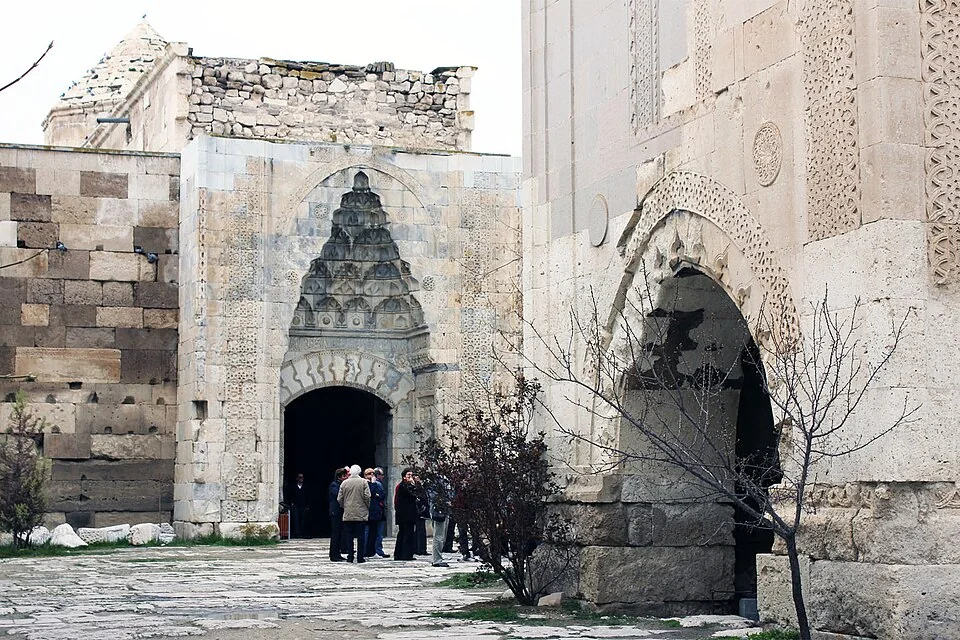
A modern view of Sultan Han caravanserai in Anatolia; context for the overland travel network, without claiming Ibn Battuta stayed in this building. Claude Valette · CC BY-SA 3.0.
Ibn Battuta wants to reach India, where Delhi's sultan is known for employing foreign scholars. Finding a suitable guide proves difficult. Instead of taking a direct sea passage, he travels north through Syria towards Anatolia, in what is now Turkey. The journey will connect several very different worlds.
A merchant ship brings him to Alanya. In Anatolian towns, he encounters associations of working men who provide food and lodging for travellers. Members contribute their earnings to support their shared hospitality. At Konya and elsewhere, religious communities offer further introductions. A stranger's welcome is sustained by other people's labour, organization and generosity.
From Sinop, he prepares to cross the Black Sea. His account describes waiting for suitable weather, then a dangerous storm during the crossing. The Crimean ports connect Mediterranean merchants with the products of the steppe. Grain, timber and furs pass through them, alongside enslaved people. Commercial connections can support a traveller while causing suffering to others.
Beyond the coast, wagons replace the rhythms of a seaborne journey. Ibn Battuta buys vehicles and joins the moving world of the Golden Horde. Across the grasslands, households and courts can travel with their animals and possessions. The authority of rulers offers protection, while hosts introduce him to food and customs he sometimes finds unfamiliar. His judgments tell us about his own expectations as well as the people he meets.
The road then turns towards Central Asia. Around Bukhara, he describes the continuing damage left by Mongol conquest. Political connections help him obtain supplies and assistance, but they cannot remove the difficulties of the landscape. Afghanistan brings mountain passes and snow. His account describes felt being spread for the camels to walk on. Guides and companions make the crossing possible. Beyond these mountains lie the Indus and the road to Delhi. The prospect of a position at the sultan's court has drawn him through this enormous northern arc.
Historical dates and route context
Selected journeys from the retrospective Rihla, composed with Ibn Juzayy in 1354–55. Most intermediate months are editorial animation anchors; dates and corridors are approximate. Reconstructions disagree on the East African and embassy chronology. Modern country boundaries do not imply medieval sovereignty. The Constantinople detour and several local journeys are omitted. China is a reported itinerary, not independently verified daily travel; no confirmed Beijing route is drawn. This selected route omits the Constantinople detour. The controller continues along the shared Indus-to-Delhi journey after the Central Asian stages.
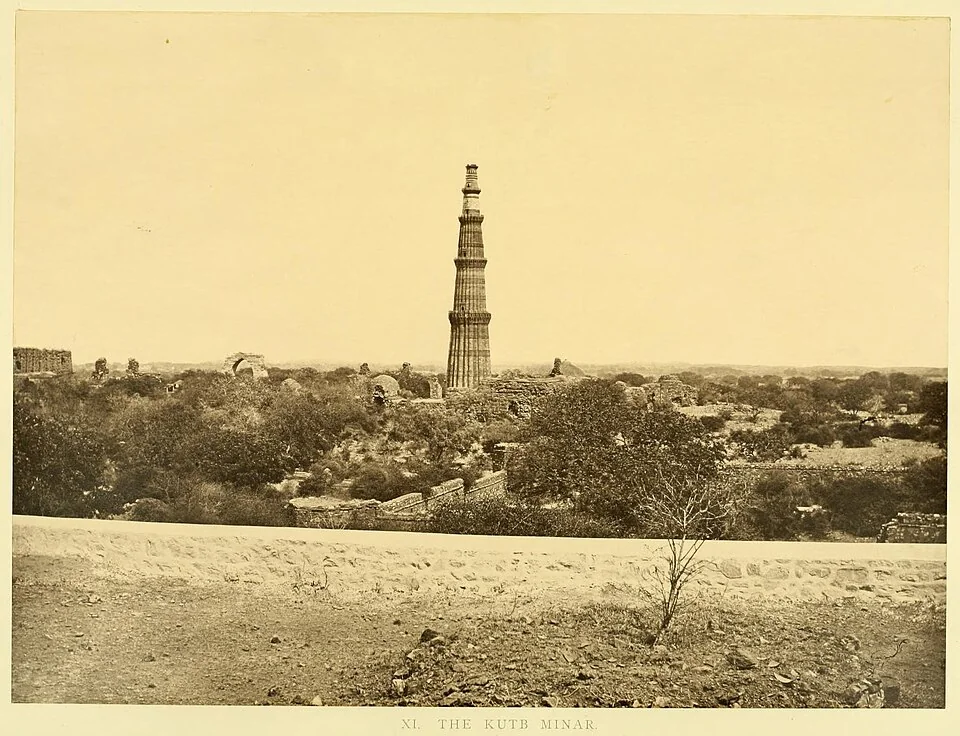
Qutb Minar in Delhi, photographed in 1872; a later photograph of the medieval monument. Charles Shepherd; published by Henry Hardy · Public domain.
By the mid-1330s, Ibn Battuta reaches Delhi. Sultan Muhammad bin Tughluq recruits foreign scholars, and Ibn Battuta gains a judicial appointment, income and status. He remains in the sultan’s service for roughly seven or eight years. Court favour brings opportunity, but his account also describes suspicion and severe punishment. Staying in one place can be as uncertain as travelling.
Historical dates and route context
Selected journeys from the retrospective Rihla, composed with Ibn Juzayy in 1354–55. Most intermediate months are editorial animation anchors; dates and corridors are approximate. Reconstructions disagree on the East African and embassy chronology. Modern country boundaries do not imply medieval sovereignty. The Constantinople detour and several local journeys are omitted. China is a reported itinerary, not independently verified daily travel; no confirmed Beijing route is drawn.
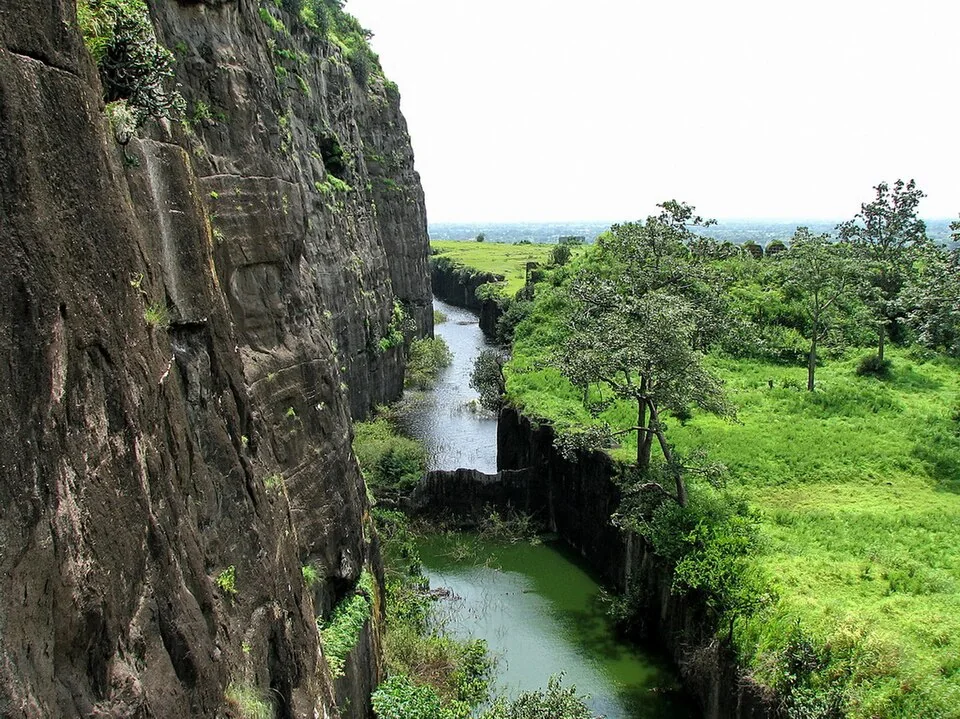
Daulatabad Fort in a modern photograph from 2006; geographical context for travel through the Deccan, not a depiction of the 1342 embassy. Danial Chitnis · CC BY 2.0.
An embassy to China offers Ibn Battuta a way out of dangerous dependence on Delhi's court. He sets out with companions, guards and gifts for a distant ruler. The party's wealth makes its progress a serious undertaking. Valuable objects, horses and supplies all have to reach the coast. The gifts also include enslaved people, showing how coercion forms part of this diplomatic world.
The account describes attacks, confusion and separation from his companions. Ibn Battuta says he is robbed and held captive, then eventually finds help and rejoins the mission. These are his recollections of danger, not a precise daily record.
Ahead, Daulatabad offers the security of a fortified city. After the roads of the interior, the journey turns towards the trading coast and Calicut. Reaching a harbour will change the means of travel, but it will not remove the risks. Ships, weather and the decisions of other people will determine what happens next.
Historical dates and route context
Selected journeys from the retrospective Rihla, composed with Ibn Juzayy in 1354–55. Most intermediate months are editorial animation anchors; dates and corridors are approximate. Reconstructions disagree on the East African and embassy chronology. Modern country boundaries do not imply medieval sovereignty. The Constantinople detour and several local journeys are omitted. China is a reported itinerary, not independently verified daily travel; no confirmed Beijing route is drawn.
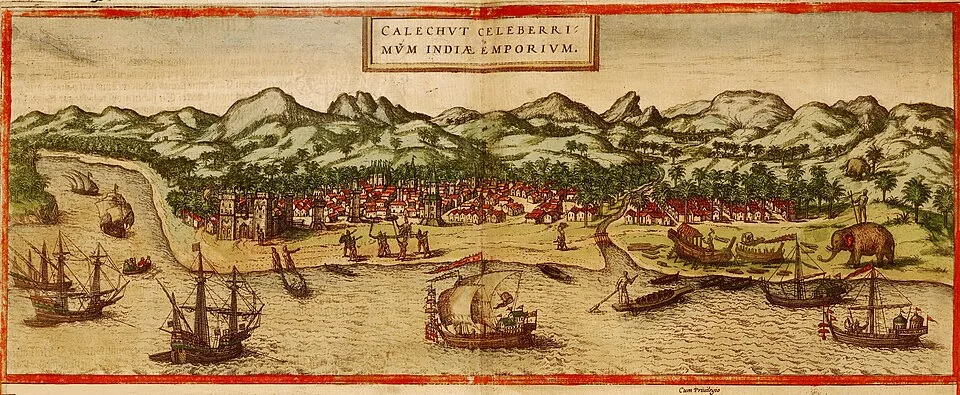
Calicut in a harbour panorama of 1572; a later view of the trading port, not a depiction of Ibn Battuta’s shipwreck. Georg Braun and Frans Hogenberg · Public domain.
At Calicut, a storm has wrecked ships while Ibn Battuta was ashore; another vessel sailed away with his possessions. The embassy has collapsed, leaving him without the protection of a successful mission. Further coastal journeys and losses follow. Eventually he turns towards the Maldives, travelling within the same Indian Ocean networks that had seemed to promise a secure passage to China.
Historical dates and route context
Selected journeys from the retrospective Rihla, composed with Ibn Juzayy in 1354–55. Most intermediate months are editorial animation anchors; dates and corridors are approximate. Reconstructions disagree on the East African and embassy chronology. Modern country boundaries do not imply medieval sovereignty. The Constantinople detour and several local journeys are omitted. China is a reported itinerary, not independently verified daily travel; no confirmed Beijing route is drawn.
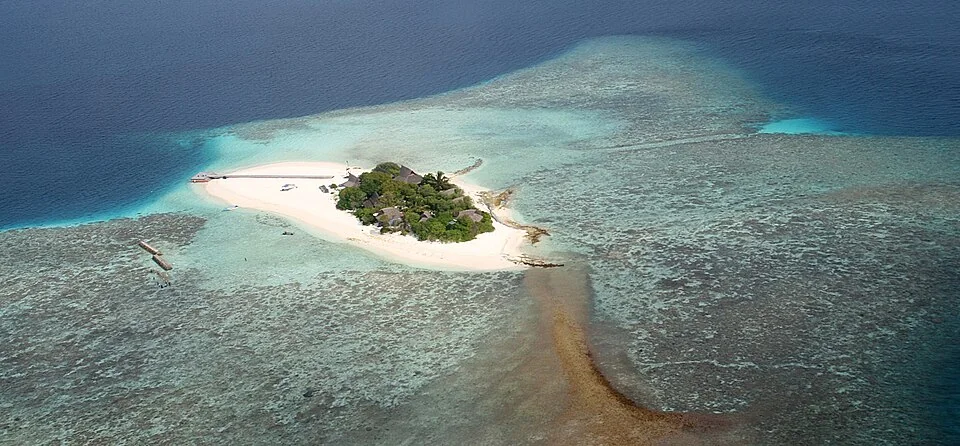
A small Maldivian island photographed in 2007; modern geographical context, not a reconstruction of a medieval settlement. Dr. Ondřej Havelka (cestovatel) · CC BY-SA 4.0.
In the Maldives, he stays for roughly nine months and becomes a judge. Coconut products and cowrie shells connect the islands to wider trade. But his efforts to impose his own legal and social expectations meet resistance, and involvement in island politics complicates his position. These communities have their own institutions and priorities. Departure takes him towards Sri Lanka and another pilgrimage.
Historical dates and route context
Selected journeys from the retrospective Rihla, composed with Ibn Juzayy in 1354–55. Most intermediate months are editorial animation anchors; dates and corridors are approximate. Reconstructions disagree on the East African and embassy chronology. Modern country boundaries do not imply medieval sovereignty. The Constantinople detour and several local journeys are omitted. China is a reported itinerary, not independently verified daily travel; no confirmed Beijing route is drawn.
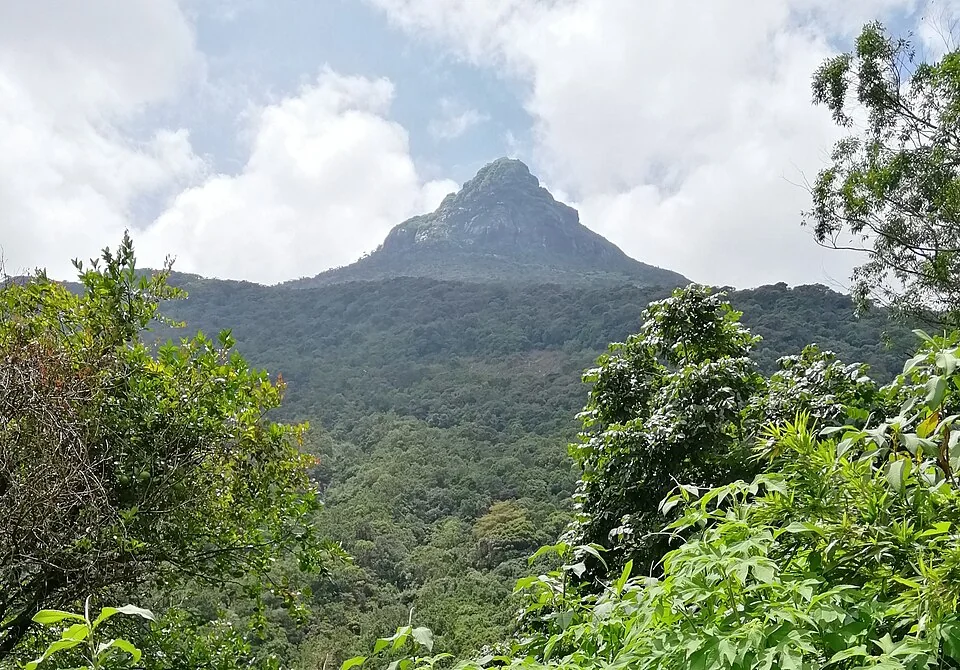
Sri Pada, also called Adam’s Peak, in Sri Lanka; a modern photograph of the sacred mountain, not a reconstruction of Ibn Battuta’s ascent. Deshadhee Wijayarathne · CC BY-SA 4.0.
Landing in Sri Lanka, Ibn Battuta undertakes a pilgrimage to the mountain now called Sri Pada or Adam’s Peak. Its footprint-shaped sacred feature belongs to different religious traditions, which give it different meanings. The climb adds another kind of journey to his account. Afterwards he returns to the coast, and further sea travel carries him towards Bengal and northern Sumatra.
Historical dates and route context
Selected journeys from the retrospective Rihla, composed with Ibn Juzayy in 1354–55. Most intermediate months are editorial animation anchors; dates and corridors are approximate. Reconstructions disagree on the East African and embassy chronology. Modern country boundaries do not imply medieval sovereignty. The Constantinople detour and several local journeys are omitted. China is a reported itinerary, not independently verified daily travel; no confirmed Beijing route is drawn.
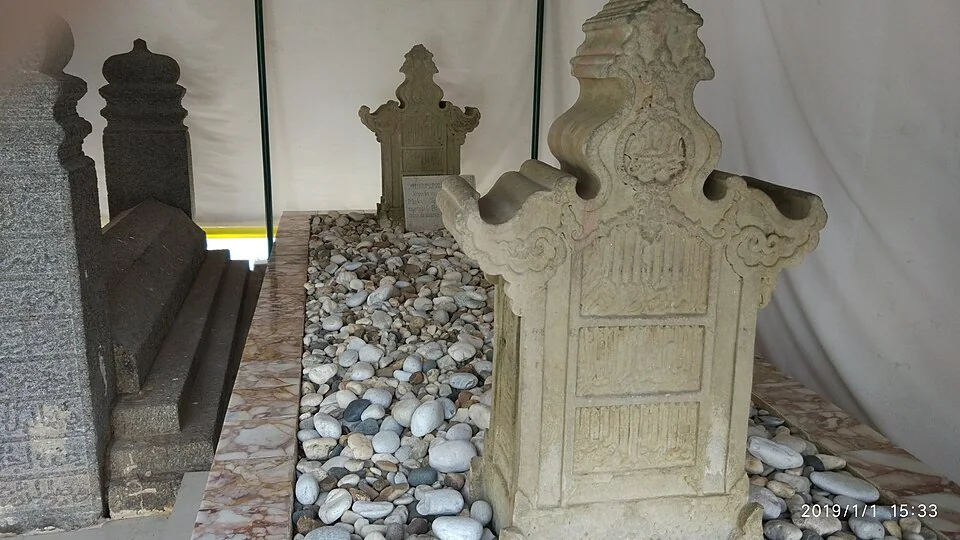
A modern view of the tomb associated with Malik al-Salih at Samudra Pasai; context for the kingdom, not the ruler whom Ibn Battuta met. Iqbalhafidh · CC BY-SA 4.0.
After Bengal, Ibn Battuta reaches Samudra in northern Sumatra. The ruler welcomes him and supports his onward travel. Such assistance is essential: a traveller needs ships, introductions, provisions and people able to negotiate unfamiliar ports. The account now takes him towards China, where Muslim merchant communities form part of a much larger trading society. This next part of his journey is less securely reconstructed.
Historical dates and route context
Selected journeys from the retrospective Rihla, composed with Ibn Juzayy in 1354–55. Most intermediate months are editorial animation anchors; dates and corridors are approximate. Reconstructions disagree on the East African and embassy chronology. Modern country boundaries do not imply medieval sovereignty. The Constantinople detour and several local journeys are omitted. China is a reported itinerary, not independently verified daily travel; no confirmed Beijing route is drawn.
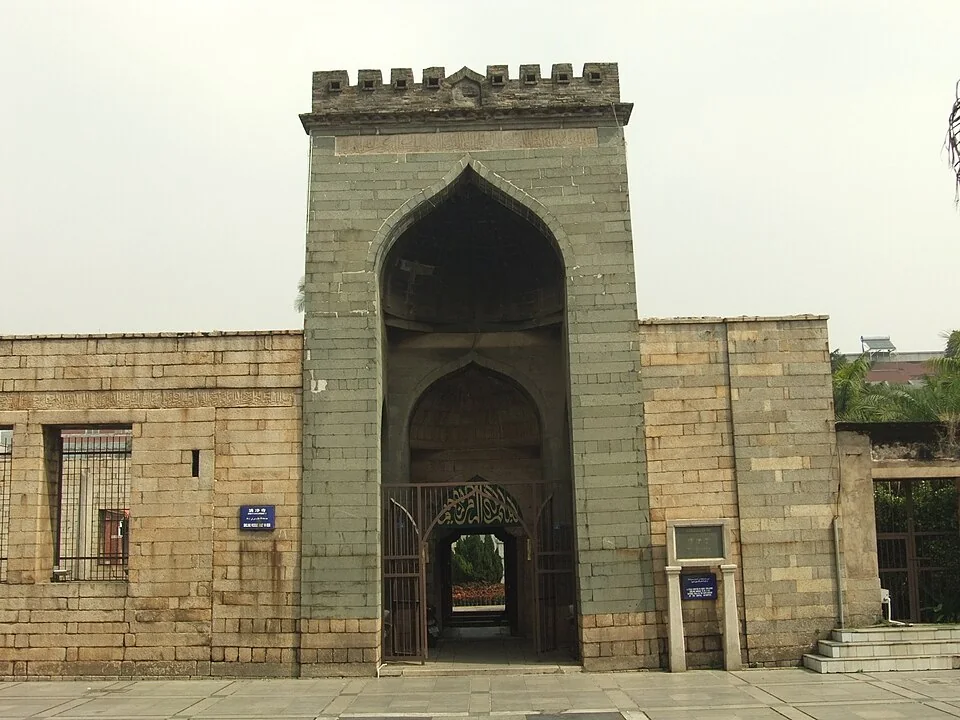
A modern view of the Qingjing Mosque entrance in Quanzhou; context for the Chinese Muslim port described in the Rihla, whose China itinerary remains debated. Shomada · CC BY-SA 4.0.
According to his account, Ibn Battuta reaches the Chinese port of Quanzhou. He describes commerce and merchant communities, but historians question how much of the China section he experienced himself. Some passages may draw on other people’s reports or earlier writing, especially the claimed northern journey. The uncertainty is part of the story: the Rihla preserves a traveller’s world, but it is not an unedited daily log.
Historical dates and route context
Selected journeys from the retrospective Rihla, composed with Ibn Juzayy in 1354–55. Most intermediate months are editorial animation anchors; dates and corridors are approximate. Reconstructions disagree on the East African and embassy chronology. Modern country boundaries do not imply medieval sovereignty. The Constantinople detour and several local journeys are omitted. China is a reported itinerary, not independently verified daily travel; no confirmed Beijing route is drawn. Quanzhou is a reported port in the account. The disputed Beijing journey is not drawn.
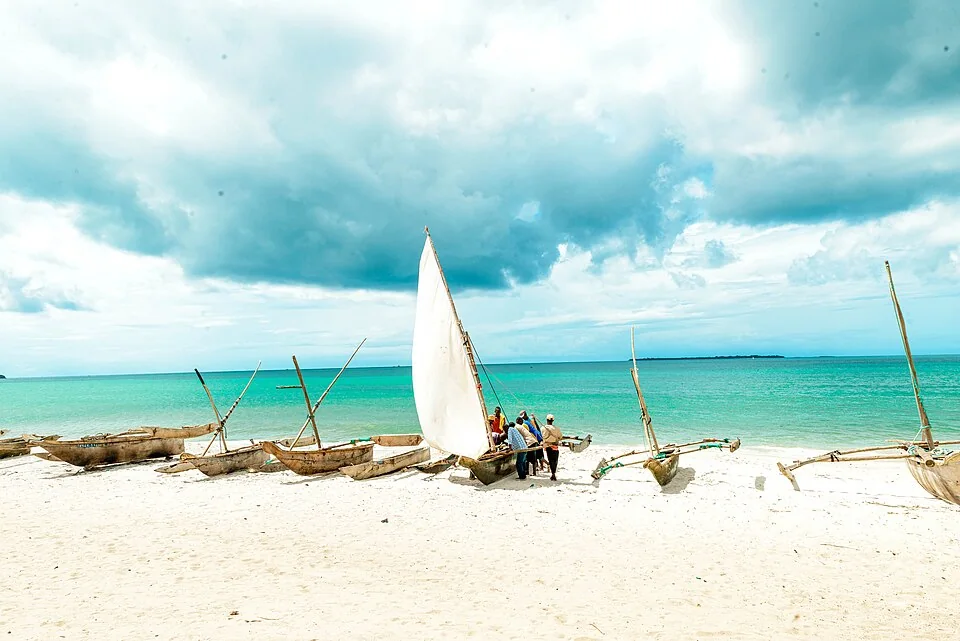
Modern dhows on the East African coast; illustrative context for Indian Ocean sailing, not Ibn Battuta’s vessel. Rasheedhrasheed · CC BY-SA 4.0.
According to the account, the homeward journey begins with a passage south from China. Its exact extent remains disputed, but the return through the Indian Ocean follows a recognizable world of trading ports. Seasonal winds shape which passages are practical. A traveller must find a ship, secure provisions and rely on the people who know the sea.
Samudra in northern Sumatra offers another welcome from a ruler he has met before. Such relationships can be renewed across enormous distances. They also reveal the limits of travelling alone: Ibn Battuta's independence rests on hosts, crews, interpreters and communities whose lives continue after he leaves.
Southern India and Calicut lie farther along the return. Here he considers approaching his former employer in Delhi, but fear of the sultan's response helps keep him away. Returning to a familiar country does not mean returning to his former position. He chooses another route onwards.
Beyond the ocean, Hormuz opens the way towards Iraq. His earlier travels have shown him courts supported by wealth and patronage; now he encounters a political landscape changed by conflict. A letter of introduction or an old acquaintance cannot guarantee that the same ruler still holds power.
Baghdad and Syria draw nearer. Much of his adult life has passed since he left Morocco, and information about home has travelled slowly. Caravan routes carry news as well as goods. As he approaches Damascus, that news will include losses in his own family. Soon he will also encounter communities facing a much larger catastrophe: the plague.
Historical dates and route context
Selected journeys from the retrospective Rihla, composed with Ibn Juzayy in 1354–55. Most intermediate months are editorial animation anchors; dates and corridors are approximate. Reconstructions disagree on the East African and embassy chronology. Modern country boundaries do not imply medieval sovereignty. The Constantinople detour and several local journeys are omitted. China is a reported itinerary, not independently verified daily travel; no confirmed Beijing route is drawn.
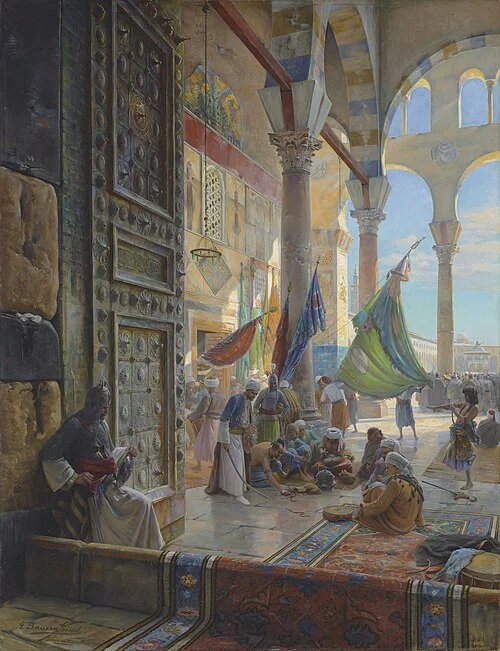
The Umayyad Mosque courtyard in Damascus, painted in 1890; a later city view, not a scene of the plague of 1348. Gustav Bauernfeind · Public domain.
In July 1348, Ibn Battuta describes Damascus in the grip of plague. The city he knew as a place of study and hospitality is now confronting illness and death. His account records fasting and public prayers. Muslims, Christians and Jews appear in his description of communities appealing for relief through their religious traditions.
He reports dramatic daily mortality figures. These convey the scale of the disaster as he understood it, but they cannot be treated as a modern census. The travel account combines what he witnessed with information received from other people.
The road ahead takes him through Egypt and another pilgrimage to Mecca before he turns west. A familiar route does not promise a familiar reception when disease has disrupted so many lives. The ports and caravan towns remain connected, and news of suffering travels between them.
Eventually the Mediterranean passages bring North Africa closer. Ibn Battuta has been away for about twenty-four years. Home will contain people and places he remembers, but it has changed during his absence. He is returning with extraordinary experiences, while also discovering what time and distance have taken away.
Historical dates and route context
Selected journeys from the retrospective Rihla, composed with Ibn Juzayy in 1354–55. Most intermediate months are editorial animation anchors; dates and corridors are approximate. Reconstructions disagree on the East African and embassy chronology. Modern country boundaries do not imply medieval sovereignty. The Constantinople detour and several local journeys are omitted. China is a reported itinerary, not independently verified daily travel; no confirmed Beijing route is drawn.
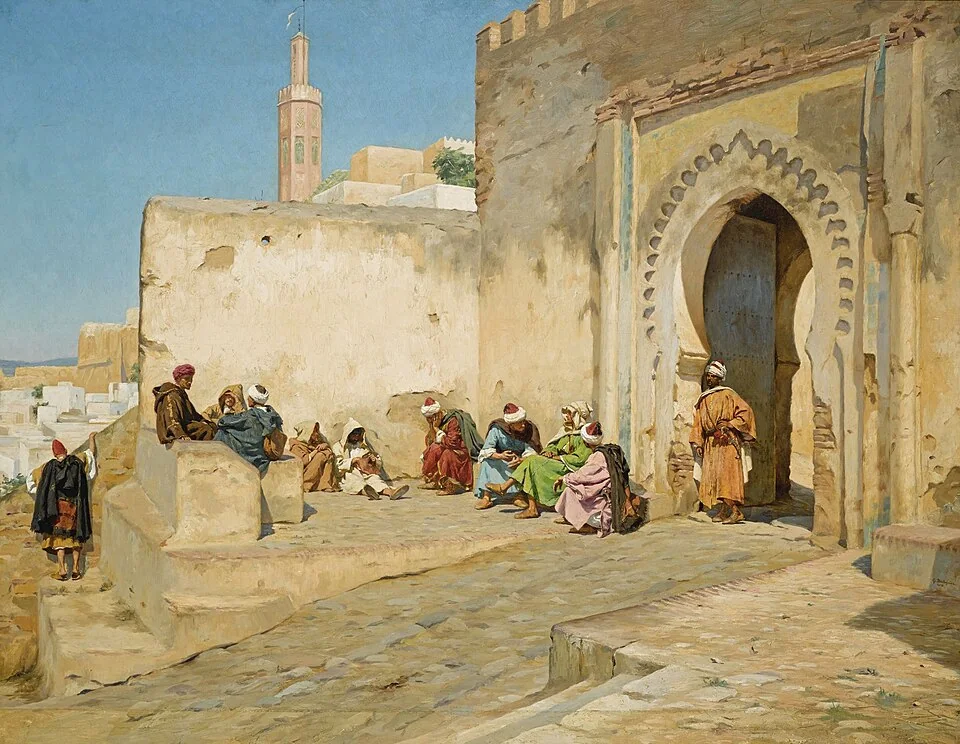
Tangier’s kasbah in a nineteenth-century painting; a later view of the Moroccan city to which Ibn Battuta returned. Georges Bretegnier · Public domain.
After about twenty-four years away, Ibn Battuta returns to Morocco and visits his mother's grave. The young pilgrim who left Tangier has become an experienced traveller, but homecoming brings loss as well as recognition. He does not settle down for long. Across the strait lies al-Andalus, the Muslim-ruled part of the Iberian Peninsula.
Reports of danger on the far shore help draw him towards another crossing. By the time he arrives, the immediate threat has passed after the death of the Castilian king during the plague. His account does not become a story of fighting there. Instead, he continues as a visitor.
Granada, ahead, is surrounded by productive countryside. He admires gardens, orchards and streams, and renews the pattern of meeting scholars and seeking hospitality. This journey brings him closer to the western Islamic world he left, while showing that curiosity still pulls him beyond familiar surroundings.
Back in Morocco, Fez and the road across the Atlas lead towards Sijilmasa. There he prepares for a winter caravan. His next destination is Mali, beyond the Sahara. The challenge will be to cross a vast desert where water, supplies and reliable guidance matter more than any royal introduction.
Historical dates and route context
Selected journeys from the retrospective Rihla, composed with Ibn Juzayy in 1354–55. Most intermediate months are editorial animation anchors; dates and corridors are approximate. Reconstructions disagree on the East African and embassy chronology. Modern country boundaries do not imply medieval sovereignty. The Constantinople detour and several local journeys are omitted. China is a reported itinerary, not independently verified daily travel; no confirmed Beijing route is drawn.
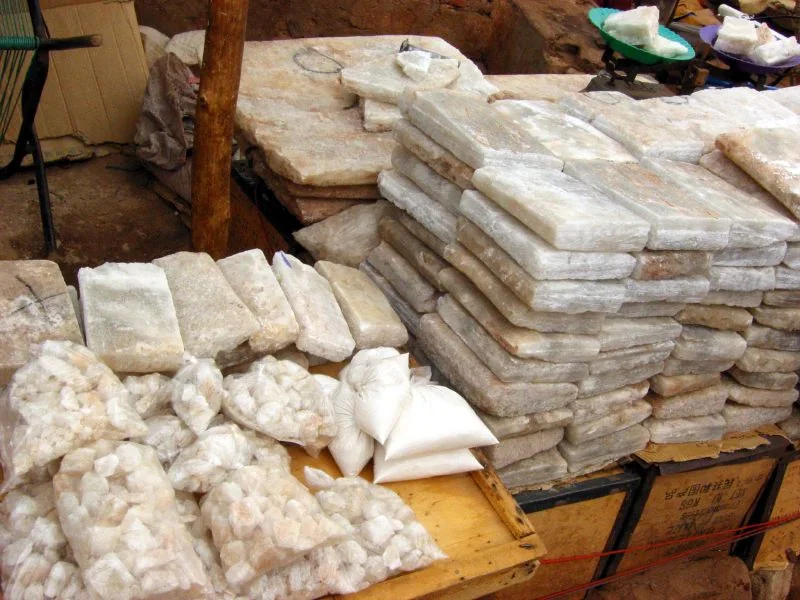
Salt blocks being sold in modern Mopti, Mali; context for the continuing Saharan salt trade, not the Taghaza mines in 1352. Robin Taylor · CC BY 2.0.
From Sijilmasa, Ibn Battuta joins a winter caravan crossing the Sahara. The choice of season matters: the travellers must manage heat, provisions and the distance between water supplies. He has bought camels and depends on people who know this route.
Ahead is Taghaza, where enslaved workers mine the salt traded south towards Mali. He describes buildings made from salt blocks, with roofs of camel hide. Food has to be brought in, and even the water is salty. Valuable cargo does not make this a comfortable place to live.
Beyond the mines, guides and messengers help arrange support from the south. Keeping together becomes a matter of survival. The desert crossing depends on knowledge and labour, long before the caravan reaches Walata.
Historical dates and route context
Selected journeys from the retrospective Rihla, composed with Ibn Juzayy in 1354–55. Most intermediate months are editorial animation anchors; dates and corridors are approximate. Reconstructions disagree on the East African and embassy chronology. Modern country boundaries do not imply medieval sovereignty. The Constantinople detour and several local journeys are omitted. China is a reported itinerary, not independently verified daily travel; no confirmed Beijing route is drawn.
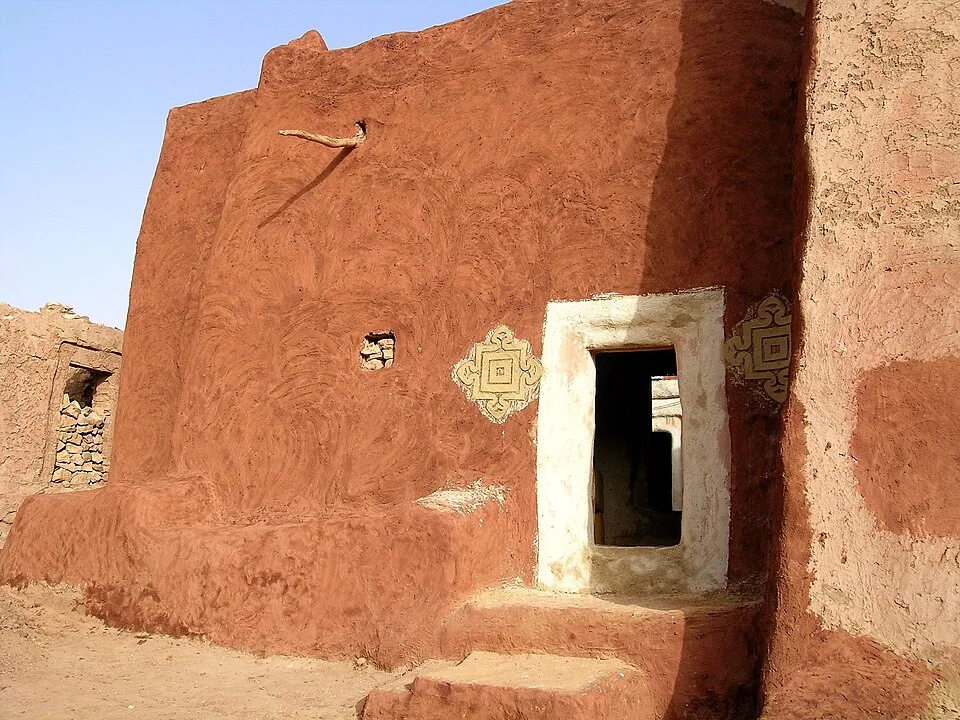
A modern view of decorated architecture in Walata, Mauritania; context for the Saharan town, not a reconstruction of Ibn Battuta’s reception. c.hug · CC BY-SA 2.0.
At Walata, the caravan reaches a meeting place between Saharan and West African networks. Ibn Battuta continues towards Mali’s ruler, relying again on local connections and assistance. The precise location of the court remains disputed. What matters for this stage is the approach to an established political world, where the visitor’s expectations will meet customs and relationships he does not always understand.
Historical dates and route context
Selected journeys from the retrospective Rihla, composed with Ibn Juzayy in 1354–55. Most intermediate months are editorial animation anchors; dates and corridors are approximate. Reconstructions disagree on the East African and embassy chronology. Modern country boundaries do not imply medieval sovereignty. The Constantinople detour and several local journeys are omitted. China is a reported itinerary, not independently verified daily travel; no confirmed Beijing route is drawn.
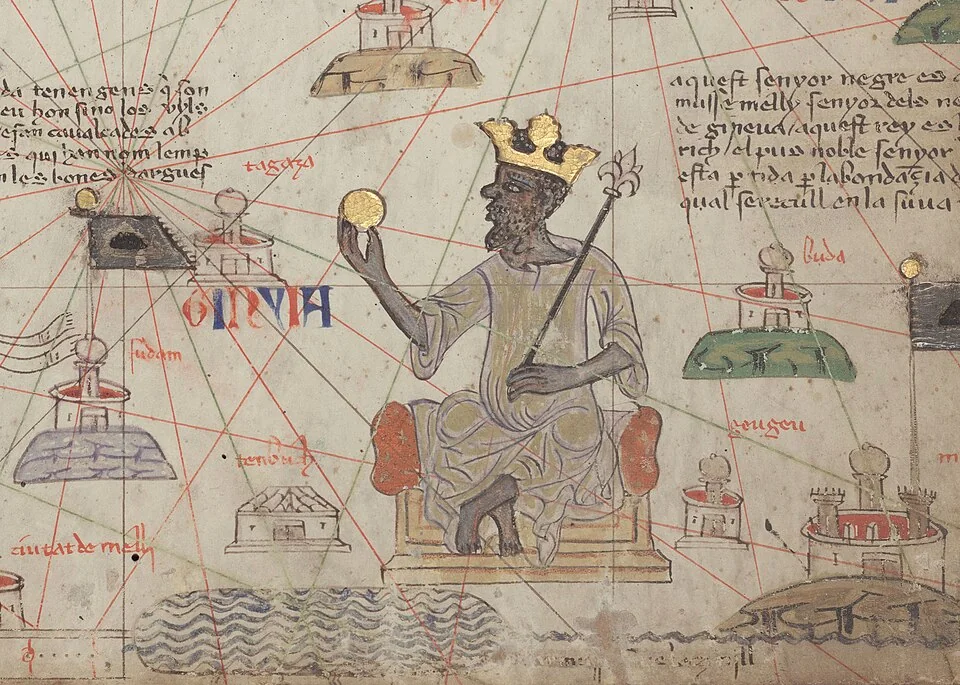
Mansa Musa represented in the Catalan Atlas of 1375; later European cartographic imagery, not Mansa Sulayman, the ruler whom Ibn Battuta visited. Attributed to Abraham Cresques · Public domain.
Ibn Battuta spends about eight months at the court of Mansa Sulayman, the ruler of Mali. This is a generation after the famous pilgrimage of Mansa Musa. He praises security, religious learning and some public practices, while criticizing customs that differ from his own expectations. His account offers valuable observations, but also a reminder that an outsider’s judgments are not a neutral description of a society.
Historical dates and route context
Selected journeys from the retrospective Rihla, composed with Ibn Juzayy in 1354–55. Most intermediate months are editorial animation anchors; dates and corridors are approximate. Reconstructions disagree on the East African and embassy chronology. Modern country boundaries do not imply medieval sovereignty. The Constantinople detour and several local journeys are omitted. China is a reported itinerary, not independently verified daily travel; no confirmed Beijing route is drawn. The image depicts Mansa Musa in the later Catalan Atlas, not the ruler Sulayman whom Ibn Battuta met. Court coordinates represent a disputed region.
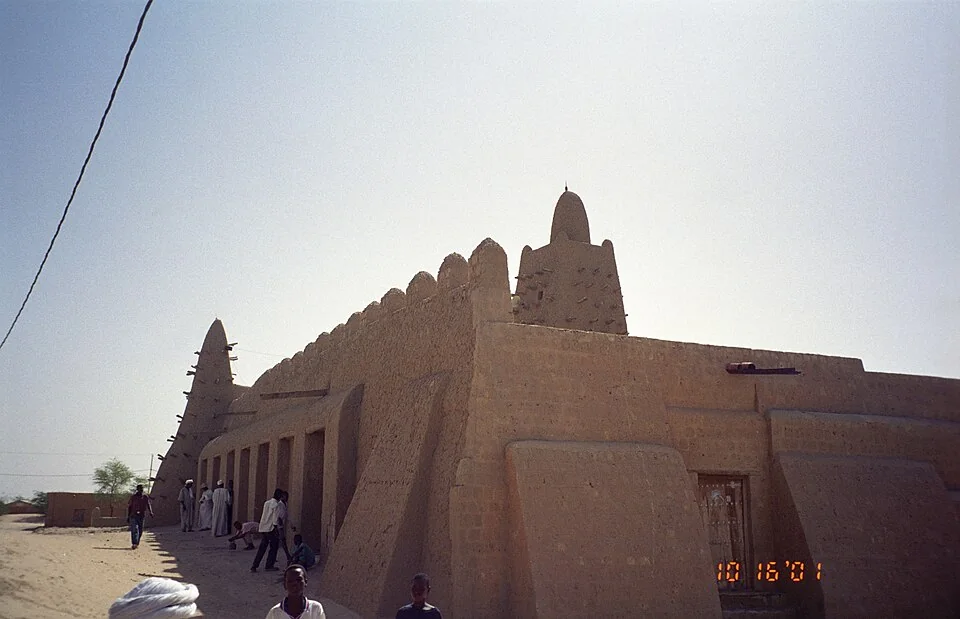
A modern view of Djinguereber Mosque in Timbuktu; a surviving monument in the Niger trading world, not a depiction of the 1353 visit. upyernoz · CC BY 2.0.
Leaving Mali's court, Ibn Battuta continues towards Timbuktu and Gao. The Niger provides another means of movement, with boatmen guiding travellers through a landscape very different from the Sahara. His account describes hippopotami in the river. Knowledge that helped him cross a desert is not enough here; he depends on people who understand these waters.
Timbuktu belongs to the trading and scholarly world of the Niger, although its greatest later fame still lies ahead. Ibn Battuta does not describe every place with equal enthusiasm. His attention often follows the welcome he receives, the people he meets and the customs he considers proper.
The onward road eventually reaches Takedda. Illness again reminds him how vulnerable a traveller can be. There he receives a summons from Morocco's ruler, calling him back to Fez. This time, the decision to return is reinforced by an order from home.
The northbound caravan includes enslaved women being taken towards Morocco. For them, the journey is forced, not an opportunity for learning or adventure. The account preserves that difference alongside its descriptions of hospitality. Beyond the desert, a winter crossing of the Atlas brings difficult roads and snow. After nearly three decades of movement, Ibn Battuta is approaching the end of his great journeys.
Historical dates and route context
Selected journeys from the retrospective Rihla, composed with Ibn Juzayy in 1354–55. Most intermediate months are editorial animation anchors; dates and corridors are approximate. Reconstructions disagree on the East African and embassy chronology. Modern country boundaries do not imply medieval sovereignty. The Constantinople detour and several local journeys are omitted. China is a reported itinerary, not independently verified daily travel; no confirmed Beijing route is drawn.
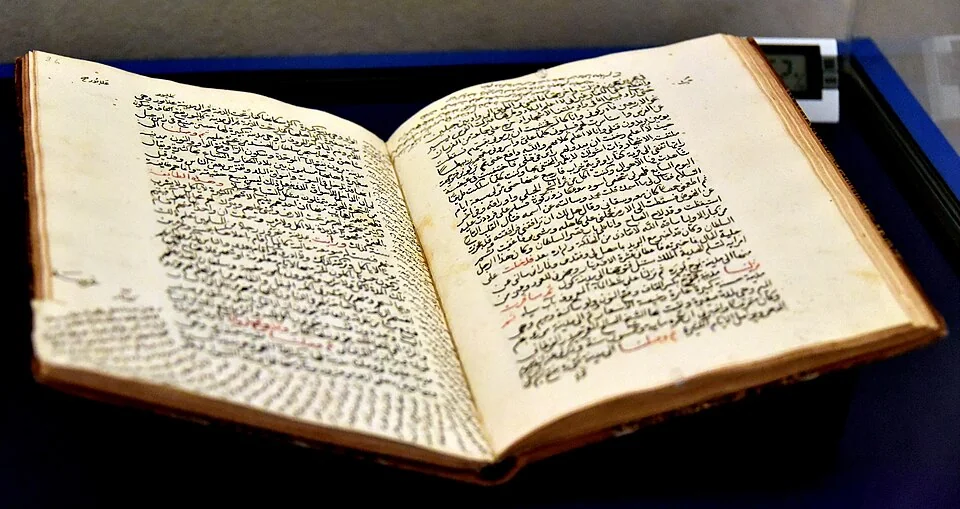
An 1836 Cairo manuscript copy of selected parts of the Rihla; a later copy, not the lost original dictated to Ibn Juzayy. Osama Shukir Muhammed Amin FRCP(Glasg) · CC BY-SA 4.0.
Back in Fez, Ibn Battuta is asked to tell his story. In 1354 and 1355, the writer Ibn Juzayy shapes his recollections into the work we call the Rihla, a travel account. Memory, observation, borrowed descriptions and storytelling come together. Its greatest legacy is the world of connections it preserves: guides, sailors, hosts and communities whose knowledge made extraordinary journeys possible.
Historical dates and route context
Selected journeys from the retrospective Rihla, composed with Ibn Juzayy in 1354–55. Most intermediate months are editorial animation anchors; dates and corridors are approximate. Reconstructions disagree on the East African and embassy chronology. Modern country boundaries do not imply medieval sovereignty. The Constantinople detour and several local journeys are omitted. China is a reported itinerary, not independently verified daily travel; no confirmed Beijing route is drawn.