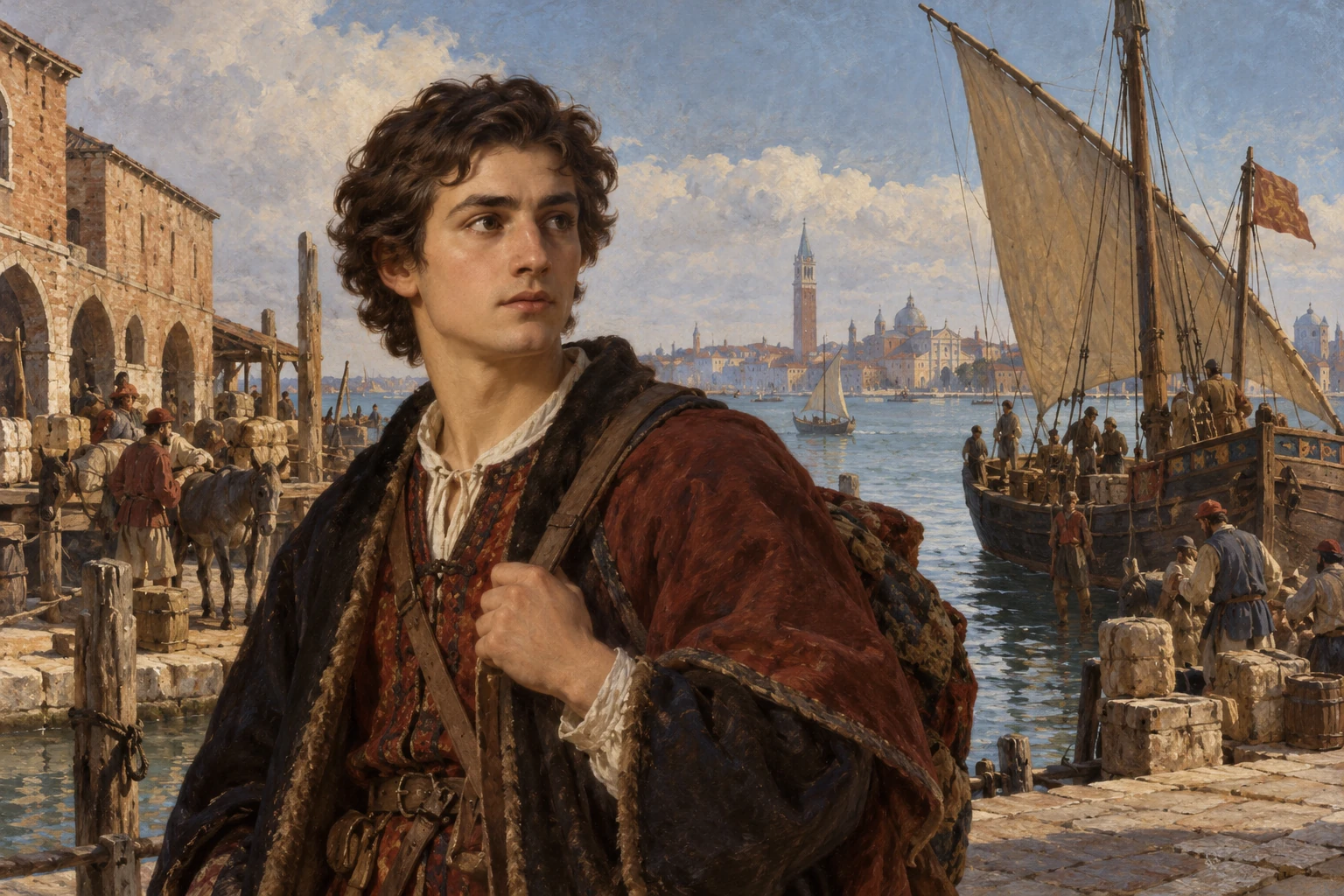
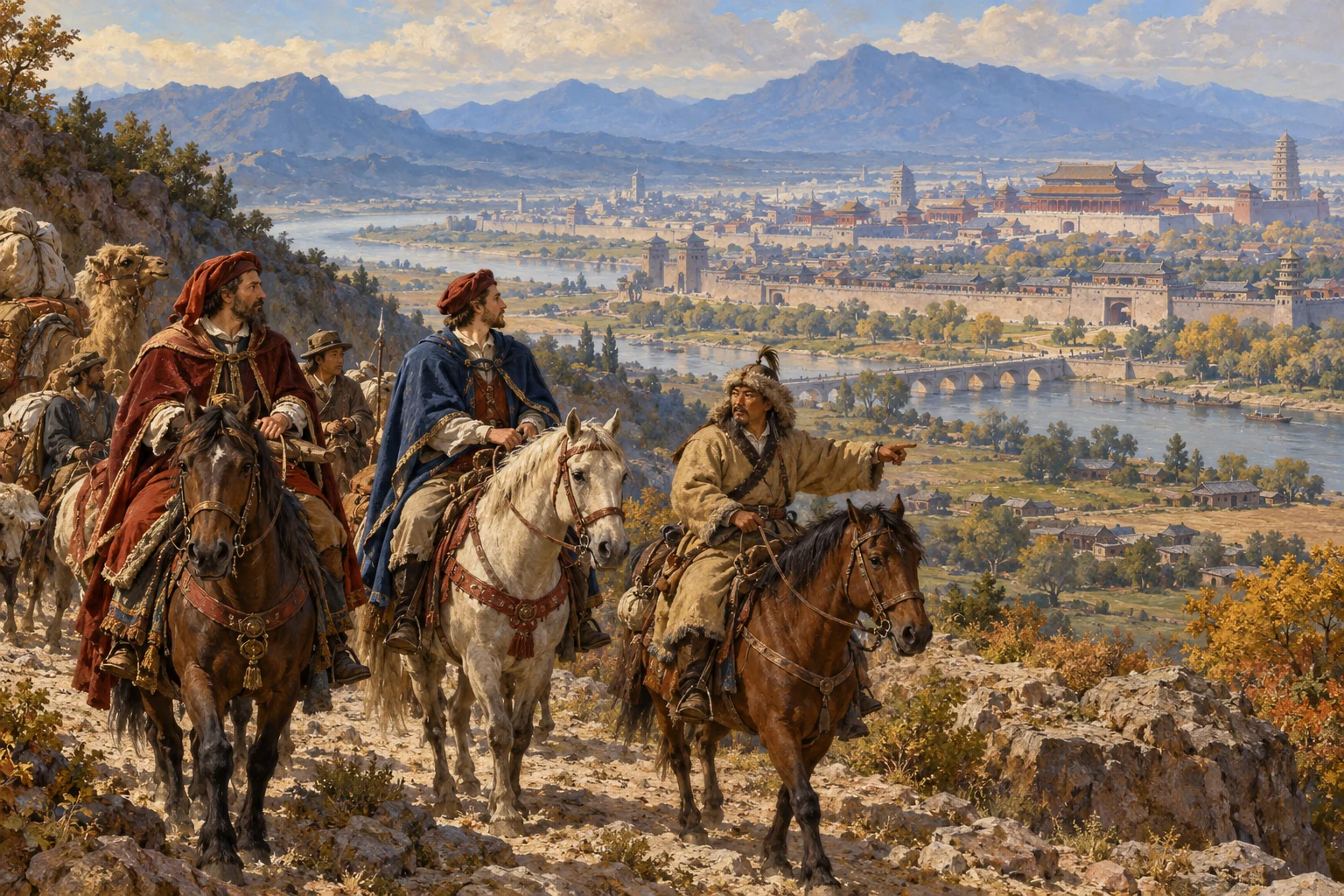
Young Marco Polo — AI-generated illustration for Histlas, 2026. Imagined likeness and setting, not a verified historical portrait.
Marco Polo is a young Venetian merchant who travels across Asia in the late thirteenth century. His account will describe the court of the Mongol ruler Kublai Khan, distant trading cities and everyday practices unfamiliar to many European readers. This journey will keep him away from Venice for more than twenty years. We begin in 1271, as Marco prepares to leave with his father Niccolò and uncle Maffeo, who have already made an earlier journey east.
Historical dates and route context
Intermediate months schedule the story and are estimates; the route is a representative reconstruction. Court scenes give context without inventing individual missions.
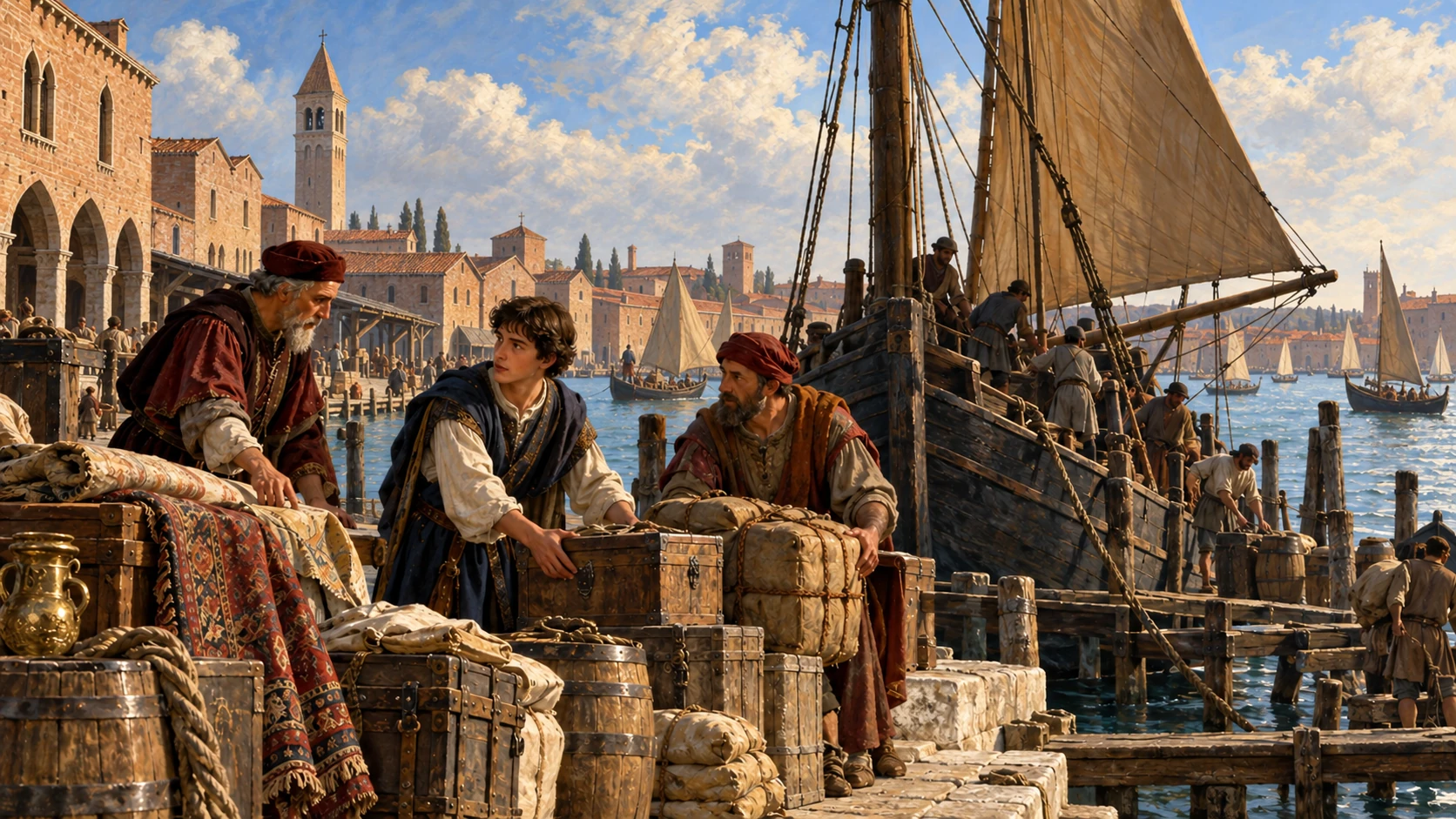
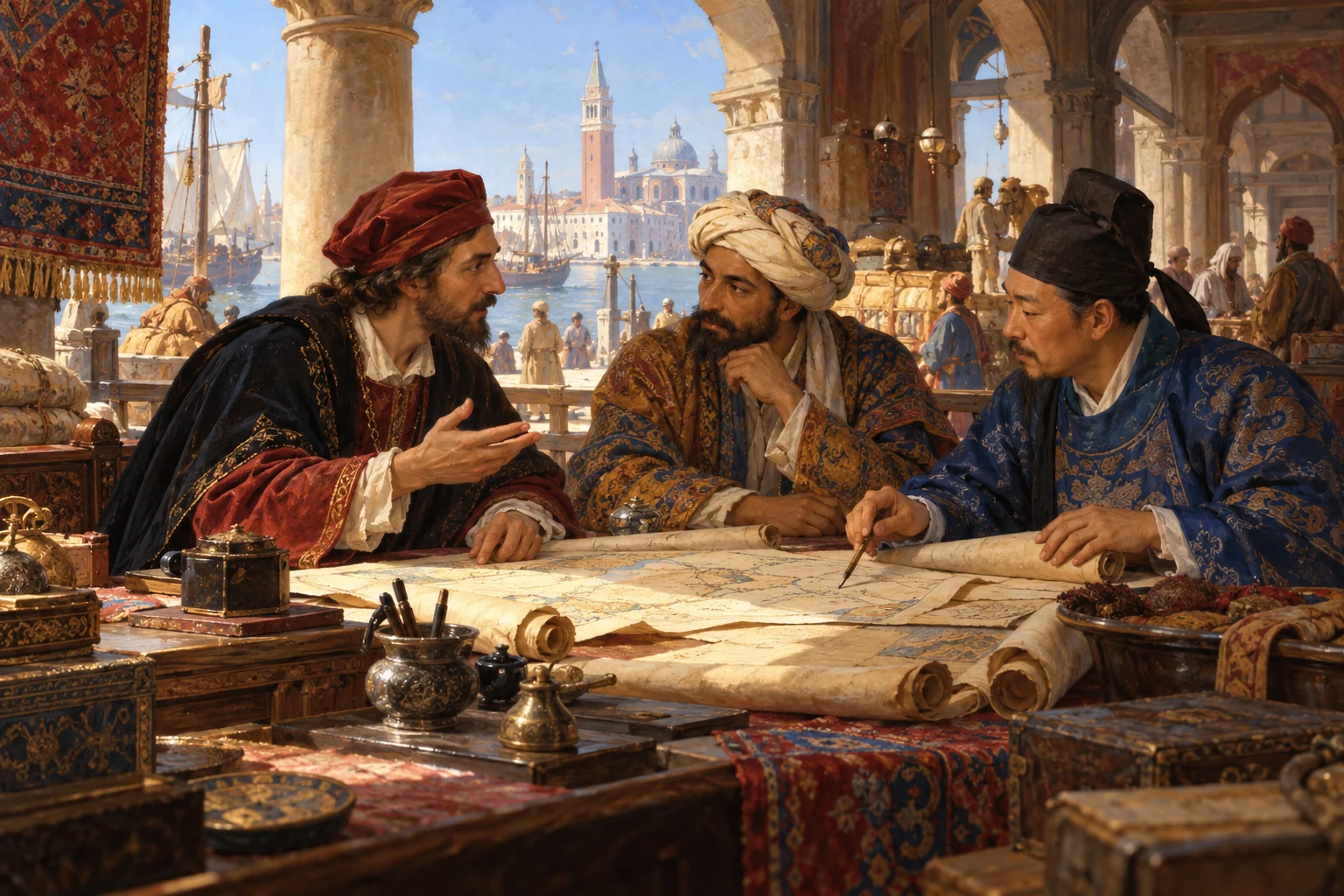
Preparing the journey in Venice — AI-generated reconstruction for Histlas, 2026. People, vessels and settings are illustrative, not eyewitness records or exact likenesses.
The Polos sail into the Mediterranean. This is not a voyage into an empty world. Merchants, pilgrims and diplomats have travelled these routes for generations. Their ambition is to reach an established imperial court on the far side of Asia, carrying a papal message and building on the contacts made by Marco’s father and uncle.
Historical dates and route context
Intermediate months schedule the story and are estimates; the route is a representative reconstruction. Court scenes give context without inventing individual missions.
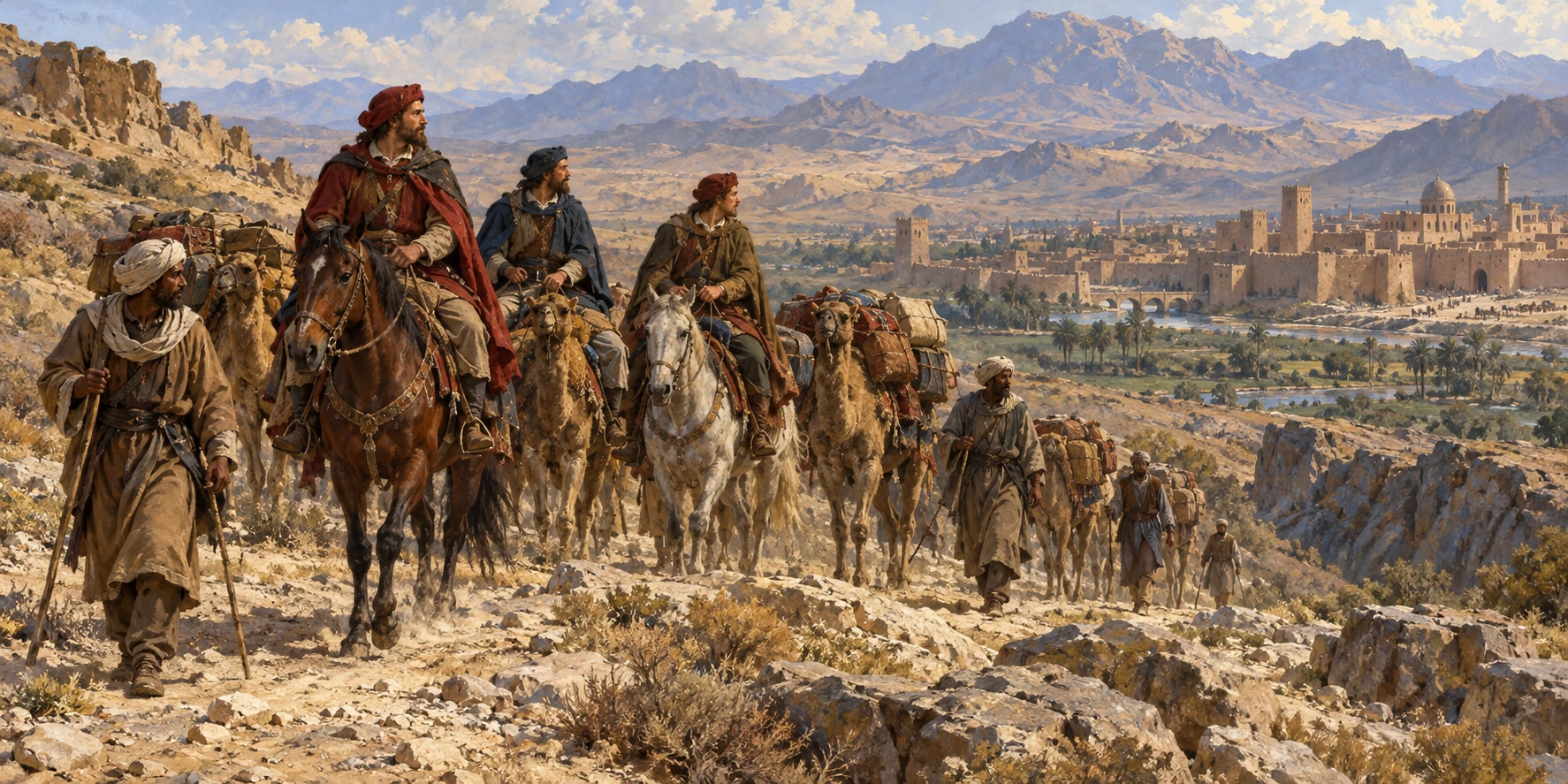
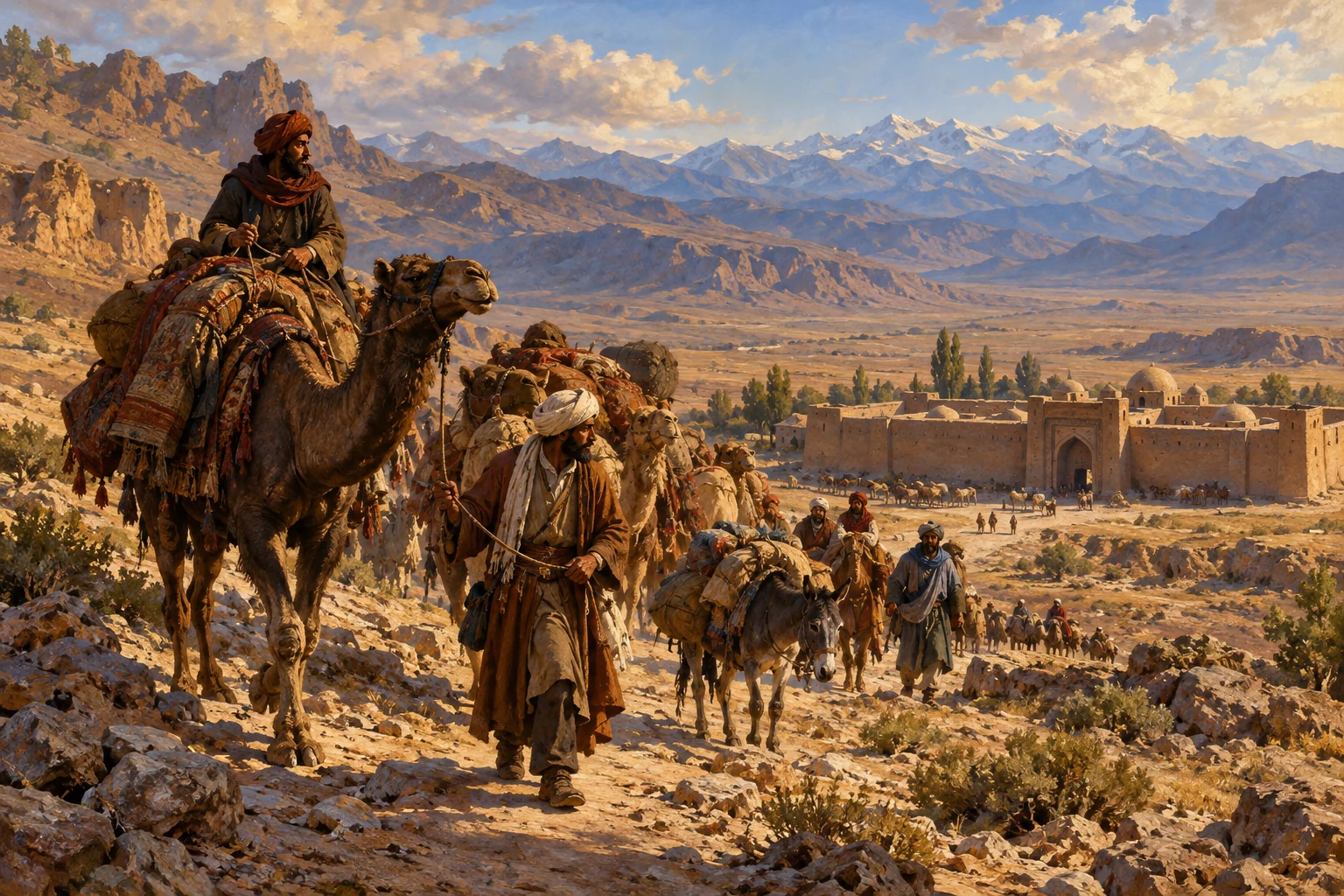
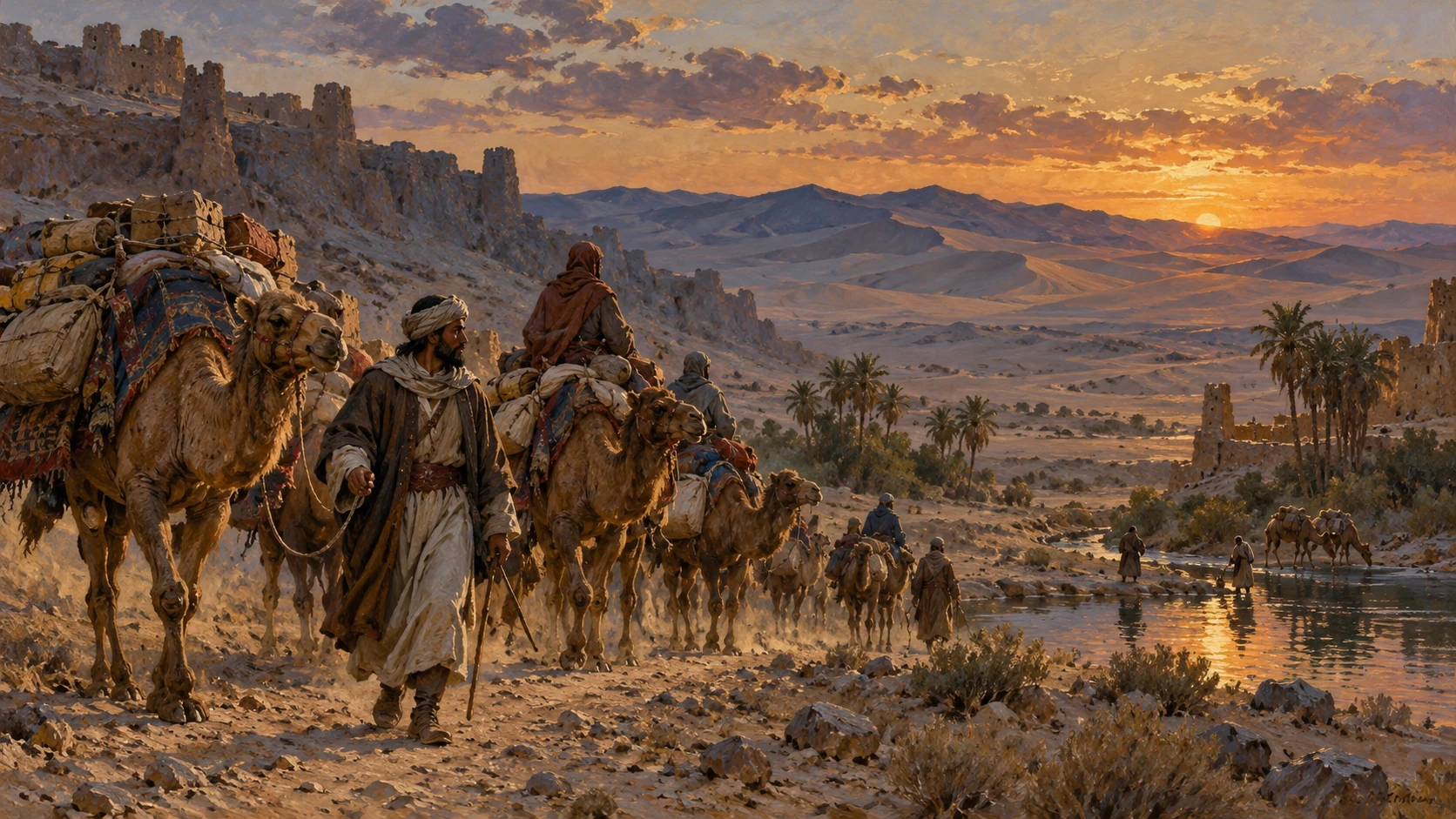
The merchant caravan in Persia — AI-generated reconstruction for Histlas, 2026. People, vessels and settings are illustrative, not eyewitness records or exact likenesses.
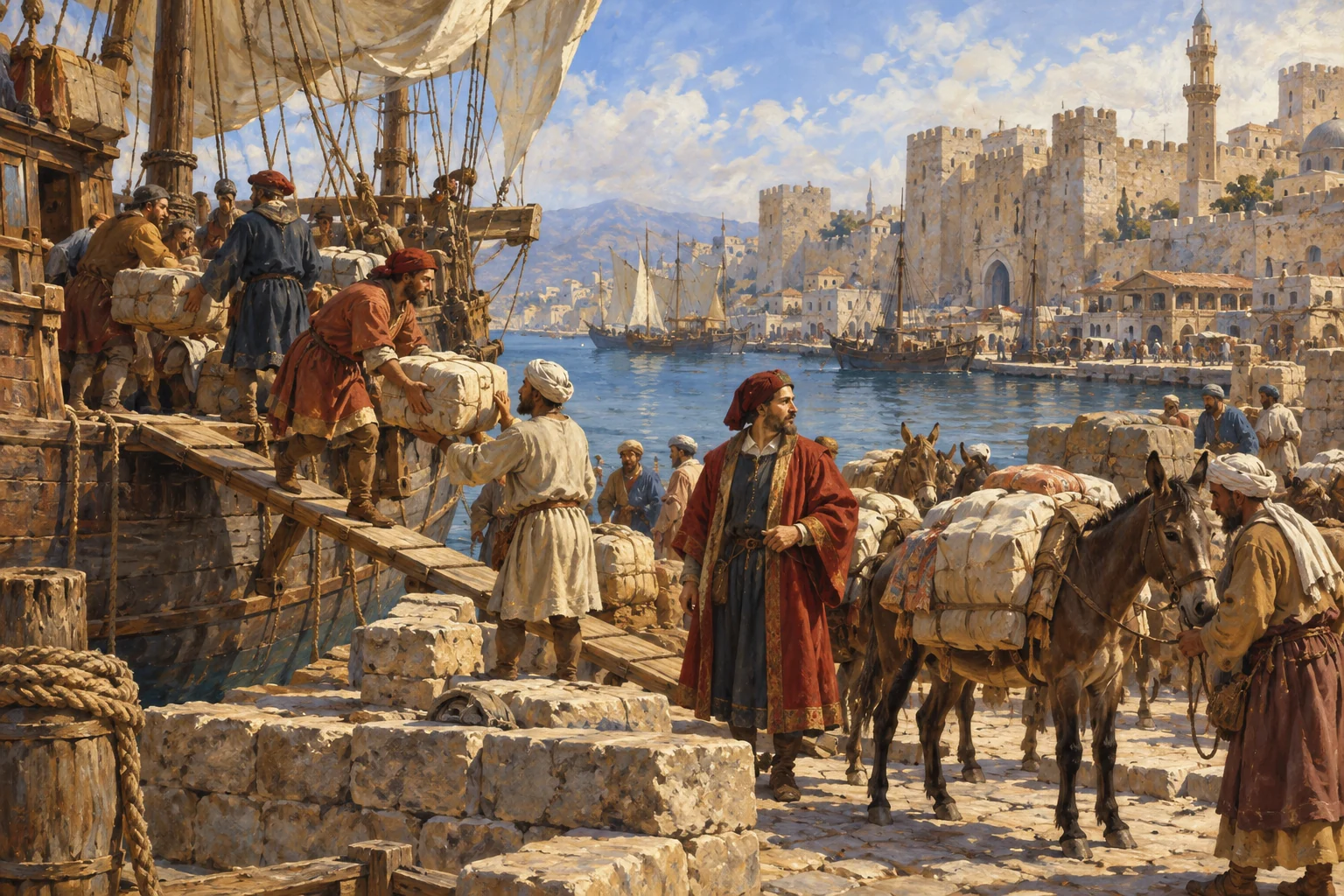
At Acre, the family encounters the Christian eastern Mediterranean. The Polos’ account links their mission to the newly elected Pope Gregory the Tenth. Religion and diplomacy travel alongside commerce. They will carry letters east, but the small party cannot fulfil Kublai’s much larger request for learned Christian visitors.
Historical dates and route context
Intermediate months schedule the story and are estimates; the route is a representative reconstruction. Court scenes give context without inventing individual missions.
AI-generated reconstruction for Histlas, 2026. People, ships and settings are illustrative, not eyewitness records or exact likenesses.
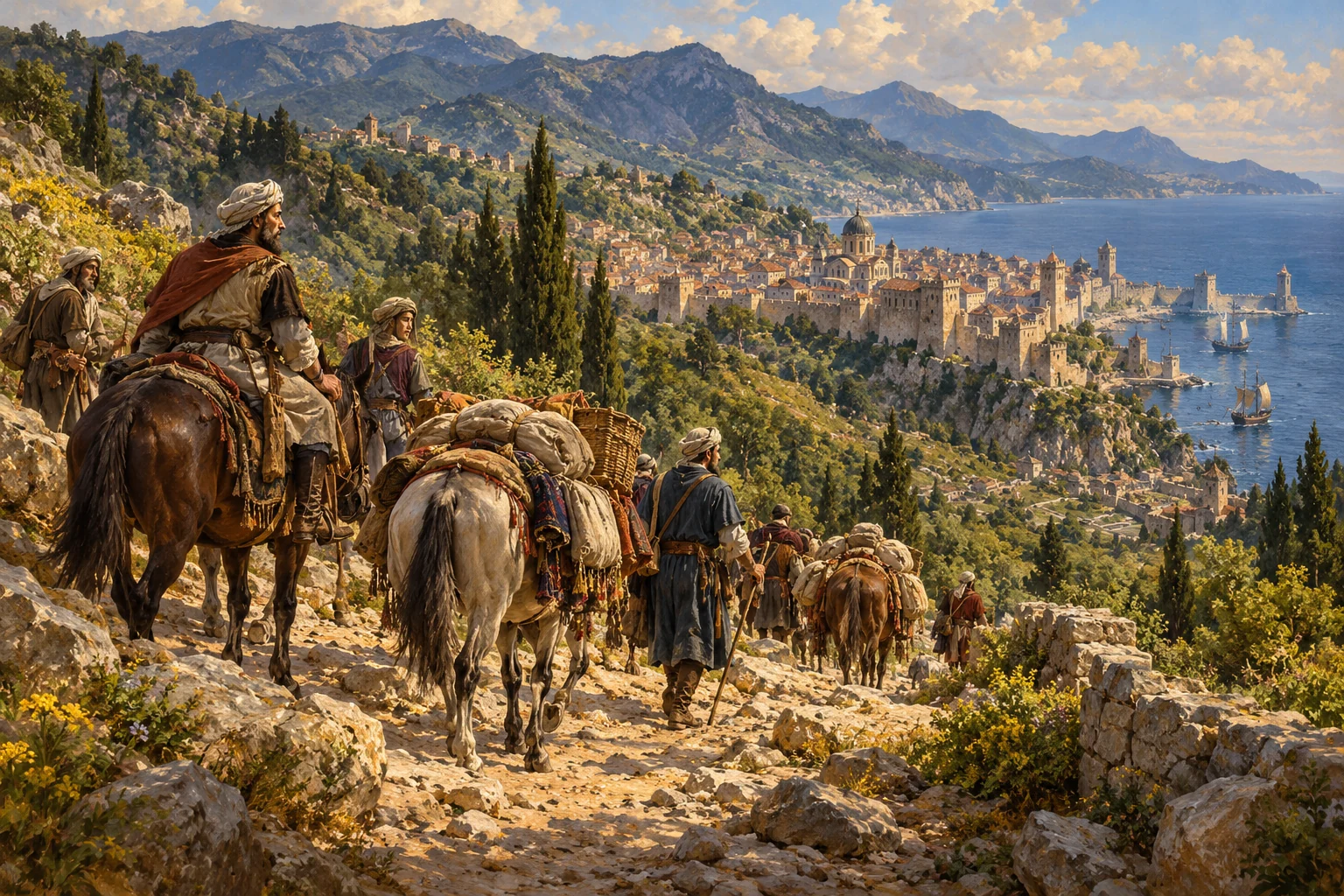
At the port of Ayas, known to Italian merchants as Laiazzo, the route turns inland. Sea passage gives way to roads, pack animals and local guides. Progress now depends on terrain, supplies and political conditions. The familiar Mediterranean is behind them; ahead lie the trading towns of Anatolia and Persia.
Historical dates and route context
Intermediate months schedule the story and are estimates; the route is a representative reconstruction. Court scenes give context without inventing individual missions.
AI-generated reconstruction for Histlas, 2026. People, ships and settings are illustrative, not eyewitness records or exact likenesses.
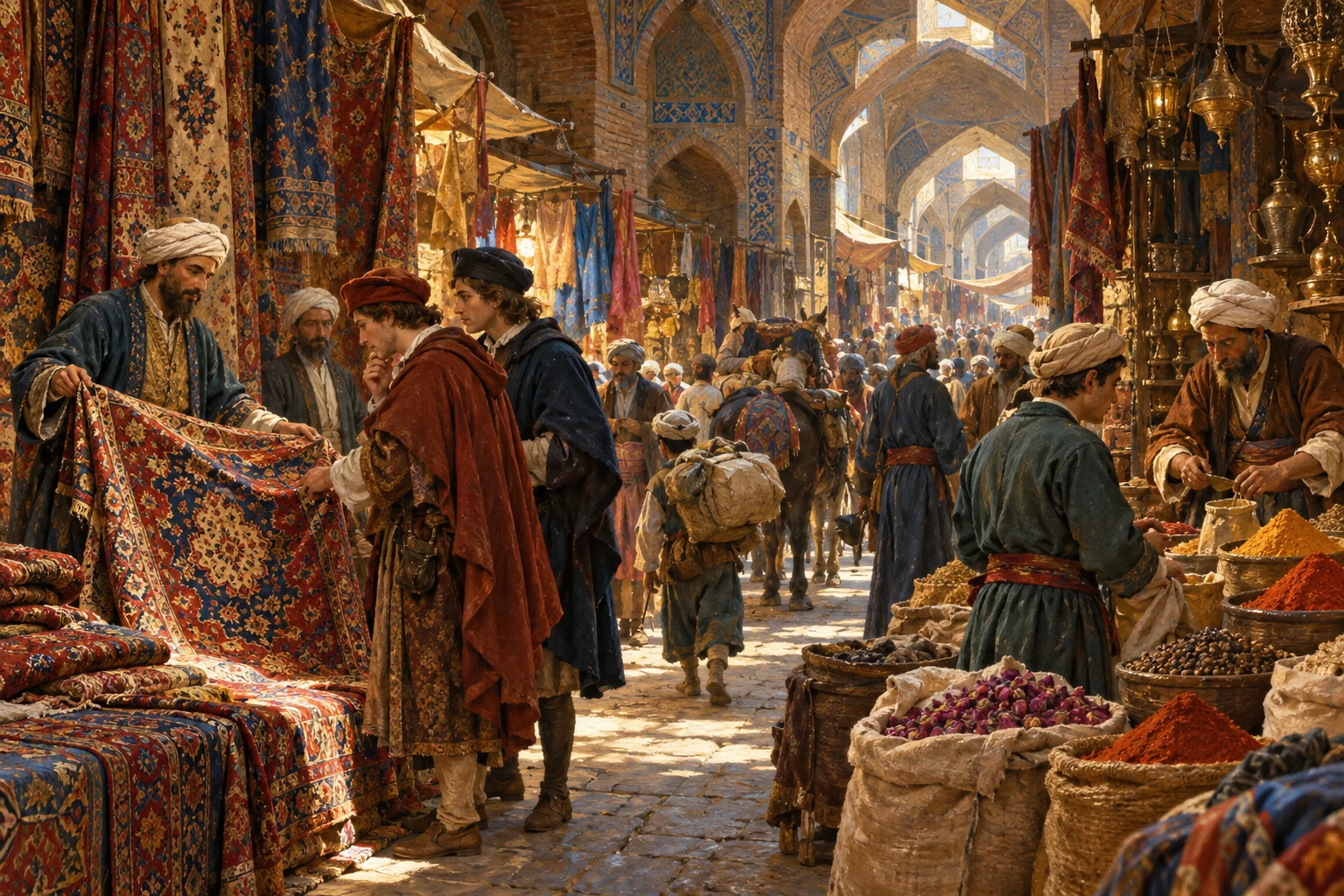
Tabriz stands within the Mongol-ruled Persian world. In Polo’s account, its markets connect merchants from many lands. Goods change hands, languages mingle, and valuable knowledge travels with the cargo. The family is following a network of routes, rather than one single road stretching uninterrupted from Venice to China.
Historical dates and route context
Intermediate months schedule the story and are estimates; the route is a representative reconstruction. Court scenes give context without inventing individual missions.
AI-generated reconstruction for Histlas, 2026. People, ships and settings are illustrative, not eyewitness records or exact likenesses.
The journey continues through Persian towns and dry country toward Kerman. Polo notices crafts, commodities and the practical business of travel. These details will fill his later book. Yet the surviving account is not a daily diary: its descriptions do not always reveal precisely when he arrived or which road he followed.
Historical dates and route context
Intermediate months schedule the story and are estimates; the route is a representative reconstruction. Court scenes give context without inventing individual missions.
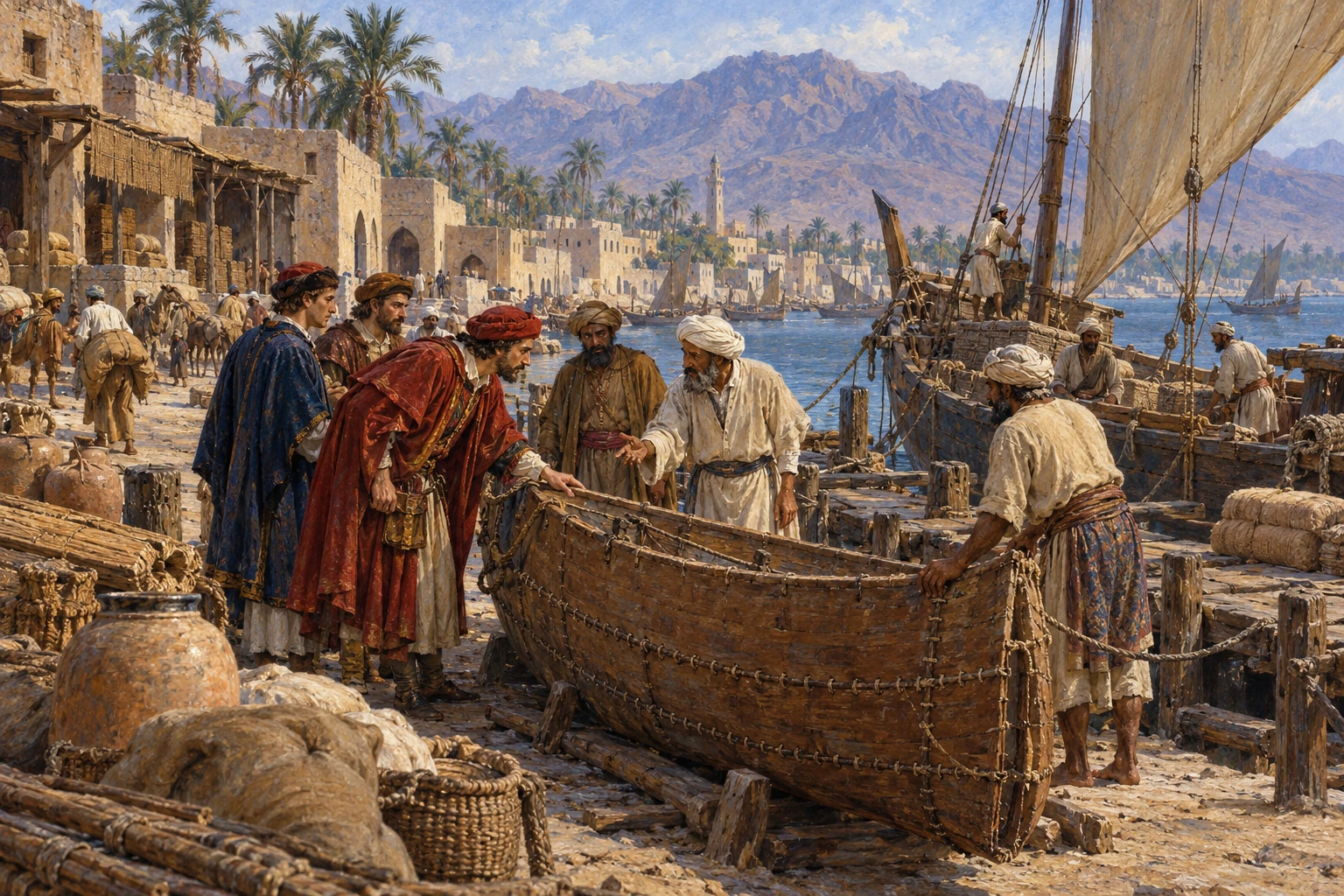
Old Hormuz: choosing the inland route — AI-generated reconstruction for Histlas, 2026. People, objects and settings are illustrative, not eyewitness records or exact likenesses.
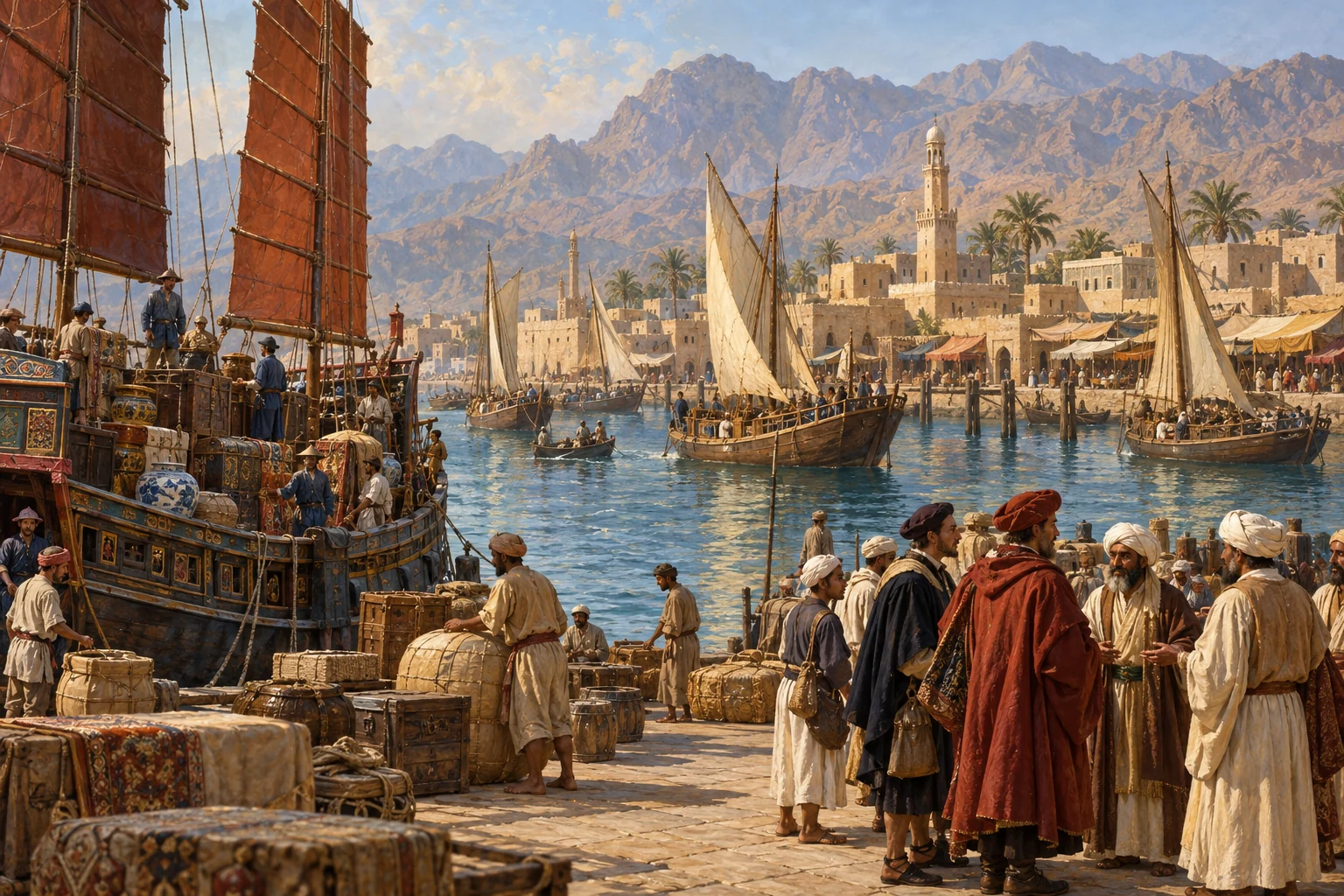
At Old Hormuz, on the mainland near today’s Minab, the travellers consider continuing by sea. Polo’s account describes local ships with planks fastened by fibre and expresses distrust of them. The family instead turns inland. The exact route is uncertain, but this change of direction sends them toward the mountains and deserts of Central Asia.
Historical dates and route context
Intermediate months schedule the story and are estimates; the route is a representative reconstruction. Court scenes give context without inventing individual missions.
AI-generated reconstruction for Histlas, 2026. People, ships and settings are illustrative, not eyewitness records or exact likenesses.
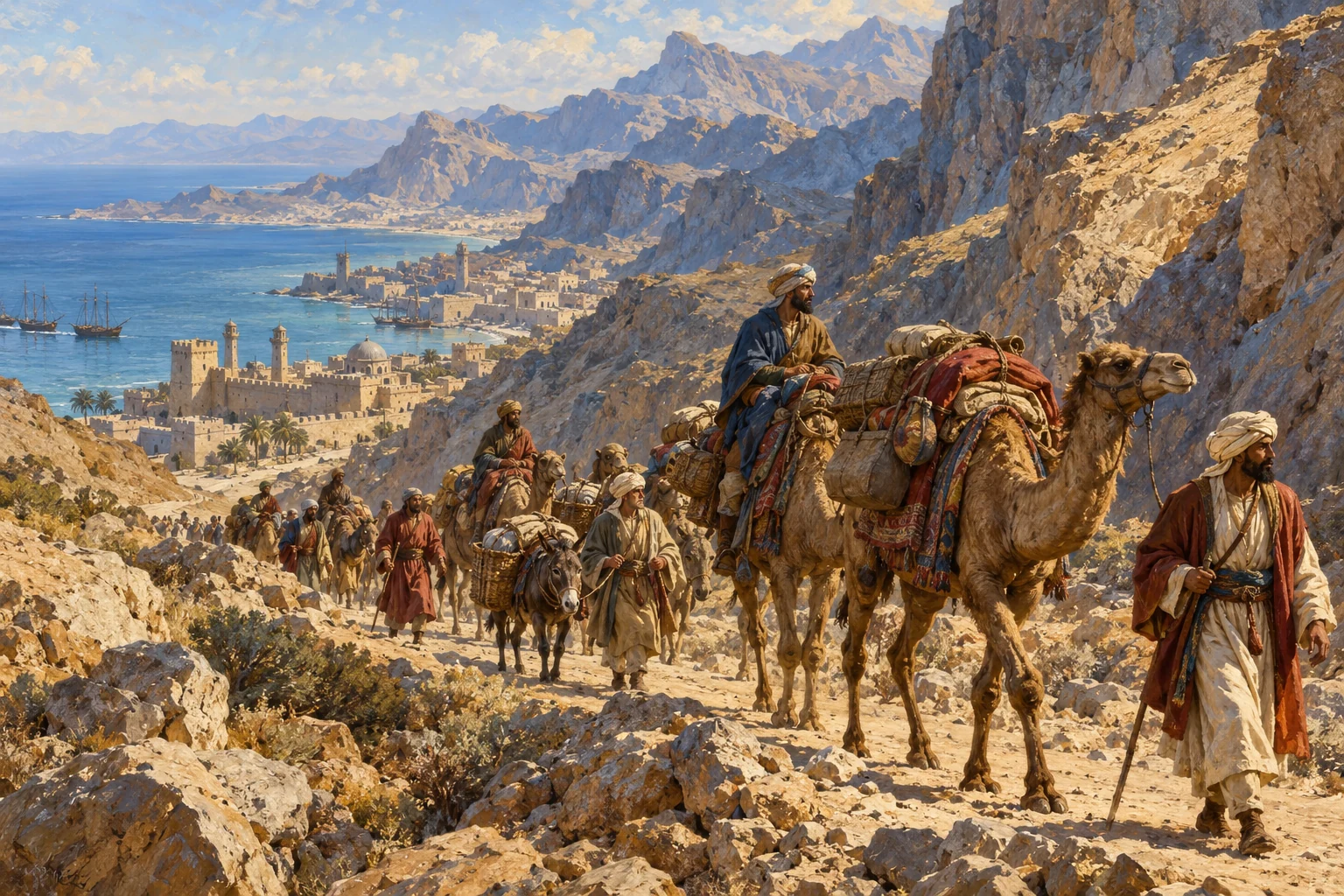
Returning toward Kerman, the Polos commit to the overland journey. There will be no quick crossing to China from the Persian Gulf. They must pass through towns and valleys whose rulers, languages and customs differ. The journey demands patience as much as courage, with progress measured in the distance to the next dependable source of food and water.
Historical dates and route context
Intermediate months schedule the story and are estimates; the route is a representative reconstruction. Court scenes give context without inventing individual missions.
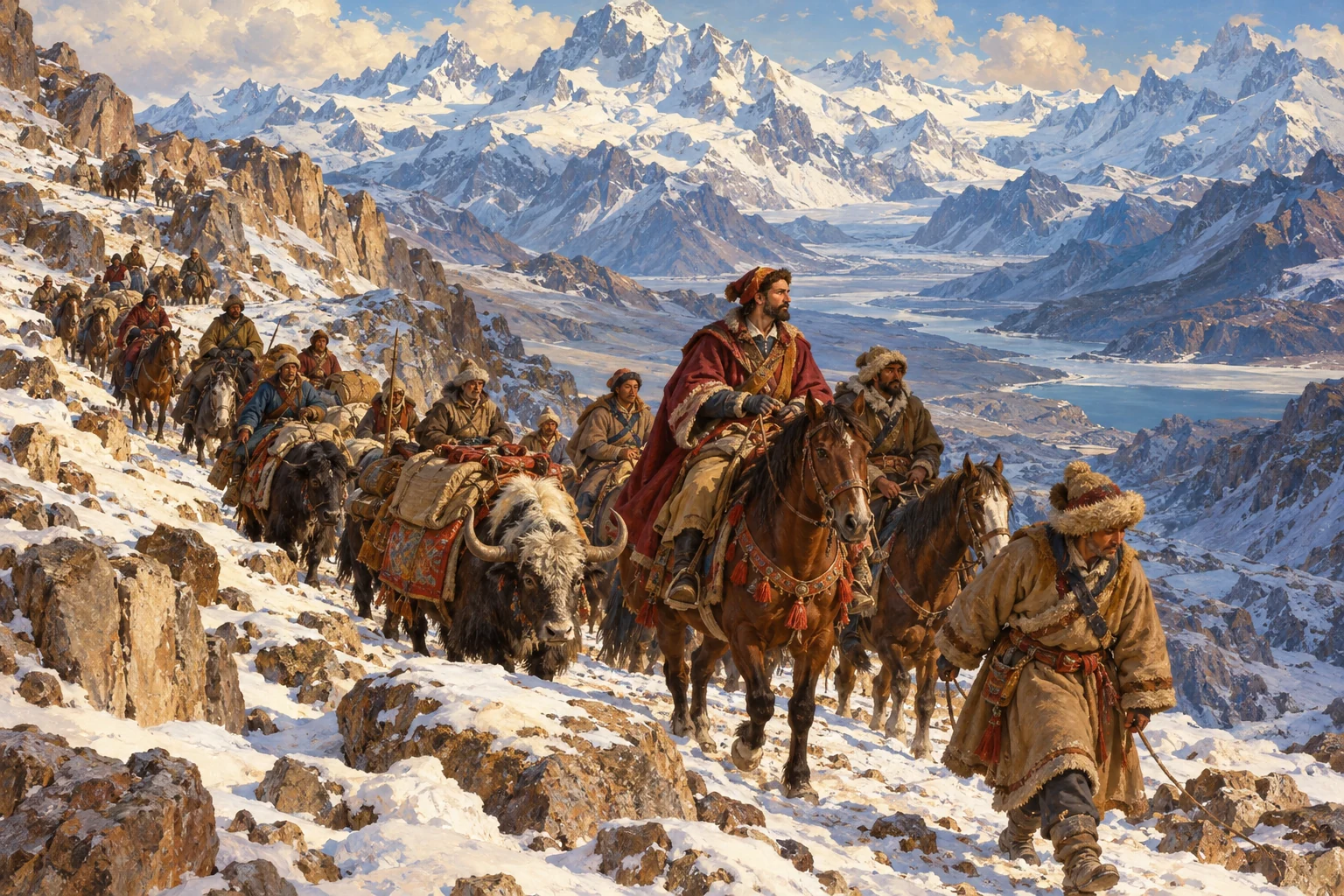
Crossing the Pamir mountains — AI-generated reconstruction for Histlas, 2026. People, vessels and settings are illustrative, not eyewitness records or exact likenesses.
In Badakhshan, Polo describes mountains and precious stones. His account says illness kept him here for about a year, with recovery in the healthier mountain air. This was a substantial part of the outward journey, not a brief sightseeing stop. The exact months are uncertain. Seasons, illness and supplies repeatedly turn a moving caravan into a settled household.
Historical dates and route context
Intermediate months schedule the story and are estimates; the route is a representative reconstruction. Court scenes give context without inventing individual missions.
AI-generated reconstruction for Histlas, 2026. People, ships and settings are illustrative, not eyewitness records or exact likenesses.
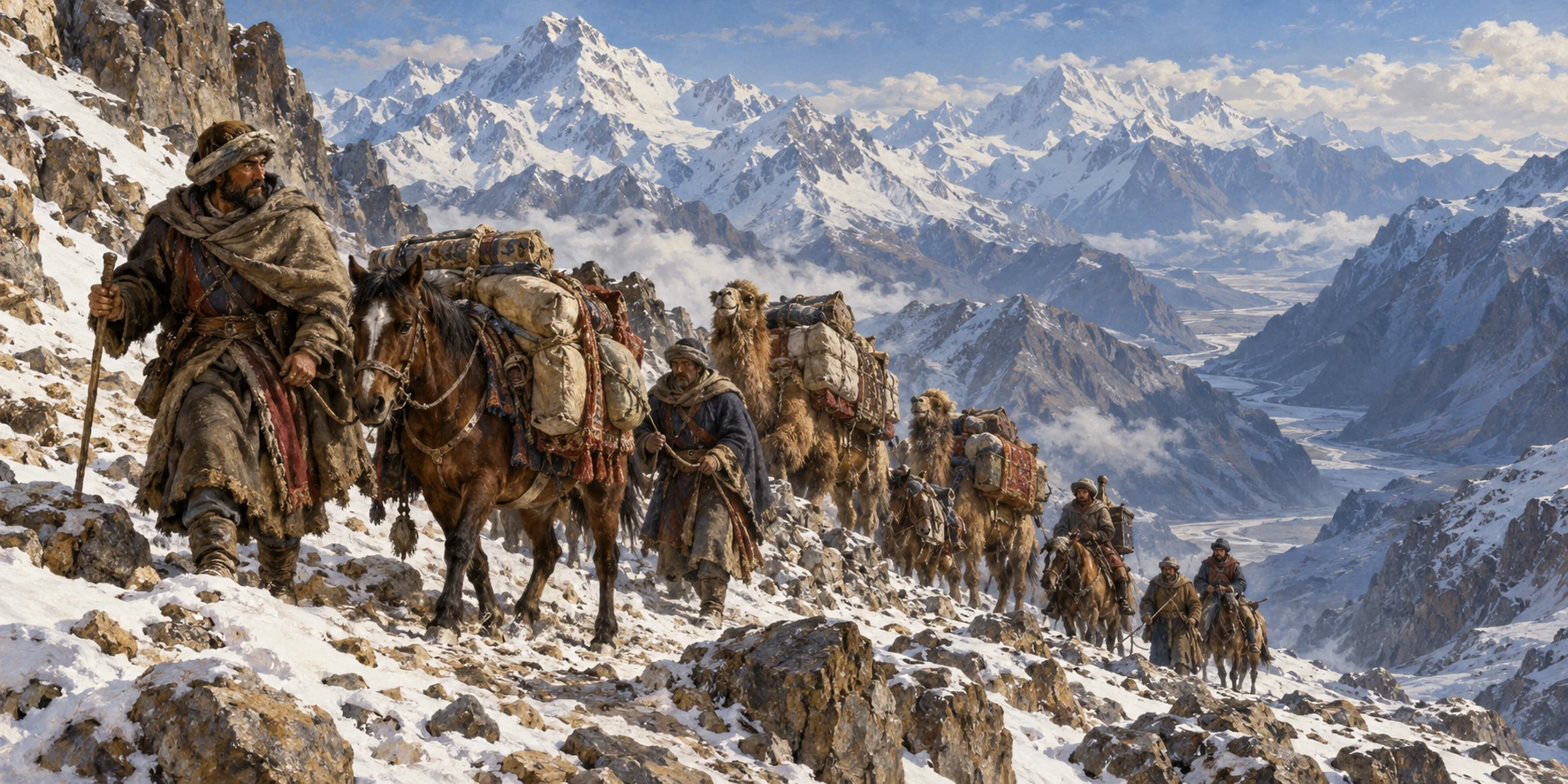
The route climbs into high mountain country. Polo describes a cold, elevated region with little settlement and difficult conditions for travellers. The precise mountain passes the Polos followed remain uncertain. Beyond these heights, the road descends toward the oasis towns around the Tarim Basin.
Historical dates and route context
Intermediate months schedule the story and are estimates; the route is a representative reconstruction. Court scenes give context without inventing individual missions.
AI-generated reconstruction for Histlas, 2026. People, ships and settings are illustrative, not eyewitness records or exact likenesses.
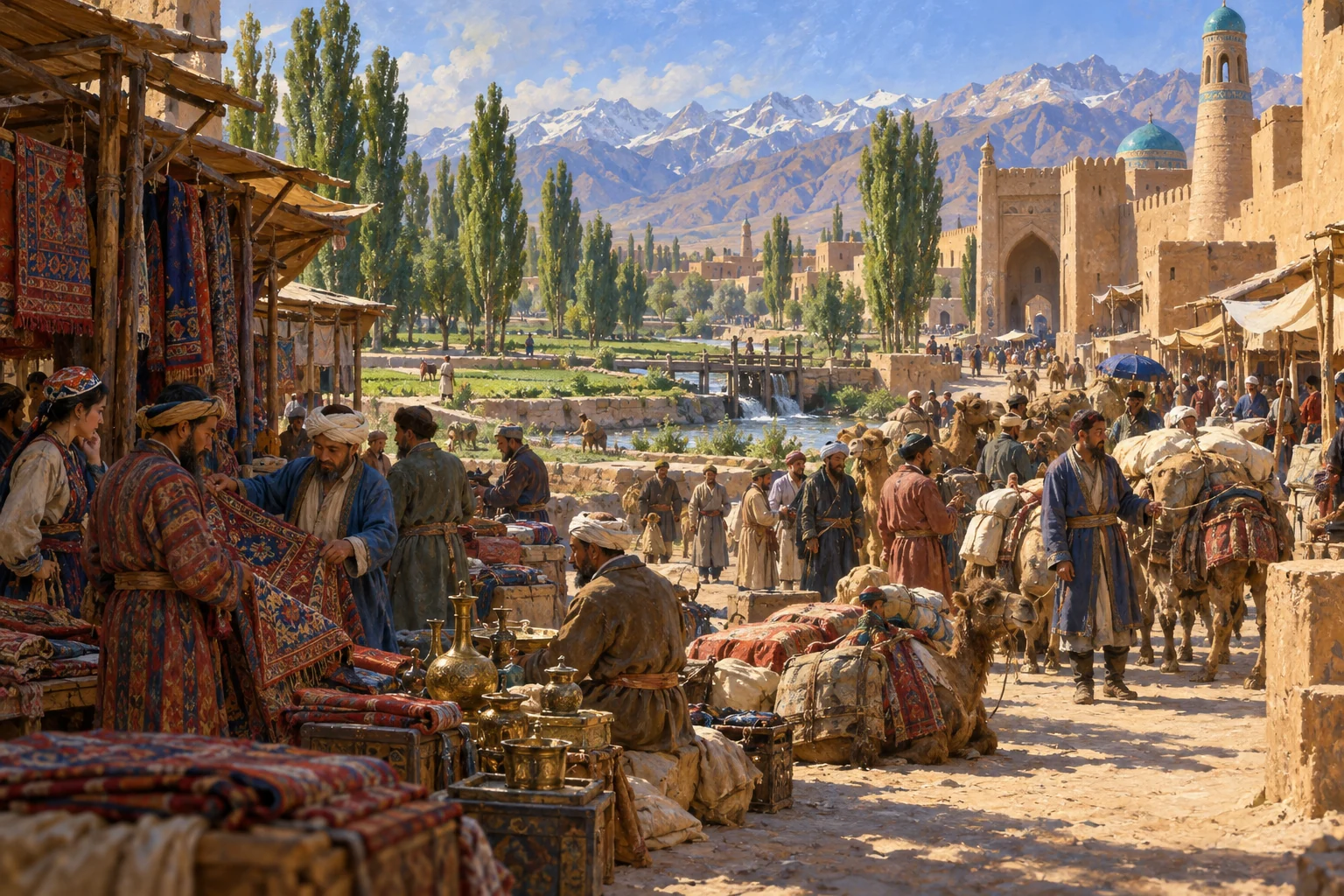
At Kashgar, the mountain journey meets the oasis world. Cultivated land and markets provide a contrast to the country just crossed. The Polos continue toward Hotan, following routes along the southern edge of the desert. Water and inhabited settlements determine where a caravan can go.
Historical dates and route context
Intermediate months schedule the story and are estimates; the route is a representative reconstruction. Court scenes give context without inventing individual missions.
The desert and oasis routes — AI-generated reconstruction for Histlas, 2026. People, vessels and settings are illustrative, not eyewitness records or exact likenesses.
Polo’s book warns of a desert where a traveller separated from companions might hear mysterious voices. That is his account’s mixture of observation, warning and legend. The practical danger is clear enough: lose the caravan or miss the water, and the journey can end. The family continues east toward the towns of the Gansu corridor.
Historical dates and route context
Intermediate months schedule the story and are estimates; the route is a representative reconstruction. Court scenes give context without inventing individual missions.
AI-generated reconstruction for Histlas, 2026. People, ships and settings are illustrative, not eyewitness records or exact likenesses.
At Ganzhou, today’s Zhangye, the account says the Polos remain for about a year on business. The exact timing of that long stay is uncertain. By the time they reach Kublai’s court around 1275, roughly four years have passed since leaving Venice. Much of that time has been spent waiting, recovering or trading rather than simply covering distance.
Historical dates and route context
Intermediate months schedule the story and are estimates; the route is a representative reconstruction. Court scenes give context without inventing individual missions.
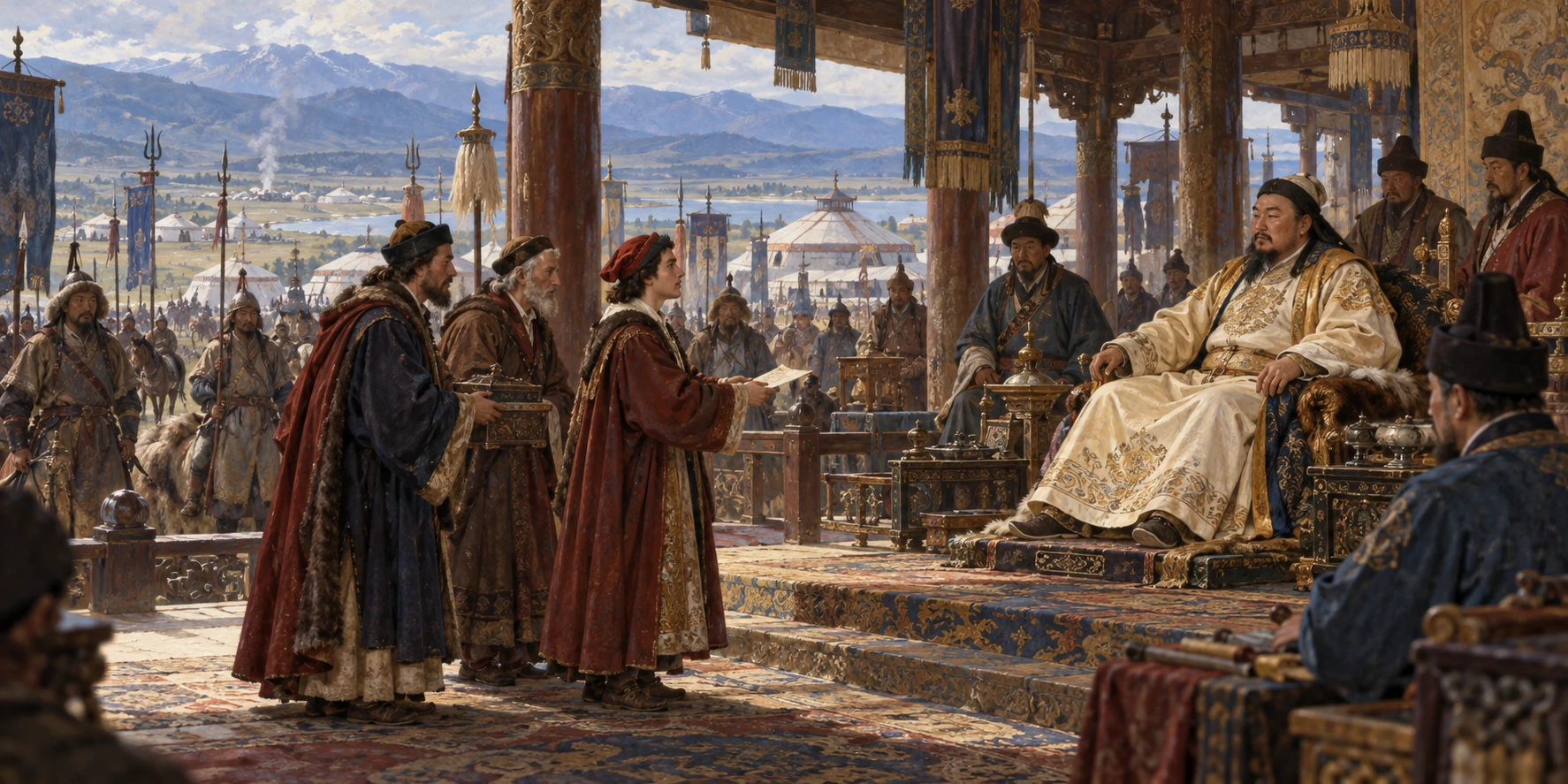
An audience at Kublai Khan’s court — AI-generated reconstruction for Histlas, 2026. People, vessels and settings are illustrative, not eyewitness records or exact likenesses.
Around 1275, the Polos reach Kublai Khan at his summer residence, Shangdu, later known in Europe as Xanadu. They present their messages and gifts. According to the account, Marco attracts the ruler’s interest and begins learning the languages and customs needed at court. The long outward journey has reached its destination.
Historical dates and route context
Intermediate months schedule the story and are estimates; the route is a representative reconstruction. Court scenes give context without inventing individual missions.
AI-generated reconstruction for Histlas, 2026. People, ships and settings are illustrative, not eyewitness records or exact likenesses.
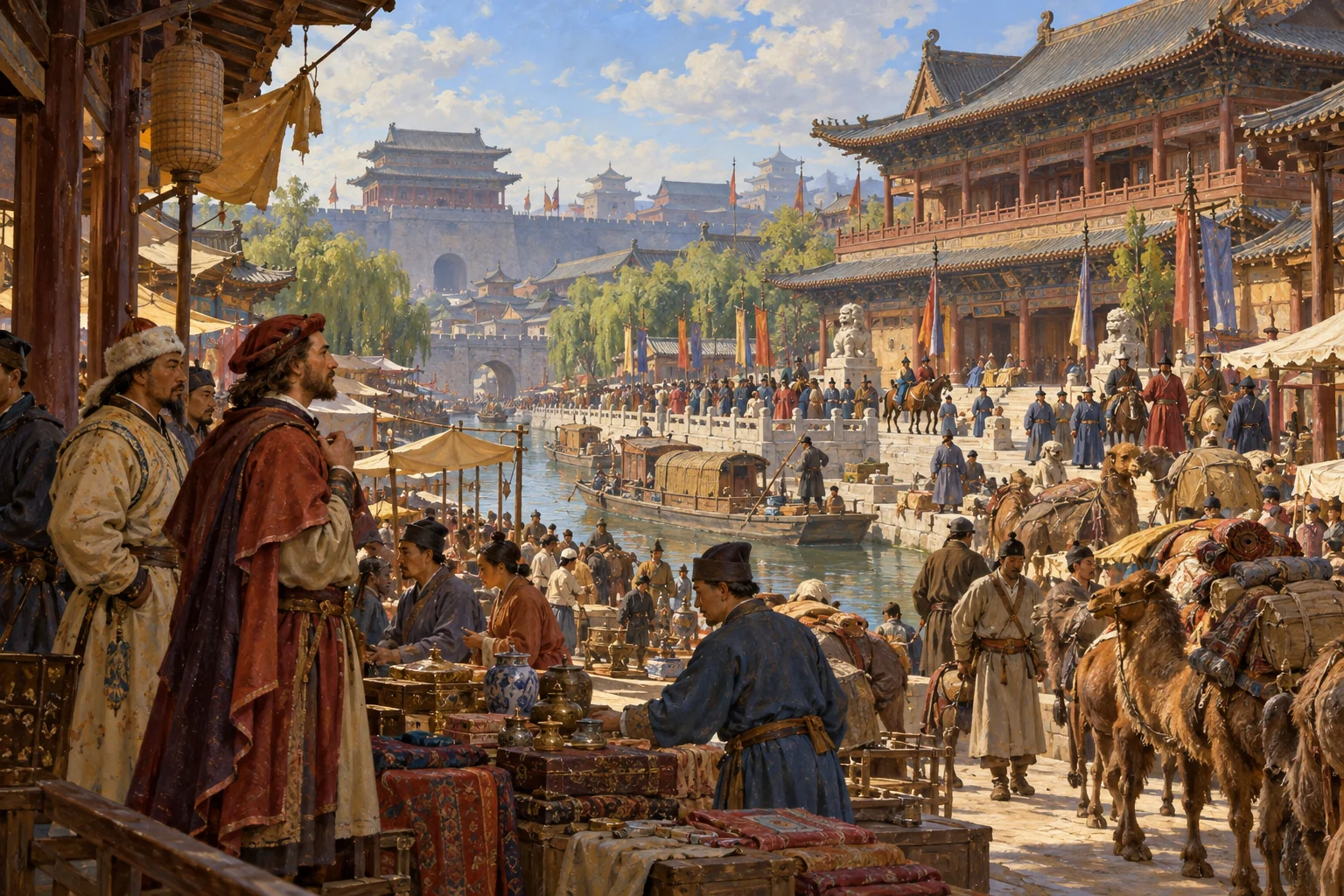
The court also resides at Dadu, now Beijing. The Polos spend approximately sixteen or seventeen years in Kublai Khan’s domains before their departure around 1291 or 1292. That is most of their time away from Venice. Marco’s account presents him as a trusted traveller in imperial service, but the exact offices he held and dates of individual missions remain debated. Only scattered details survive from those years in the Khan’s domains.
Historical dates and route context
Intermediate months schedule the story and are estimates; the route is a representative reconstruction. Court scenes give context without inventing individual missions.
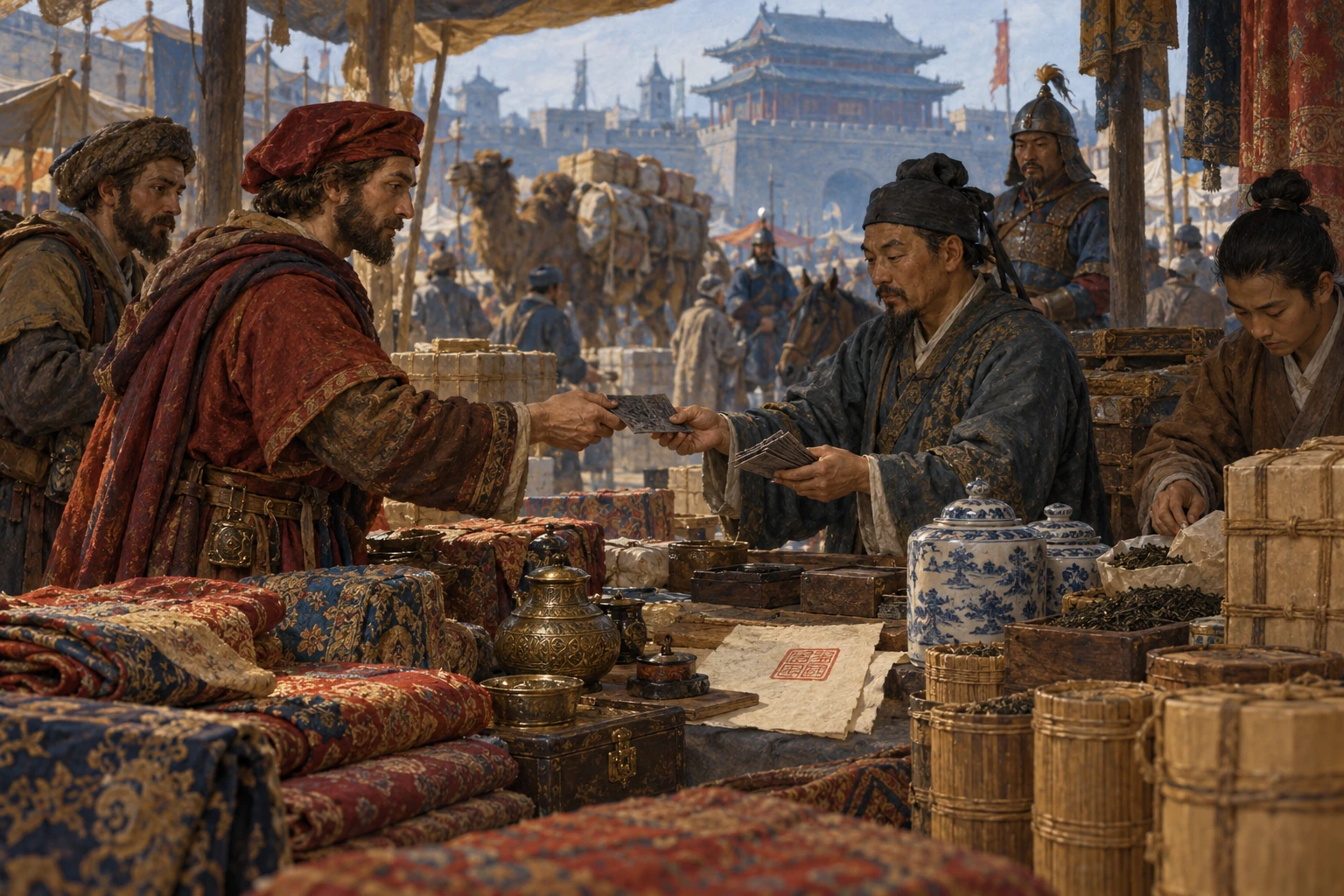
Paper money in Yuan China — AI-generated reconstruction for Histlas, 2026. People, objects and settings are illustrative, not eyewitness records or exact likenesses.
One of Polo’s most striking observations is money made from paper. He describes sheets marked and sealed under the Great Khan’s authority, accepted in payment across his domains. To a reader accustomed to precious-metal coins, that is a remarkable way to organise an economy. Polo did not invent paper money or introduce it to China. His contribution was to describe an established Asian practice to a wider European readership.
Historical dates and route context
Intermediate months schedule the story and are estimates; the route is a representative reconstruction. Court scenes give context without inventing individual missions.
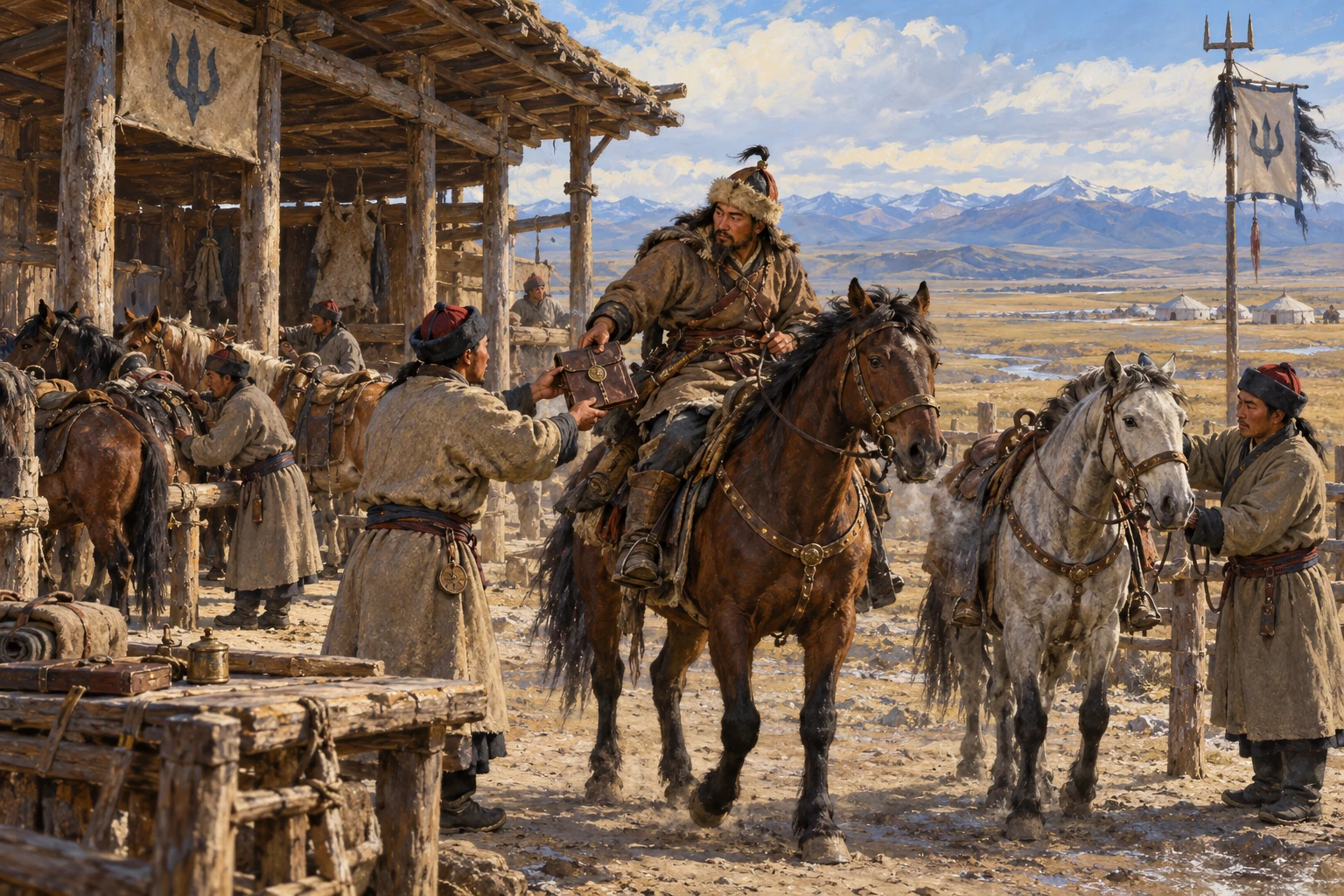
The imperial horse-relay network — AI-generated reconstruction for Histlas, 2026. People, objects and settings are illustrative, not eyewitness records or exact likenesses.
Polo describes relay stations with spare horses, food and lodging for imperial messengers. A courier can change mounts instead of exhausting one horse on an enormous journey. This infrastructure helps explain how the Mongol state governs distance. Travel credentials, often called paiza, give authorised travellers access to support. These are observations of an organised system, rather than Marco’s own discoveries.
Historical dates and route context
Date places this topic within the years in Asia; it does not establish a visit or discovery in this exact year.
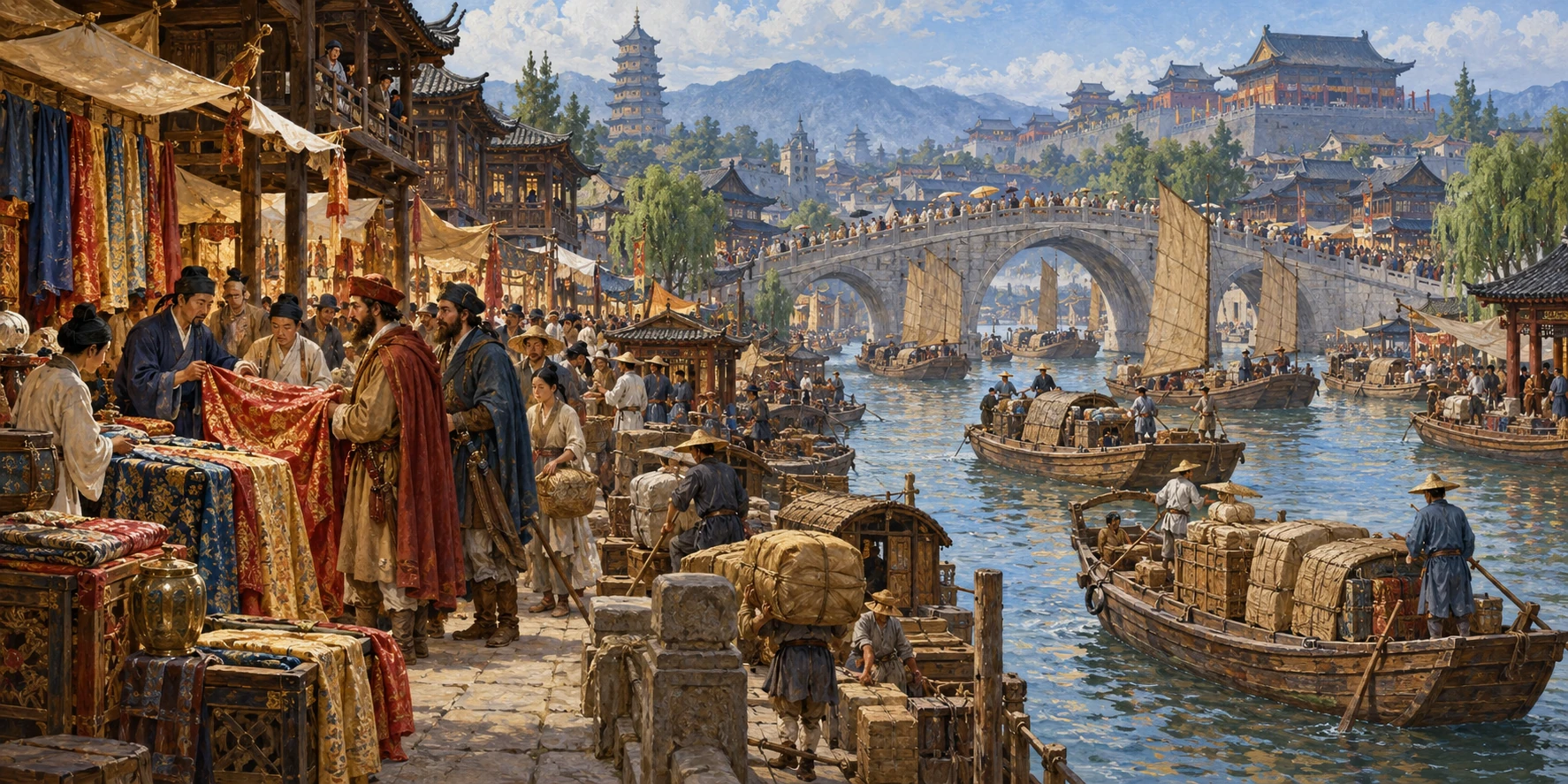
Hangzhou: canals and commerce — AI-generated reconstruction for Histlas, 2026. People, objects and settings are illustrative, not eyewitness records or exact likenesses.
Polo devotes an extraordinary description to Kinsay, usually identified with Hangzhou, the former Southern Song capital. He writes about canals, markets, bridges and specialised trades. Some numbers are exaggerated, and the precise dates of any visits are unknown. The importance is the picture of a large urban economy: Asian cities were centres of sophisticated production and trade, not merely distant sources of exotic luxuries.
Historical dates and route context
Date places this topic within the years in Asia; it does not establish a visit or discovery in this exact year.
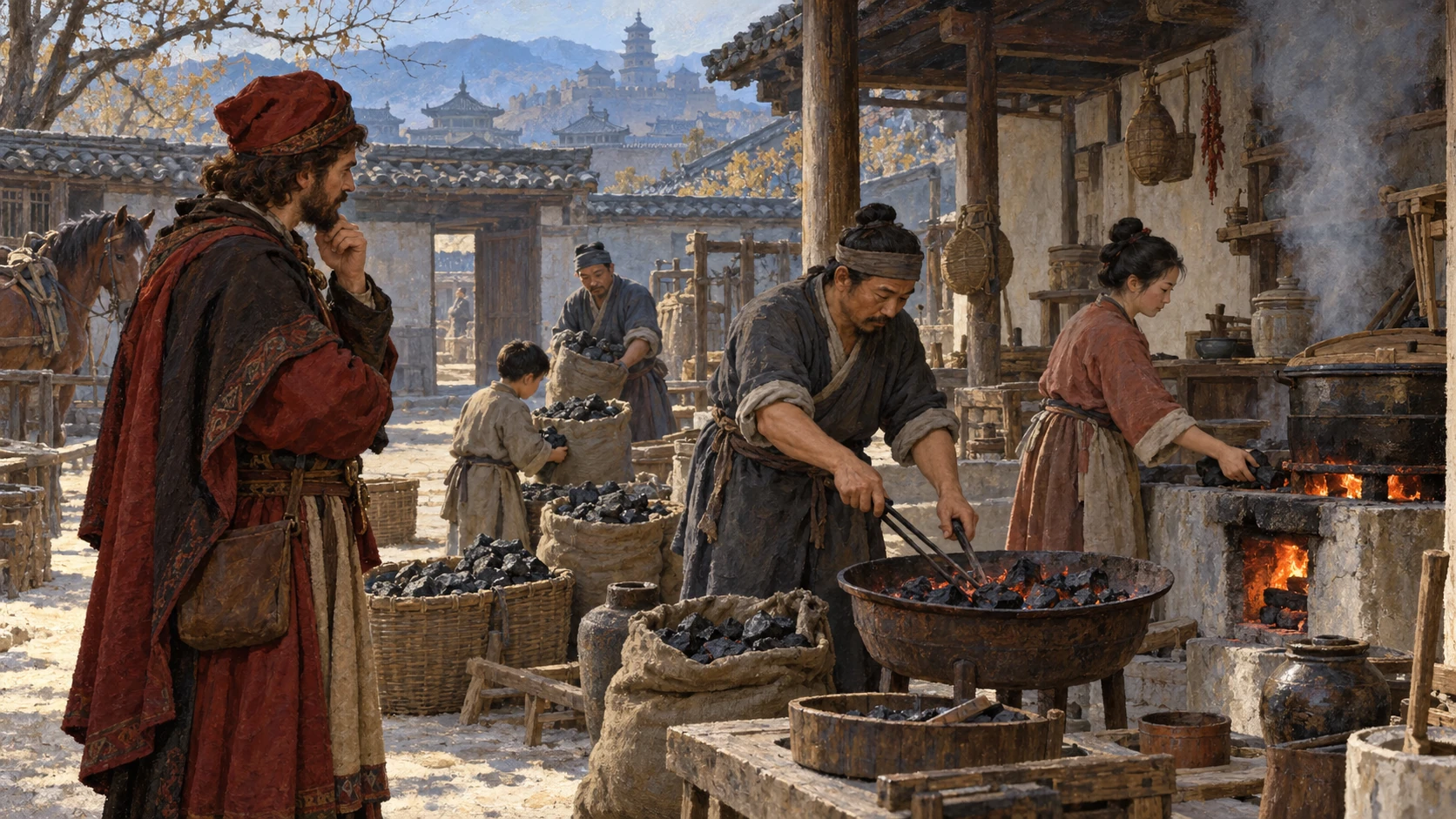
Coal as fuel in Yuan China — AI-generated reconstruction for Histlas, 2026. People, objects and settings are illustrative, not eyewitness records or exact likenesses.
Another memorable passage describes black stones dug from the earth that burn and keep their heat. Polo is describing coal used as fuel. Coal was already known elsewhere, including Europe; this is not its discovery. What impressed him was its use in the society he described. Along with paper money and urban commerce, it gave readers concrete details of daily life beyond the Mediterranean.
Historical dates and route context
Date places this topic within the years in Asia; it does not establish a visit or discovery in this exact year.
AI-generated reconstruction for Histlas, 2026. People, ships and settings are illustrative, not eyewitness records or exact likenesses.
Not every place in the book is a place Marco personally visited. Some descriptions come from other people, including the account of Japan. His narrative combines experiences, reports and stories collected over many years. Its breadth is valuable, but it also makes separating eyewitness testimony from hearsay essential.
Historical dates and route context
Intermediate months schedule the story and are estimates; the route is a representative reconstruction. Court scenes give context without inventing individual missions.
The ocean-going Chinese return fleet — AI-generated reconstruction for Histlas, 2026. People, vessels and settings are illustrative, not eyewitness records or exact likenesses.
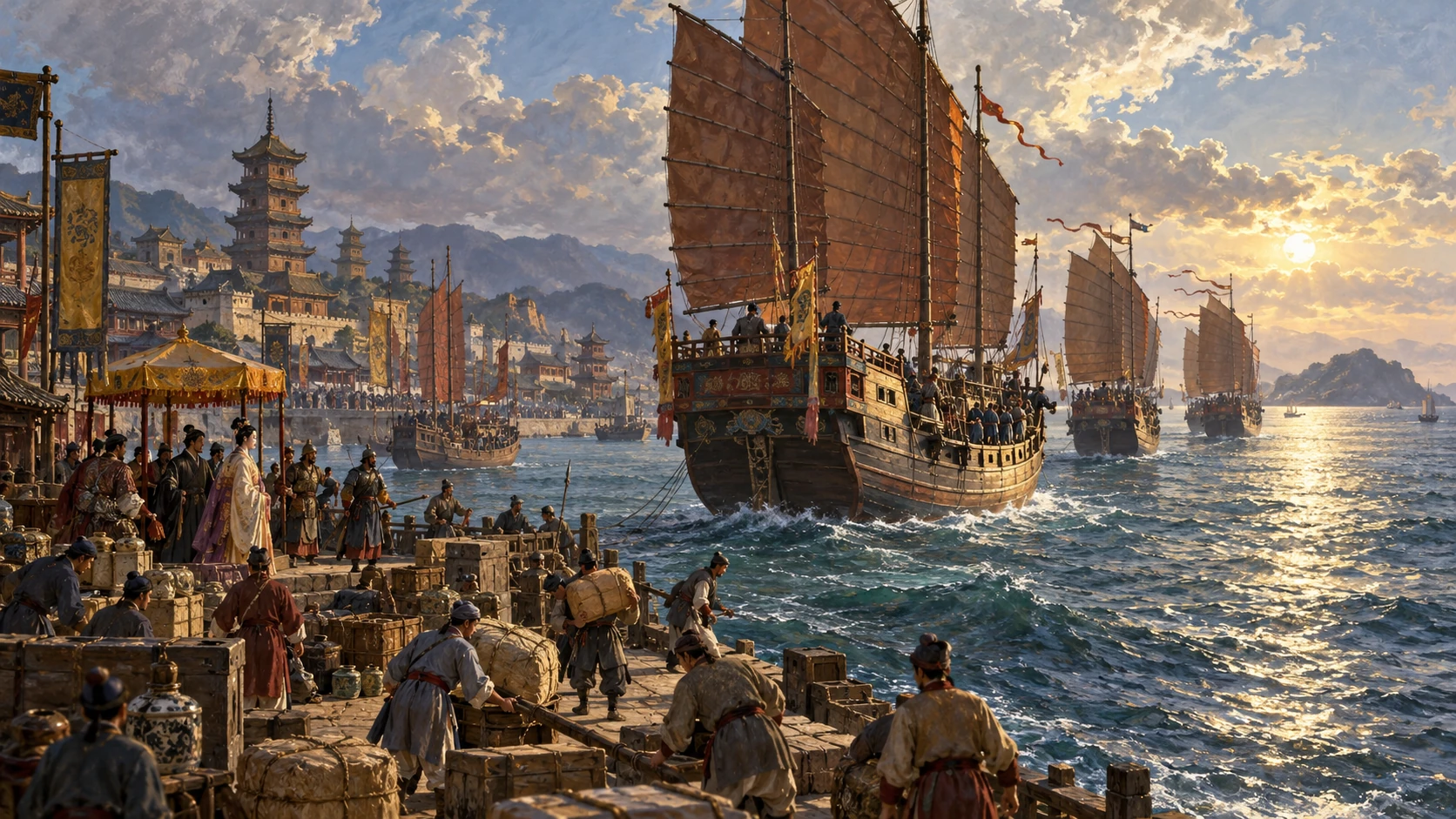
Around 1291 or 1292, the Polos leave China. Their account connects the departure with a mission to escort the Mongol princess Kökejin toward Persia for a dynastic marriage. They sail from the port called Zaytun, usually identified with Quanzhou. This time the homeward route begins aboard ocean-going Chinese ships.
Historical dates and route context
Intermediate months schedule the story and are estimates; the route is a representative reconstruction. Court scenes give context without inventing individual missions.
AI-generated reconstruction for Histlas, 2026. People, ships and settings are illustrative, not eyewitness records or exact likenesses.
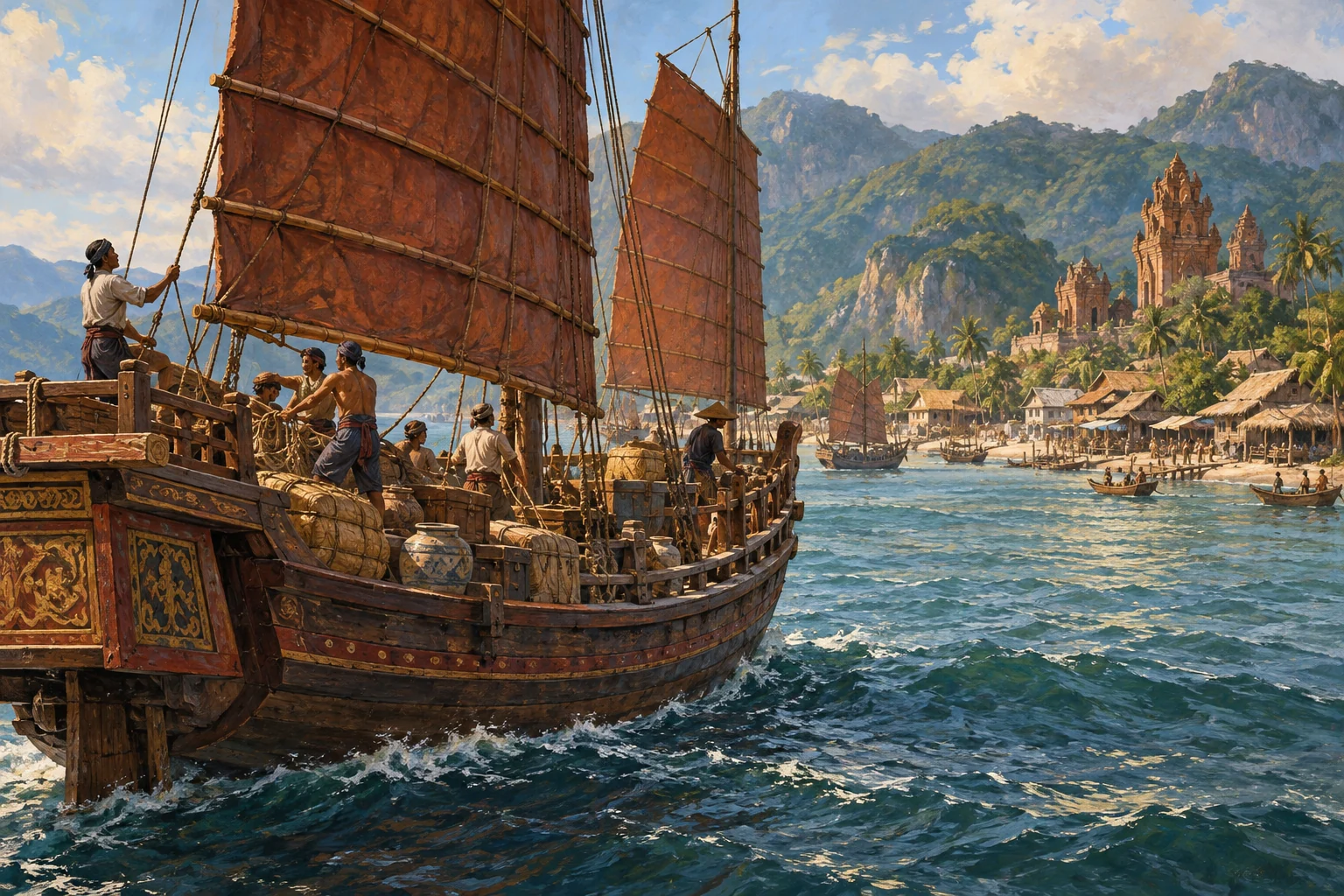
The ships follow the maritime trading world of Southeast Asia, passing the coast of Champa in present-day Vietnam. Harbours connect inland products with distant markets. The journey is governed by weather and seasonal winds, and the exact course of this passage is uncertain.
Historical dates and route context
Intermediate months schedule the story and are estimates; the route is a representative reconstruction. Court scenes give context without inventing individual missions.
The monsoon wait in Sumatra — AI-generated reconstruction for Histlas, 2026. People, vessels and settings are illustrative, not eyewitness records or exact likenesses.
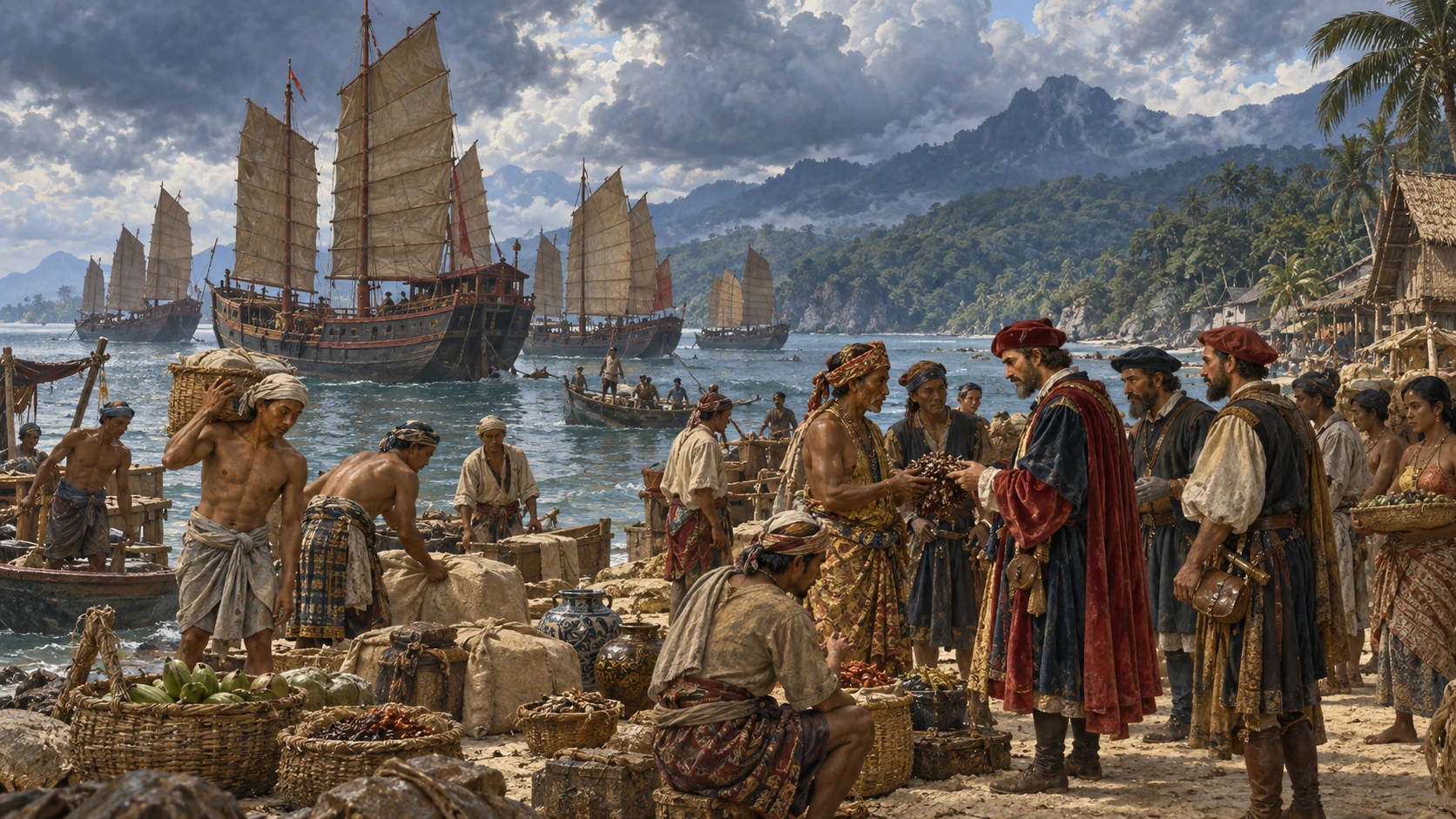
In northern Sumatra, Polo reports that the party waits for about five months. The monsoon can make a long ocean passage possible or force a fleet to remain at anchor. This pause is part of the voyage, not a detour without consequence: supplies, health and the changing wind now determine when they can leave.
Historical dates and route context
Intermediate months schedule the story and are estimates; the route is a representative reconstruction. Court scenes give context without inventing individual missions.
AI-generated reconstruction for Histlas, 2026. People, ships and settings are illustrative, not eyewitness records or exact likenesses.
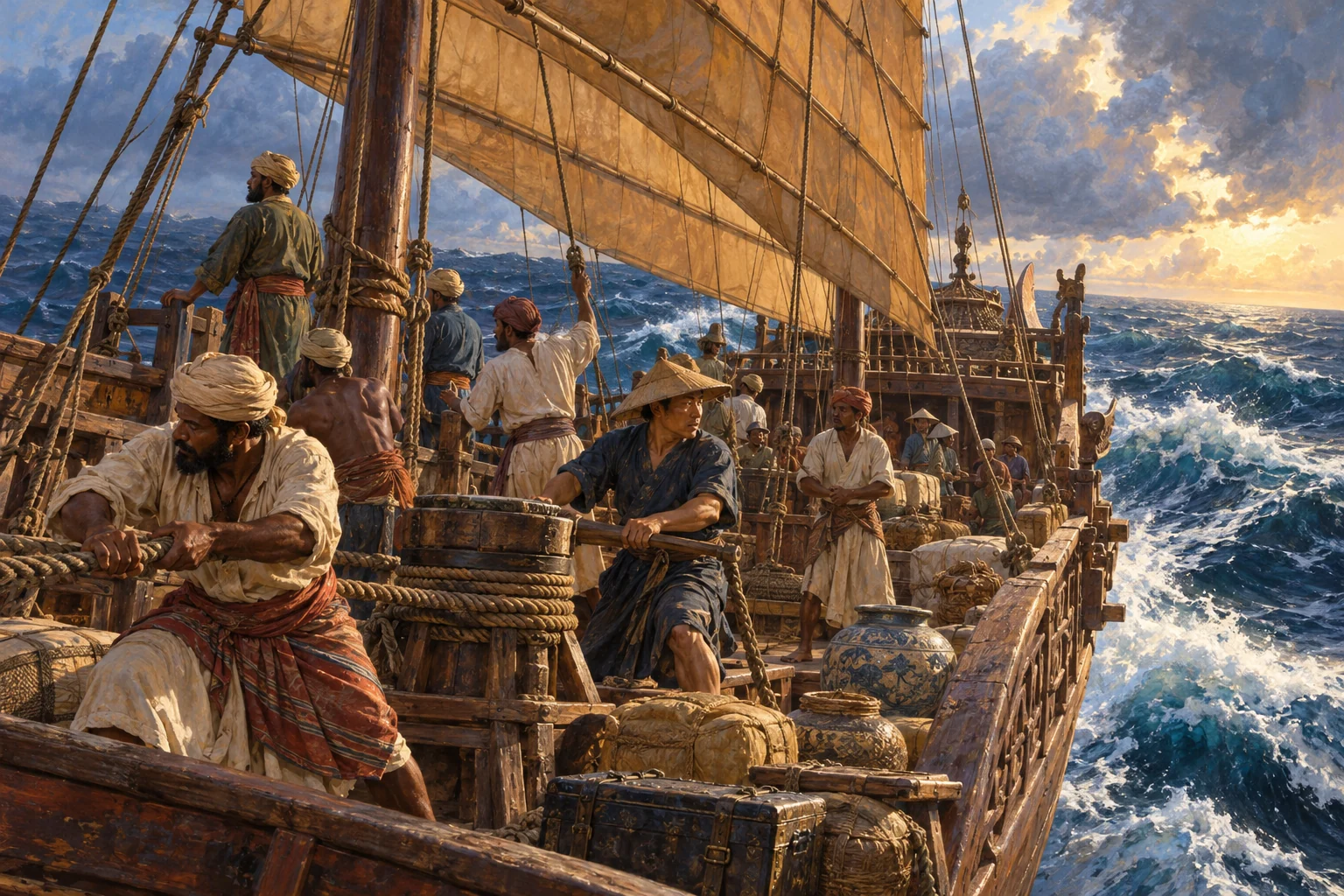
When conditions permit, the voyage continues across the Indian Ocean. Polo’s return account describes Sri Lanka and the Indian coasts, with their trade, beliefs and valuable commodities. The surviving narrative does not establish every landing or its date.
Historical dates and route context
Intermediate months schedule the story and are estimates; the route is a representative reconstruction. Court scenes give context without inventing individual missions.
AI-generated reconstruction for Histlas, 2026. People, ships and settings are illustrative, not eyewitness records or exact likenesses.
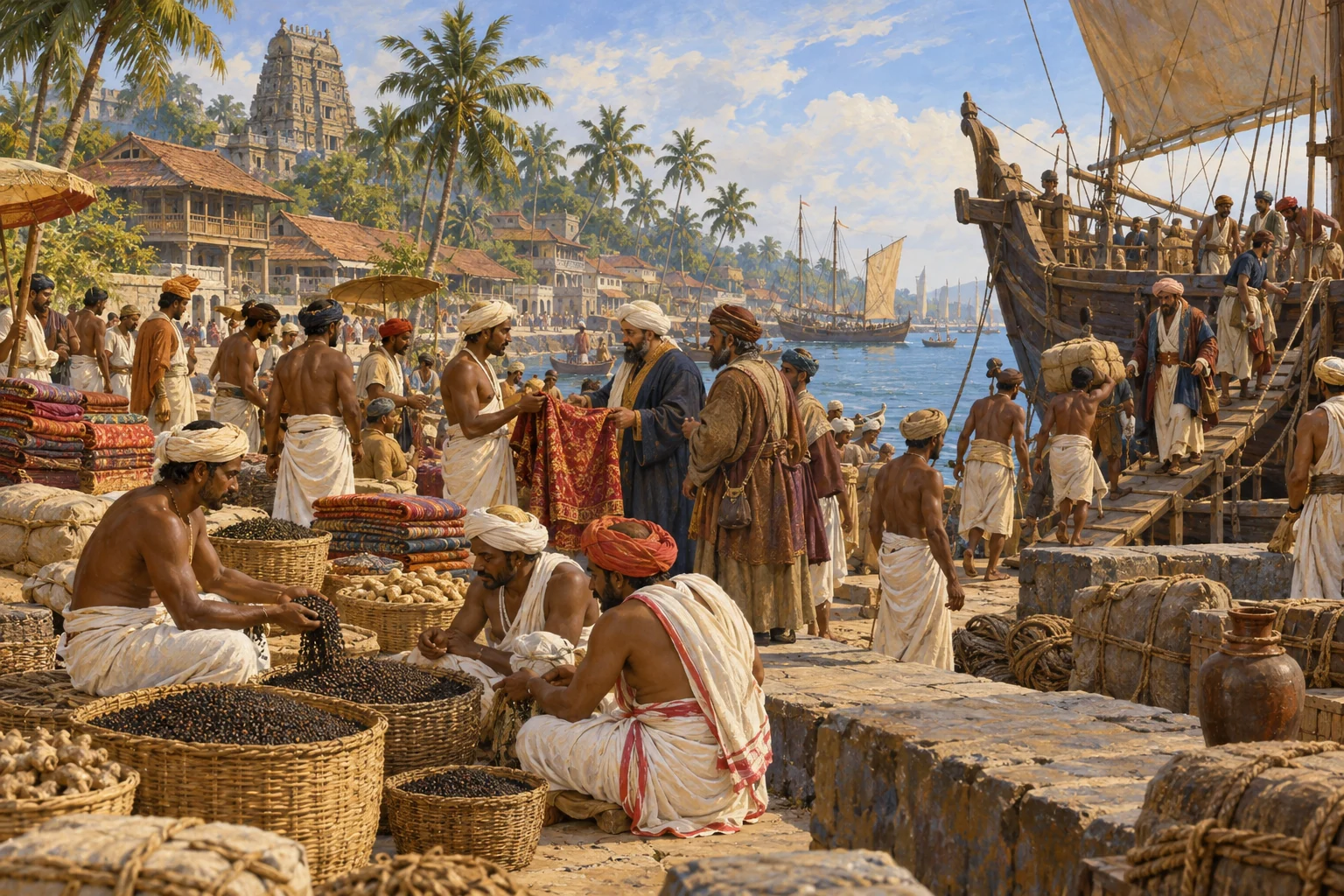
The western coast of India belongs to a commercial network linking the Arabian Sea with ports much farther east. Ships carry goods that cross several seas before reaching Mediterranean markets. The Polos are moving through that existing world of exchange, drawing nearer to Persia and the overland roads toward home.
Historical dates and route context
Intermediate months schedule the story and are estimates; the route is a representative reconstruction. Court scenes give context without inventing individual missions.
AI-generated reconstruction for Histlas, 2026. People, ships and settings are illustrative, not eyewitness records or exact likenesses.
The party reaches Persia after a difficult sea journey. In the account, the ruler for whom Kökejin’s marriage was intended has died, and arrangements are changed. The Polos’ escort mission ends here. Their own journey continues north, toward Tabriz and the Black Sea.
Historical dates and route context
Intermediate months schedule the story and are estimates; the route is a representative reconstruction. Court scenes give context without inventing individual missions.
AI-generated reconstruction for Histlas, 2026. People, ships and settings are illustrative, not eyewitness records or exact likenesses.
Travelling through Persia, the Polos return to an overland route. At Trebizond, today’s Trabzon, the Black Sea reconnects them with Mediterranean commerce. After so many years in Asia, the sea roads toward Constantinople and Venice are finally within reach.
Historical dates and route context
Intermediate months schedule the story and are estimates; the route is a representative reconstruction. Court scenes give context without inventing individual missions.
AI-generated reconstruction for Histlas, 2026. People, ships and settings are illustrative, not eyewitness records or exact likenesses.
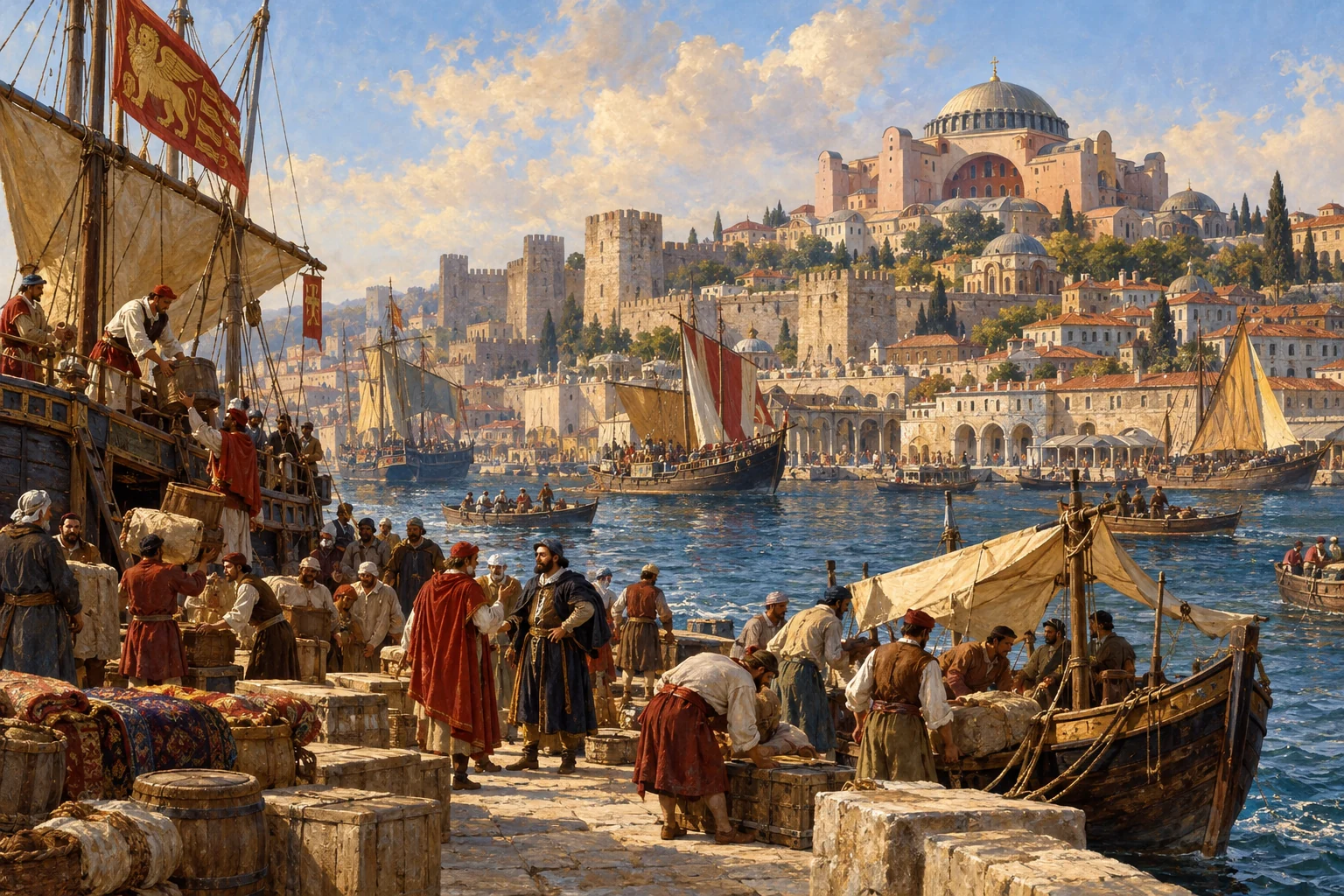
From the Black Sea, the homeward passage leads through Constantinople and toward the Adriatic. Ships and crews change along the way as the family joins successive passages towards home. The family is nearing the city it left more than two decades earlier.
Historical dates and route context
Intermediate months schedule the story and are estimates; the route is a representative reconstruction. Court scenes give context without inventing individual missions.
AI-generated reconstruction for Histlas, 2026. People, ships and settings are illustrative, not eyewitness records or exact likenesses.
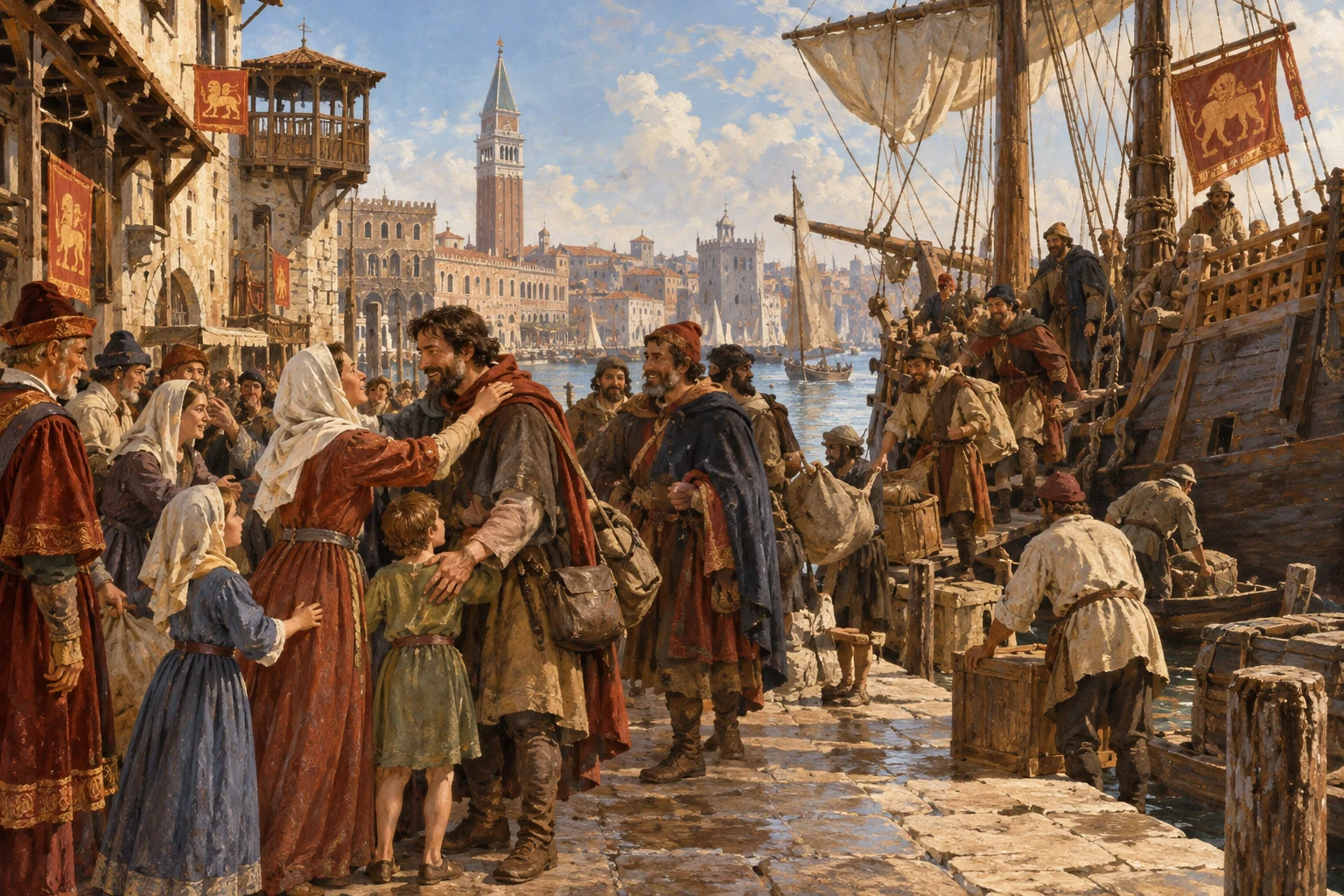
By 1295, Marco, his father and his uncle are back in Venice. They have spent roughly twenty-four years away. Later stories give their homecoming a dramatic flourish, but the secure conclusion is simpler: the long journey is over. The account that will make Marco famous has still to be written.
Historical dates and route context
Intermediate months schedule the story and are estimates; the route is a representative reconstruction. Court scenes give context without inventing individual missions.
Marco Polo and Rustichello making the book — AI-generated reconstruction for Histlas, 2026. People, vessels and settings are illustrative, not eyewitness records or exact likenesses.
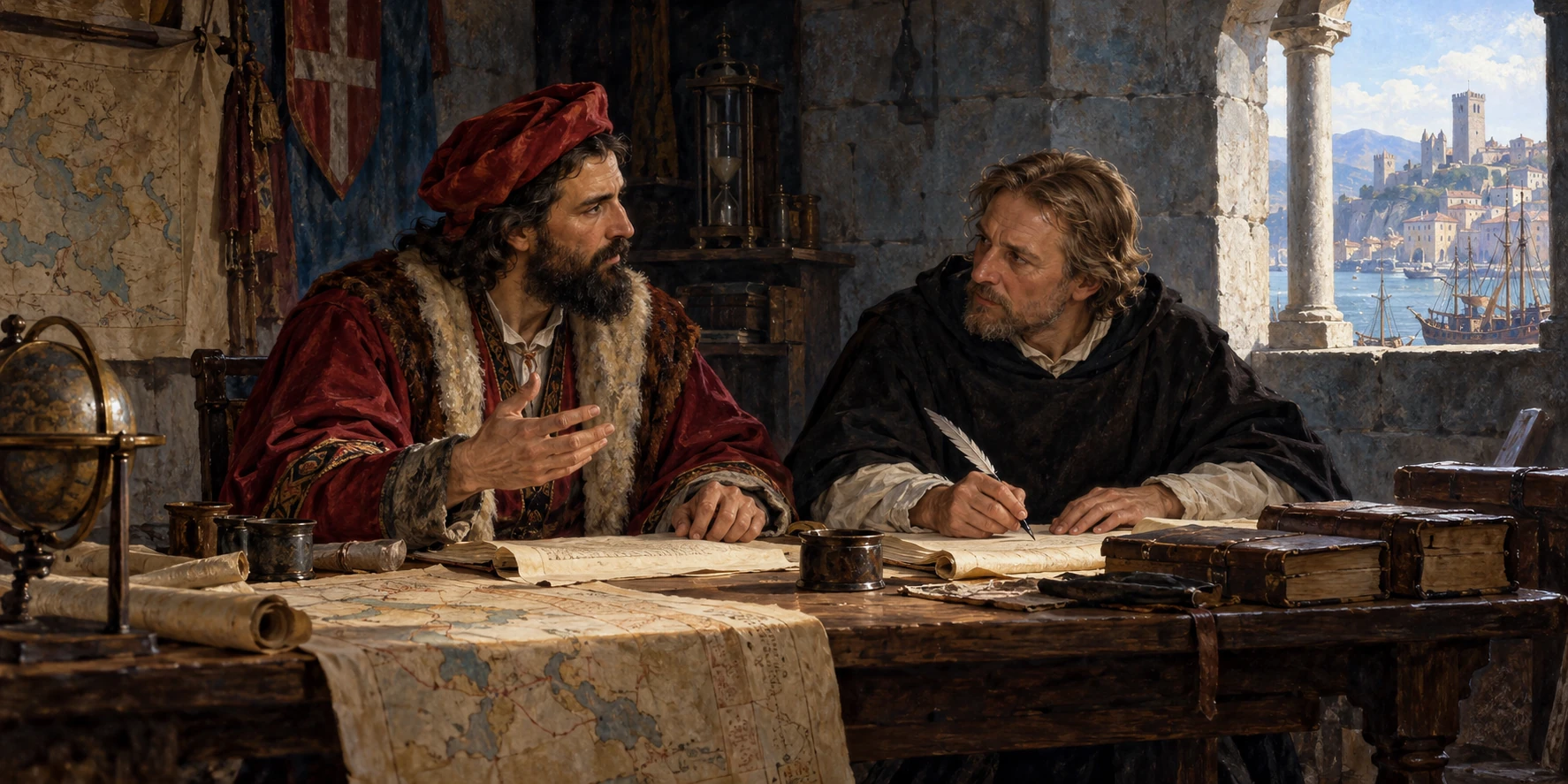
Around 1298, while imprisoned in Genoa, Marco collaborates with Rustichello of Pisa on the account we call The Travels. The exact circumstances of his capture are uncertain. Their book blends travel experience, practical information, hearsay and legend. It helps widen European knowledge of Asia, while leaving later readers the task of deciding what its many stories can prove.
Historical dates and route context
Intermediate months schedule the story and are estimates; the route is a representative reconstruction. Court scenes give context without inventing individual missions.