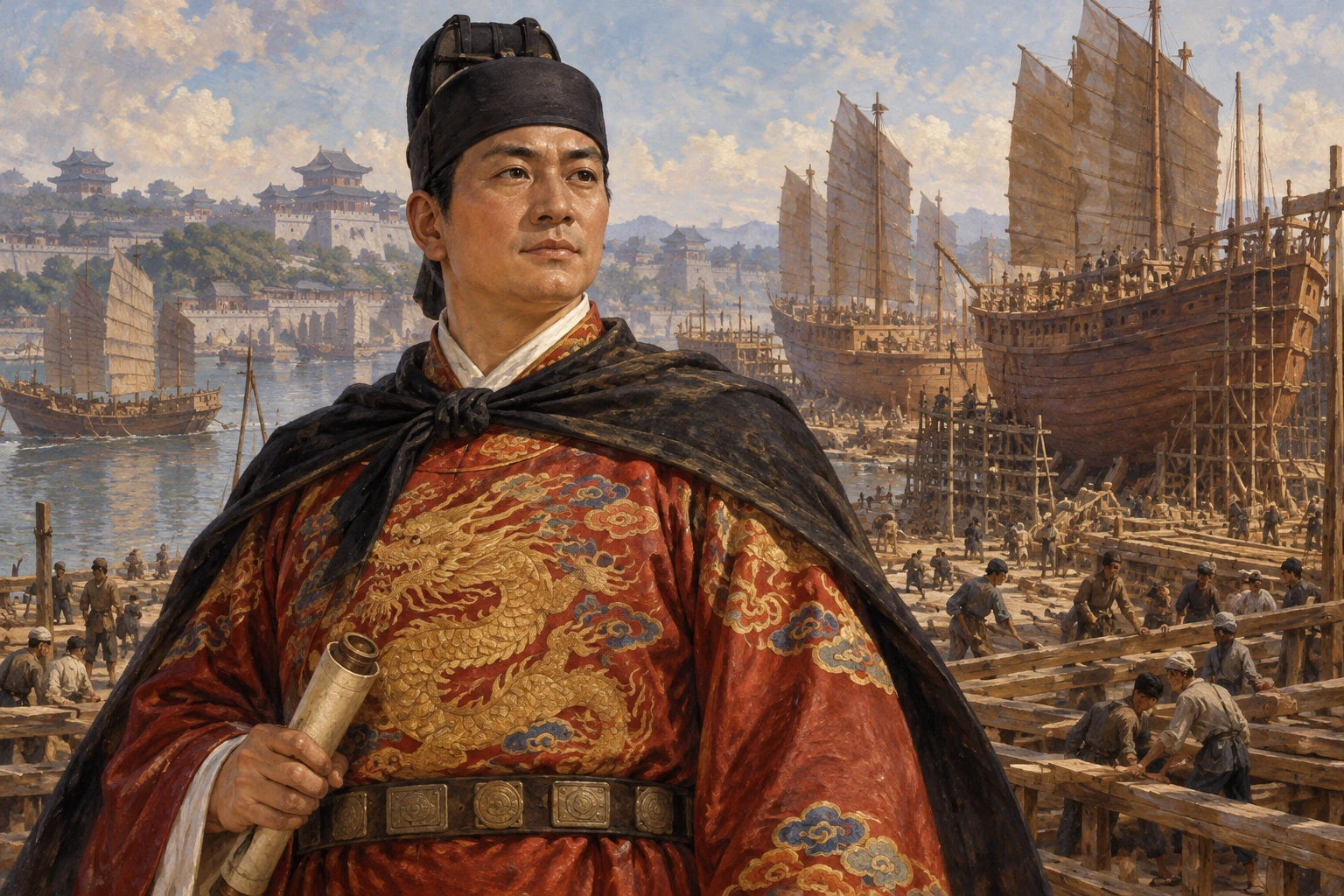
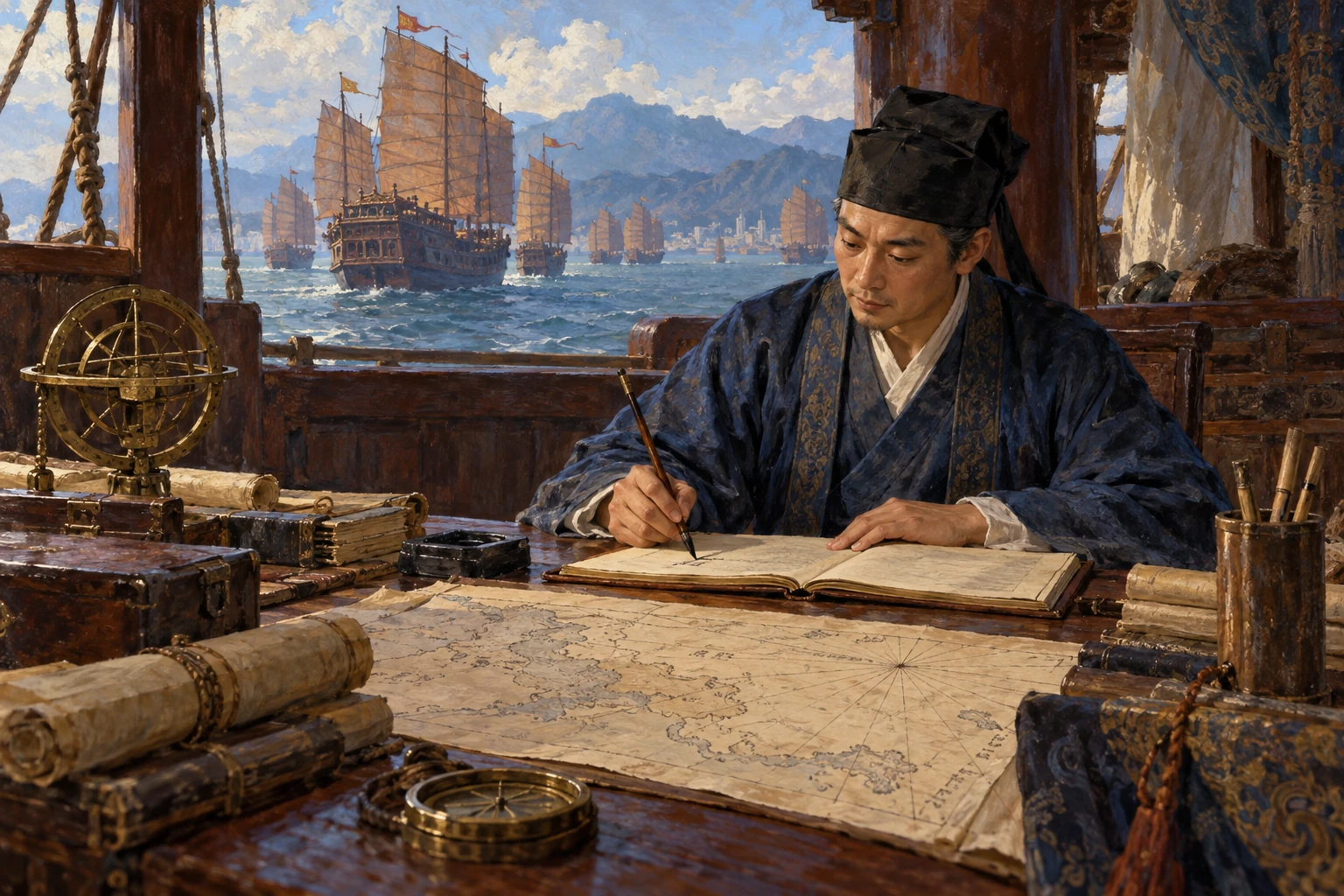
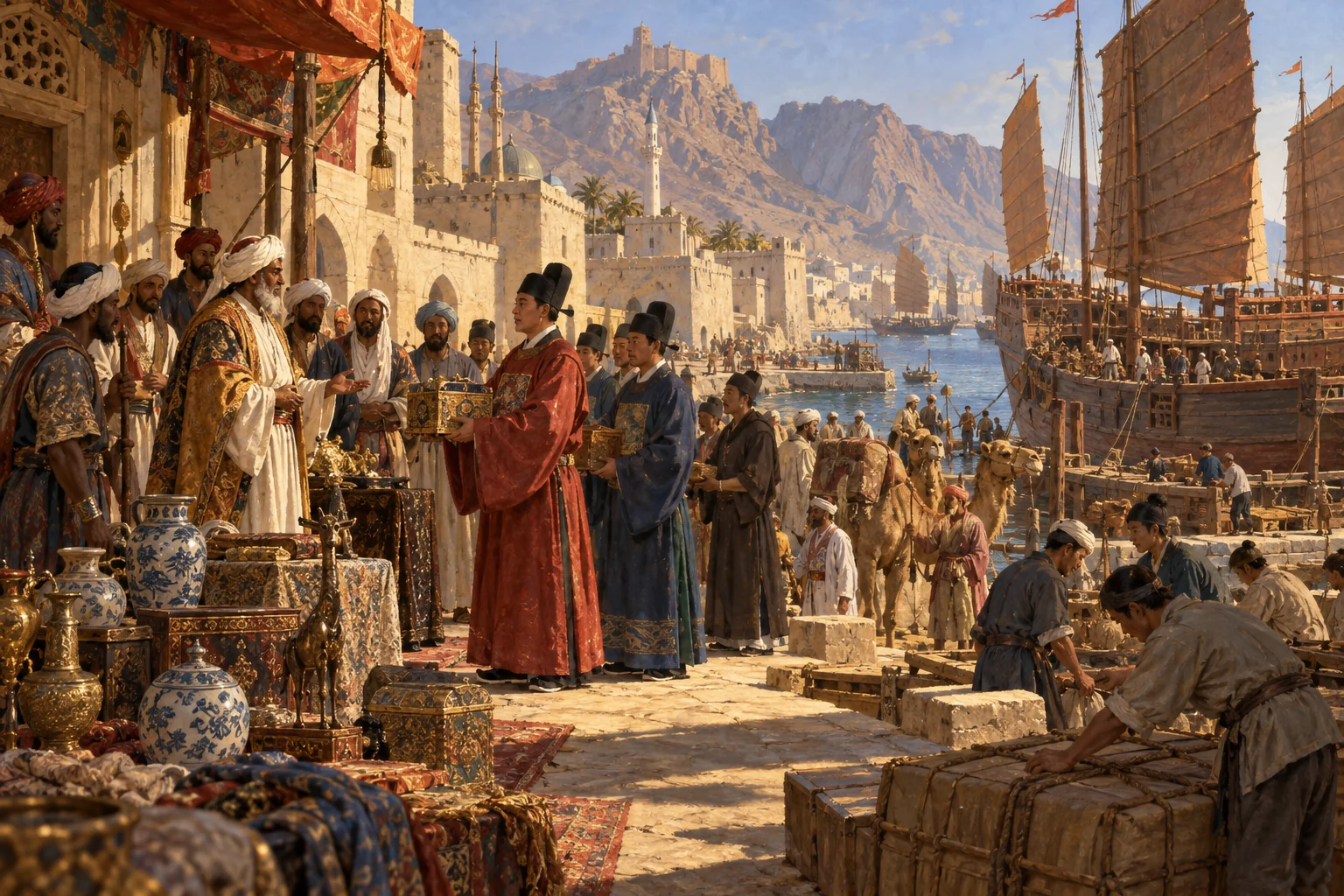
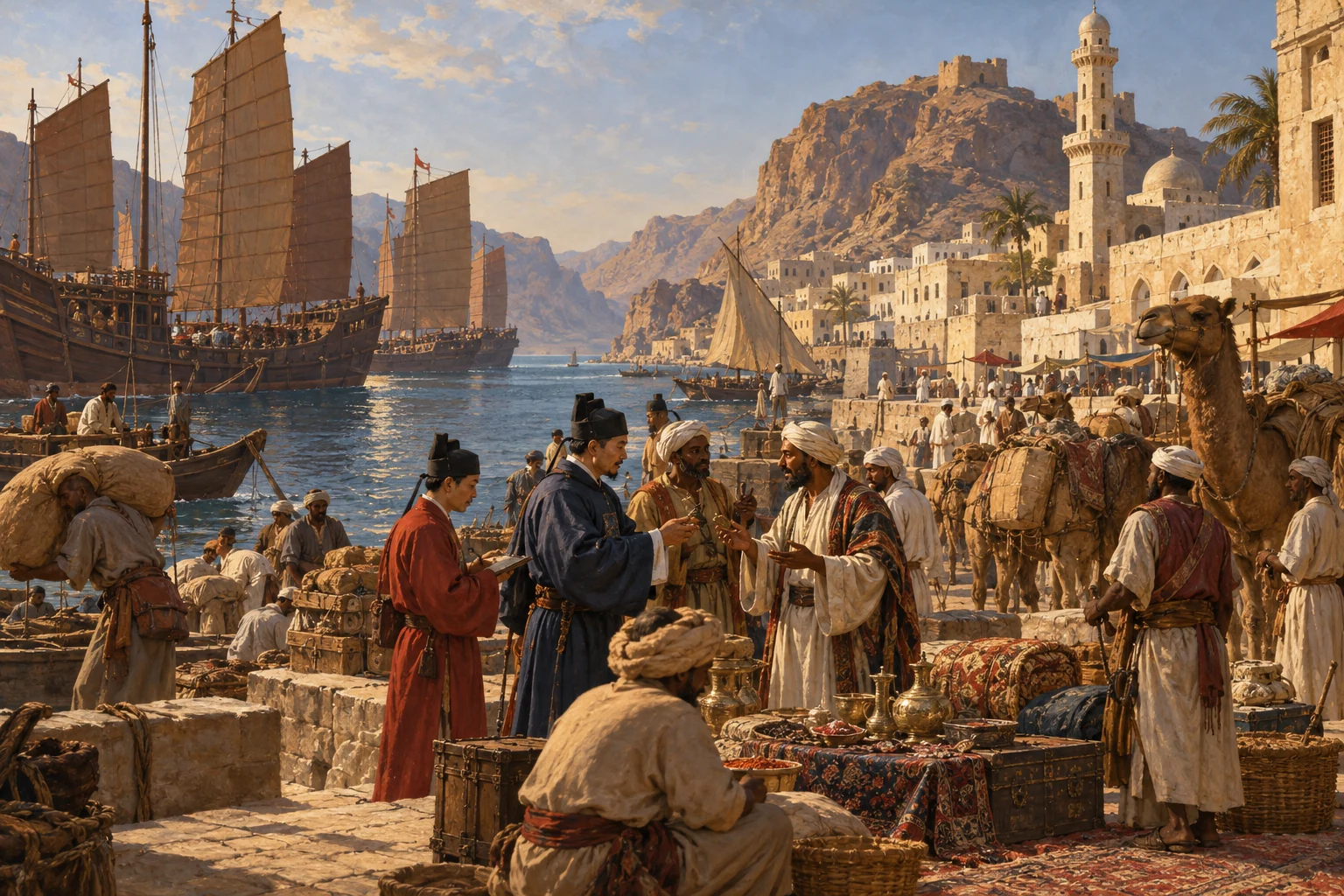
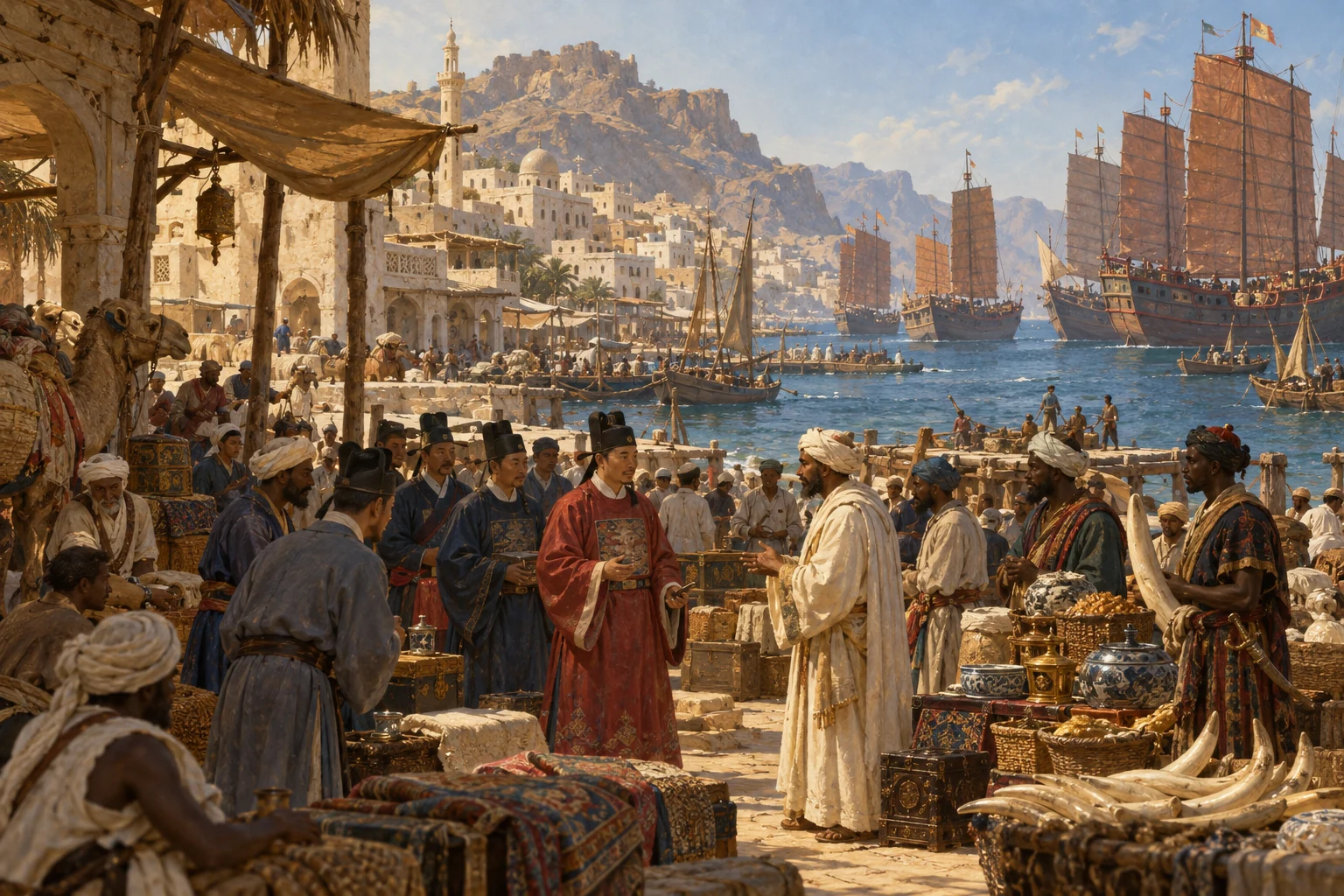
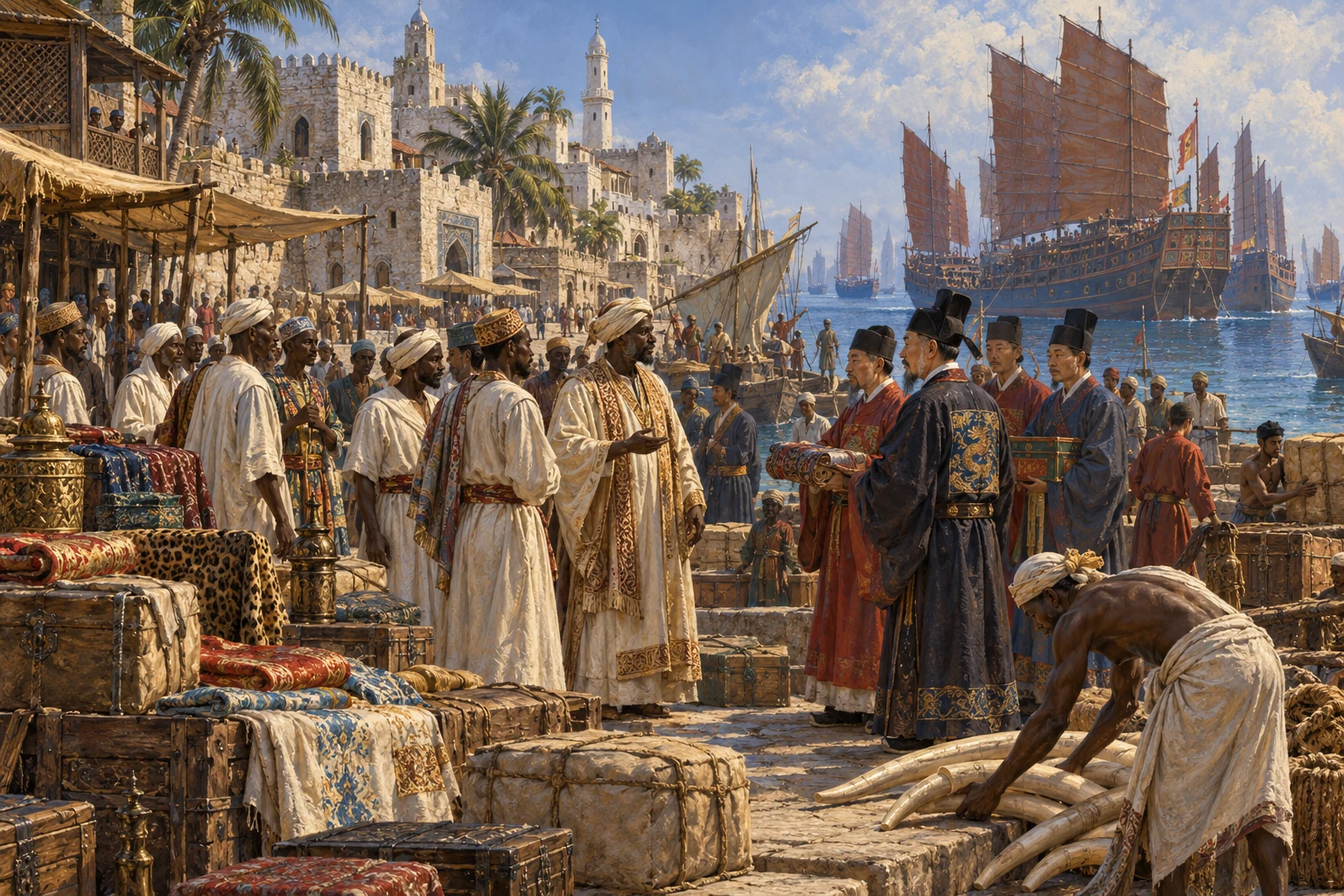
AI-generated reconstruction for Histlas, 2026. People, ships and settings are illustrative, not eyewitness records or exact likenesses. Imagined portrait of Zheng He around 1405.
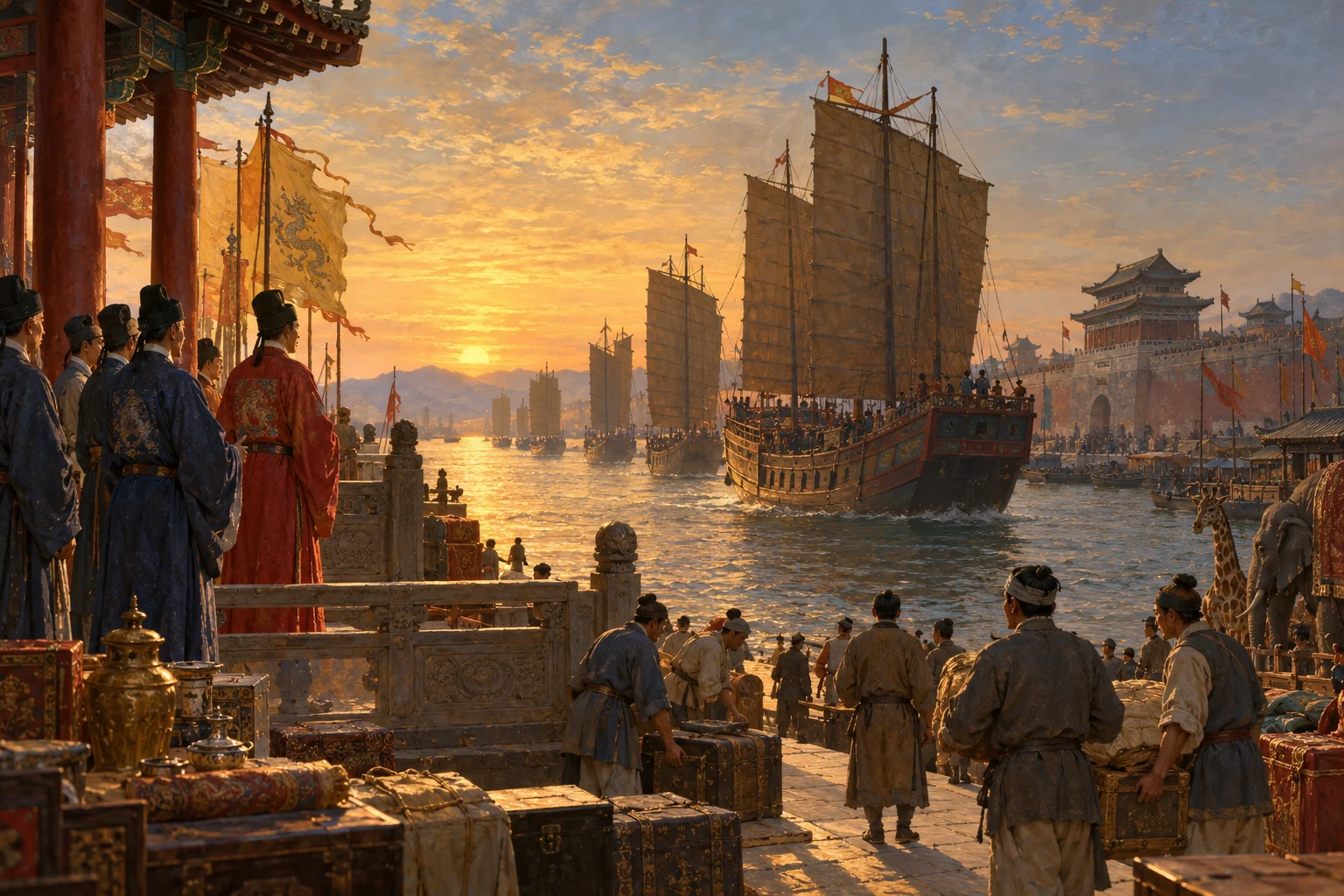
Zheng He is a Chinese admiral serving the Ming imperial court in the early fifteenth century. Between 1405 and 1433, the expeditions associated with his command will connect China with ports across the Indian Ocean, reaching Arabia and East Africa. They combine diplomacy, trade and displays of imperial power in a world already linked by sea routes. Born Ma He into a Muslim family, he rose through imperial service. We begin at Nanjing, before the first fleet departs.
Historical dates and route context
Intermediate dates are reconstructed narrative anchors, not recorded arrivals. The marker follows a representative fleet route; detached squadrons are not individual tracks.
AI-generated reconstruction for Histlas, 2026. People, ships and settings are illustrative, not eyewitness records or exact likenesses.
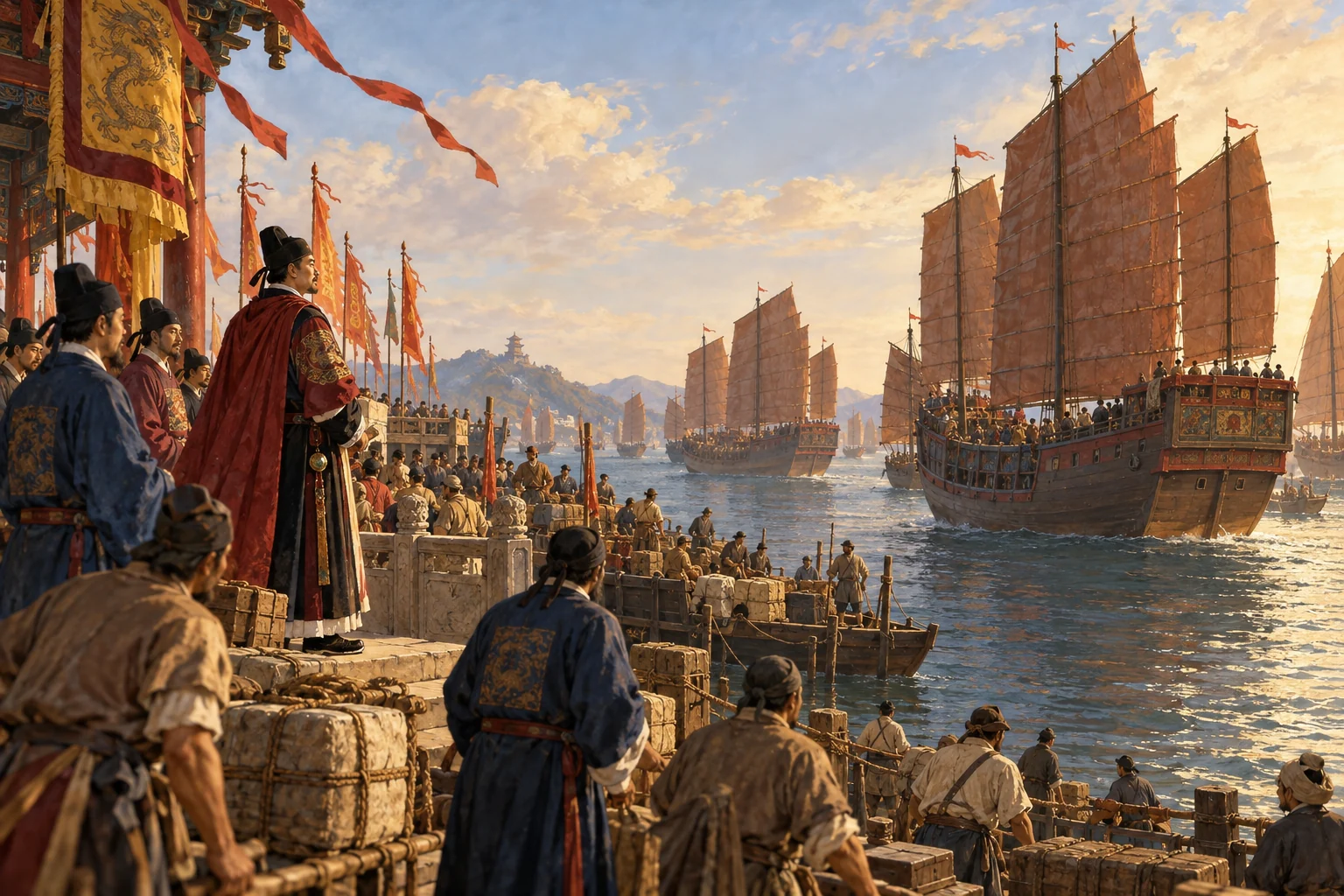
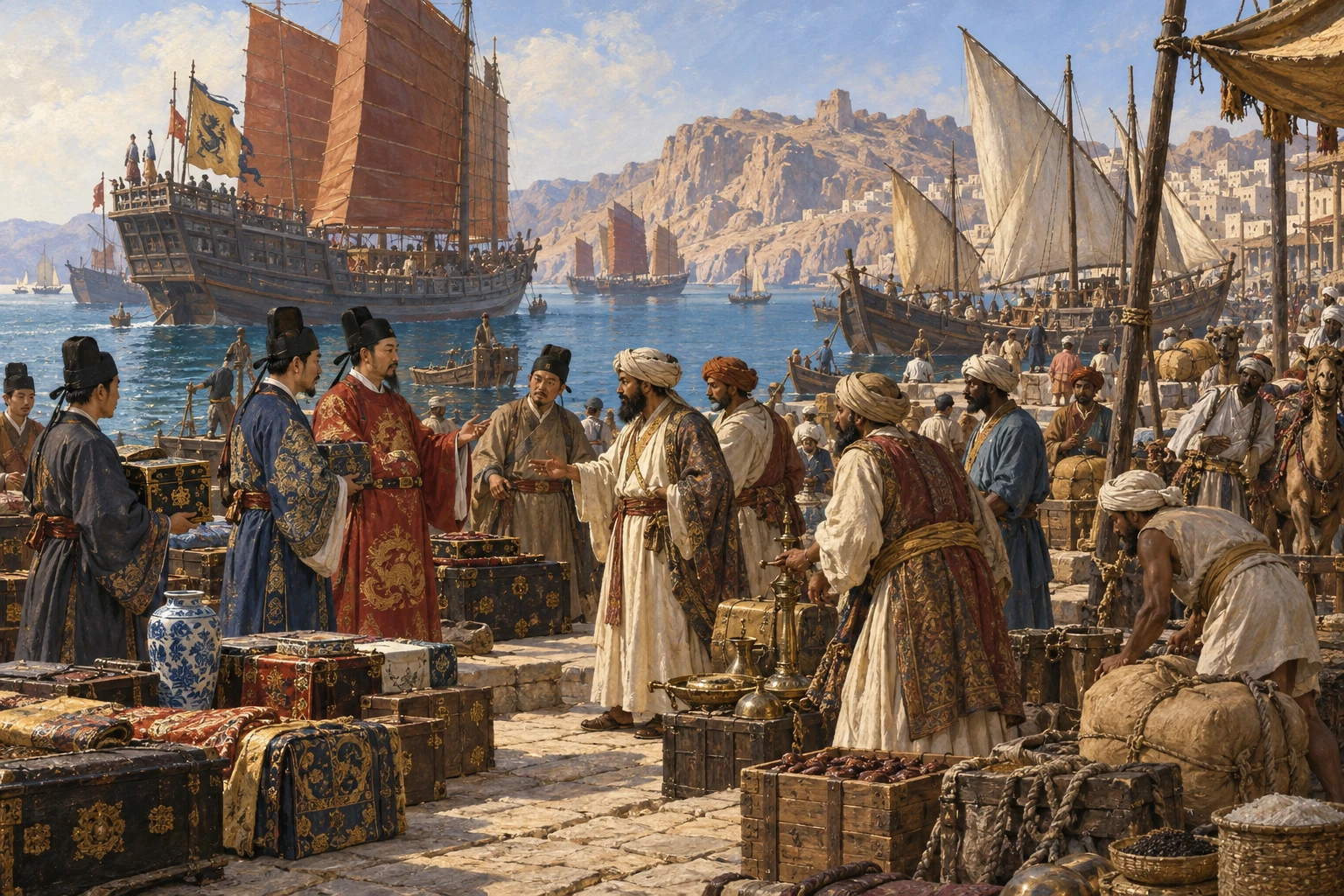
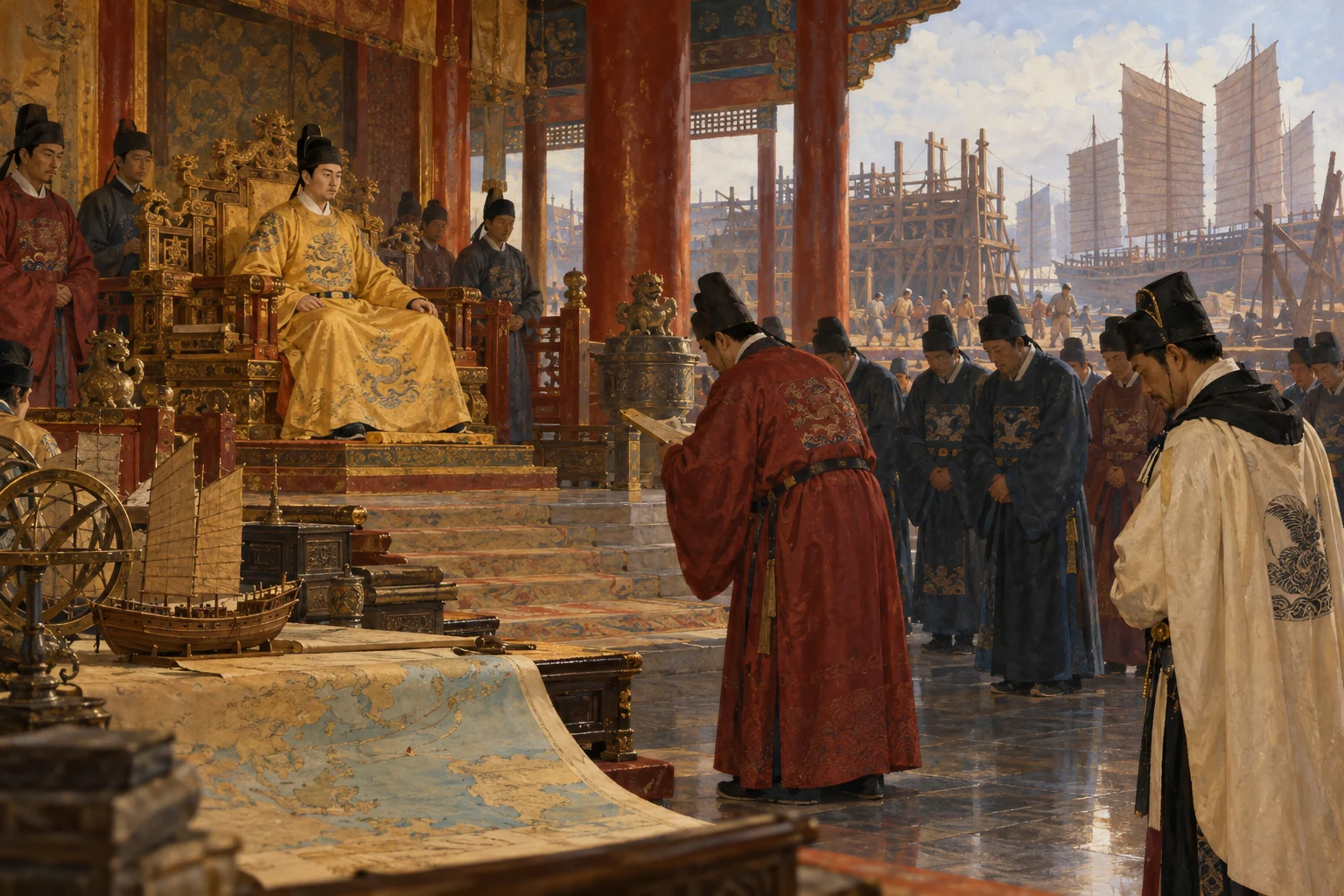
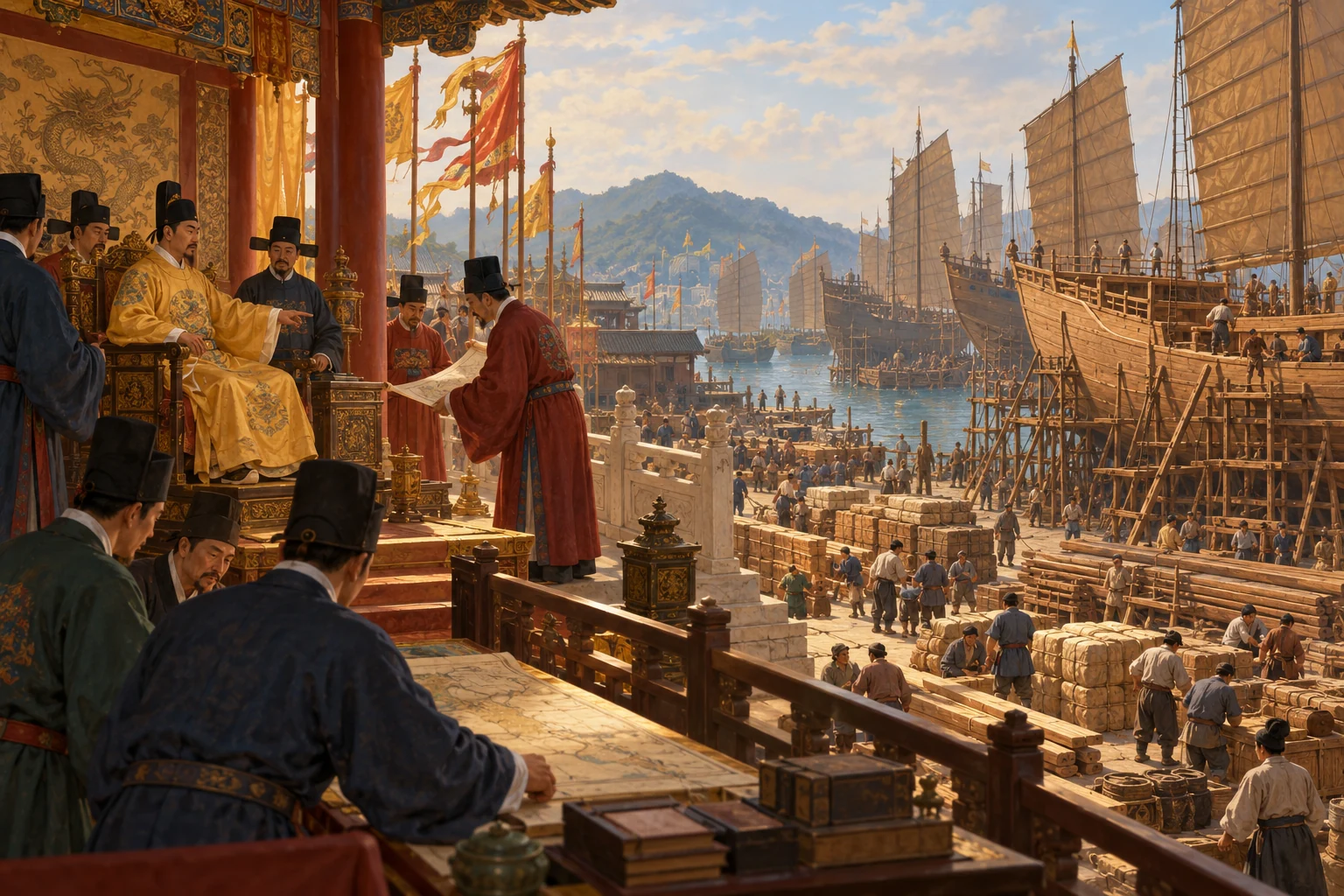
Yongle wants distant rulers to recognise Ming authority. Ships will carry gifts and envoys, establish diplomatic relationships and bring visitors back to the court. Trade accompanies this display of power, and soldiers travel with the fleet. The mission is entering seas already crossed by Asian, Arab and African merchants, rather than discovering an empty ocean.
Historical dates and route context
Intermediate dates are reconstructed narrative anchors, not recorded arrivals. The marker follows a representative fleet route; detached squadrons are not individual tracks.
AI-generated reconstruction for Histlas, 2026. People, ships and settings are illustrative, not eyewitness records or exact likenesses.
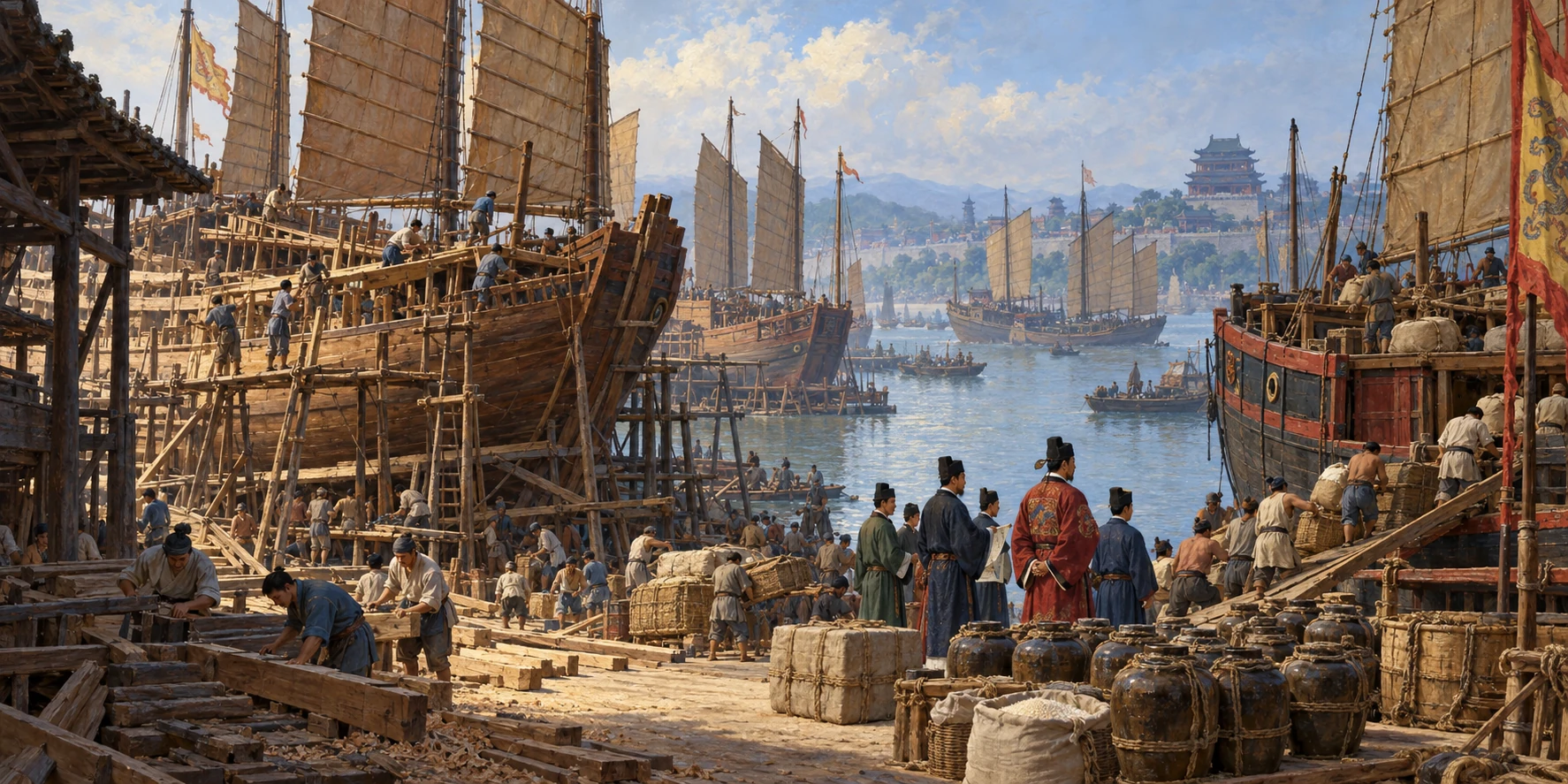
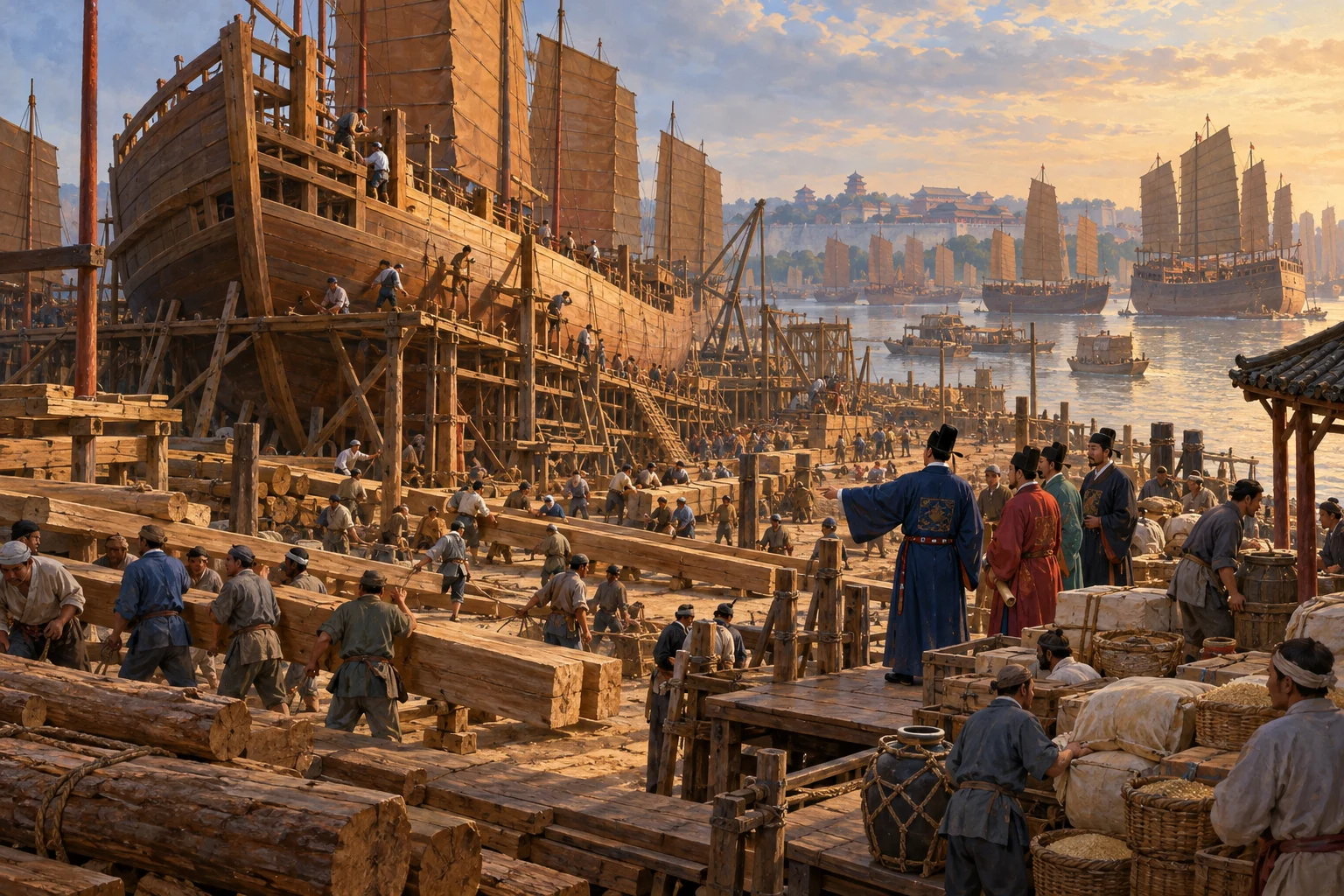
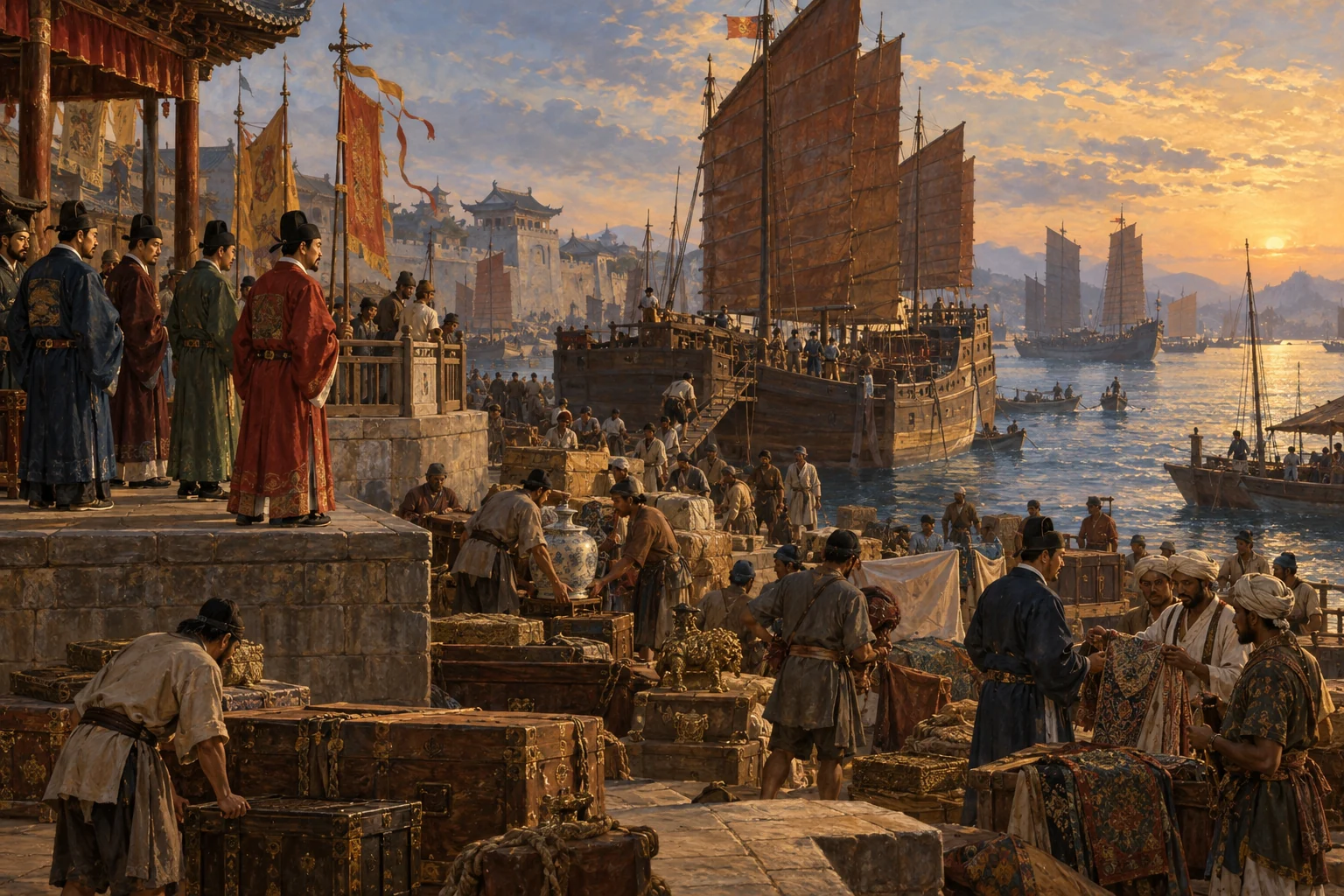
At the river yards near Nanjing, a state expedition takes shape. Ships need timber, sails, crews, drinking water and provisions. The fleet contains different types of vessels for different tasks. Its scale is extraordinary, but the dimensions of the largest treasure ships remain disputed. A realistic fleet does not require us to repeat the most dramatic measurements as settled fact.
Historical dates and route context
Intermediate dates are reconstructed narrative anchors, not recorded arrivals. The marker follows a representative fleet route; detached squadrons are not individual tracks.
AI-generated reconstruction for Histlas, 2026. People, ships and settings are illustrative, not eyewitness records or exact likenesses.
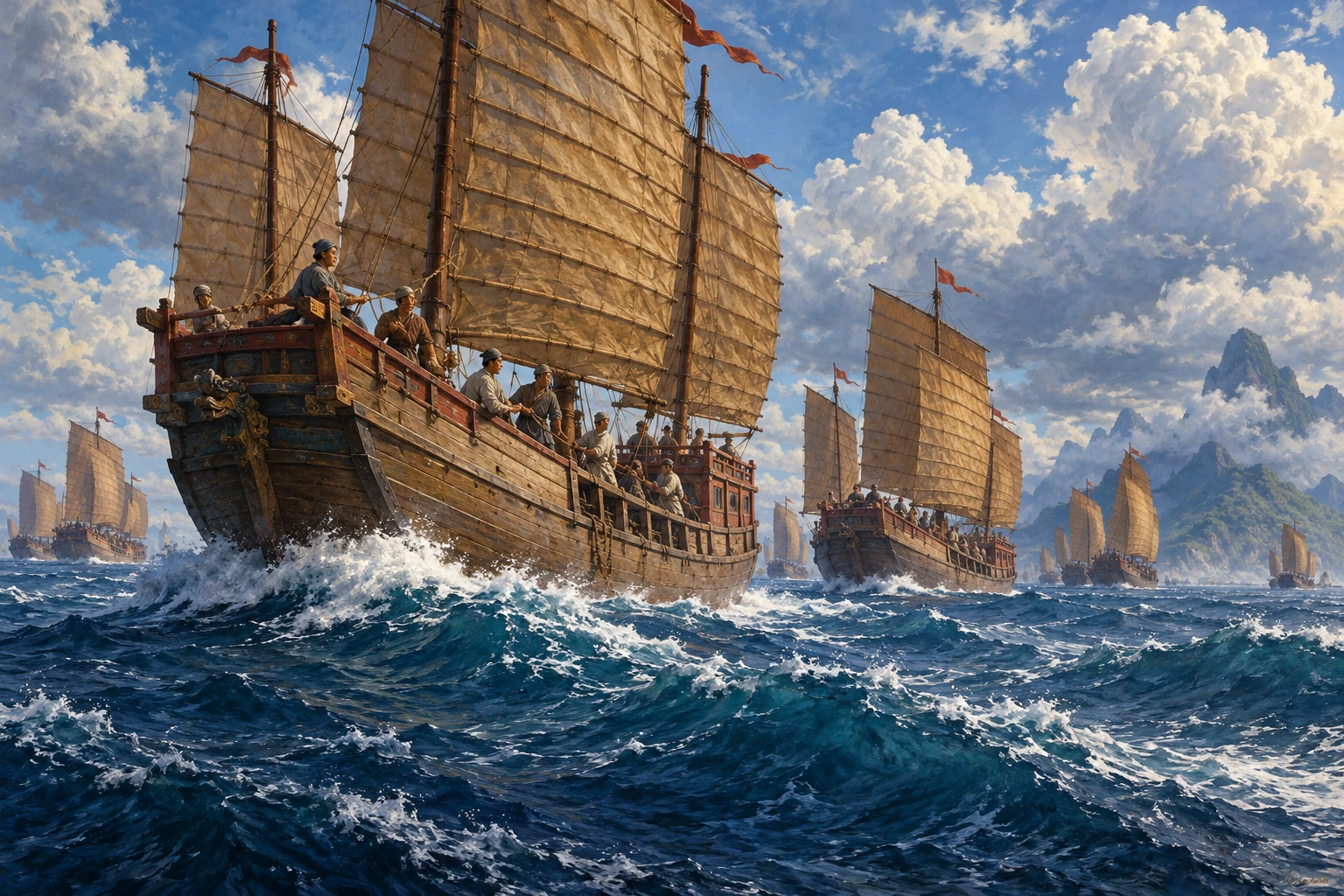
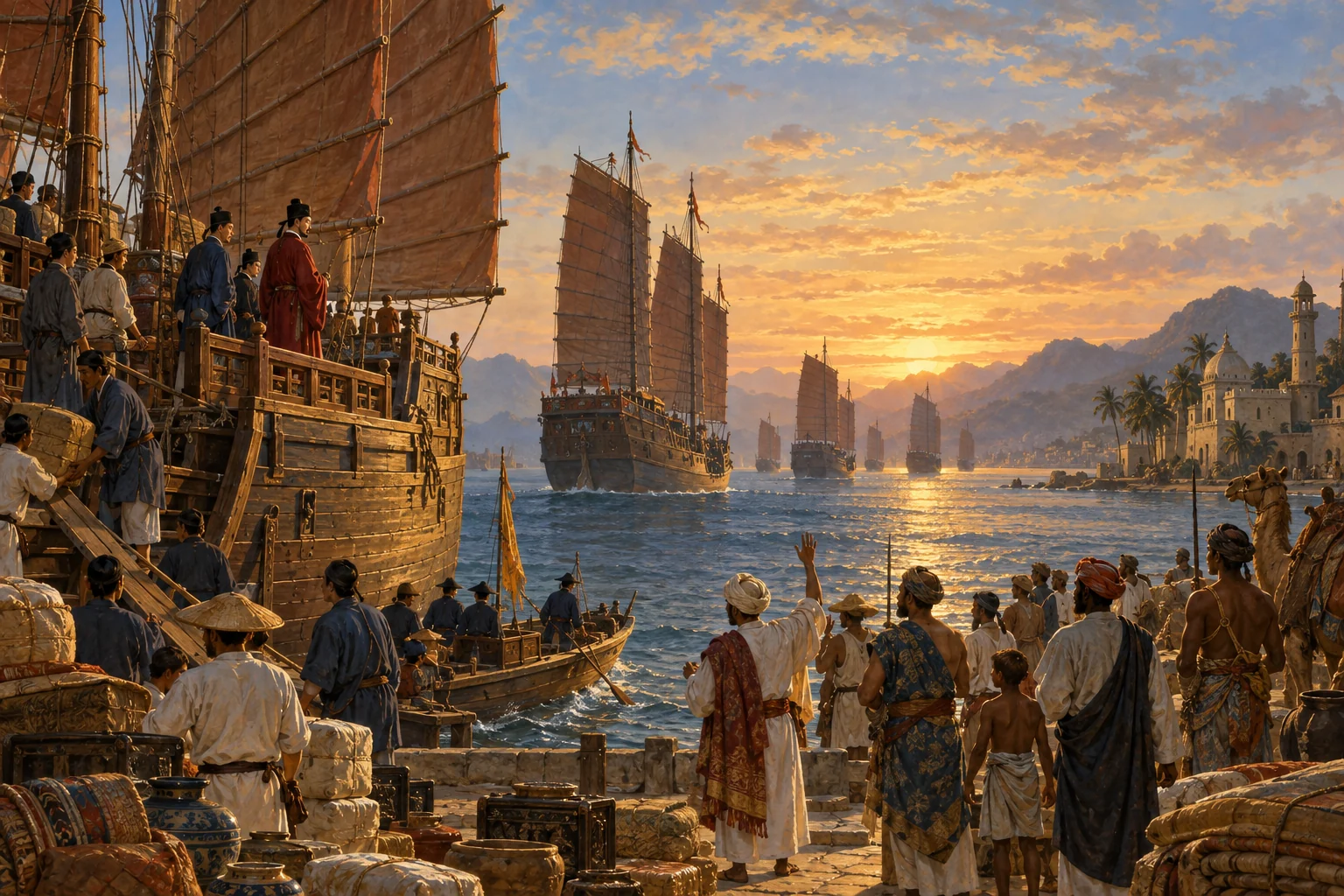
In 1405, the first expedition begins its voyage toward Southeast Asia and India. Leaving China is only the start of a mission lasting roughly two years. Coastal assembly, trading visits and seasonal waits occupy much of that time. The fleet must work with the winds, not simply point its bows toward a distant port.
Historical dates and route context
Intermediate dates are reconstructed narrative anchors, not recorded arrivals. The marker follows a representative fleet route; detached squadrons are not individual tracks.
AI-generated reconstruction for Histlas, 2026. People, ships and settings are illustrative, not eyewitness records or exact likenesses.
From China’s coast, the ships follow the routes toward Champa and Java. Compasses, astronomical knowledge and experienced pilots help them navigate. The monsoon supplies another essential tool: seasonal winds shape when they can cross the ocean and when they can return. Ships may wait weeks or months for conditions, although the precise duration at every port is not known.
Historical dates and route context
Intermediate dates are reconstructed narrative anchors, not recorded arrivals. The marker follows a representative fleet route; detached squadrons are not individual tracks.
AI-generated reconstruction for Histlas, 2026. People, ships and settings are illustrative, not eyewitness records or exact likenesses.
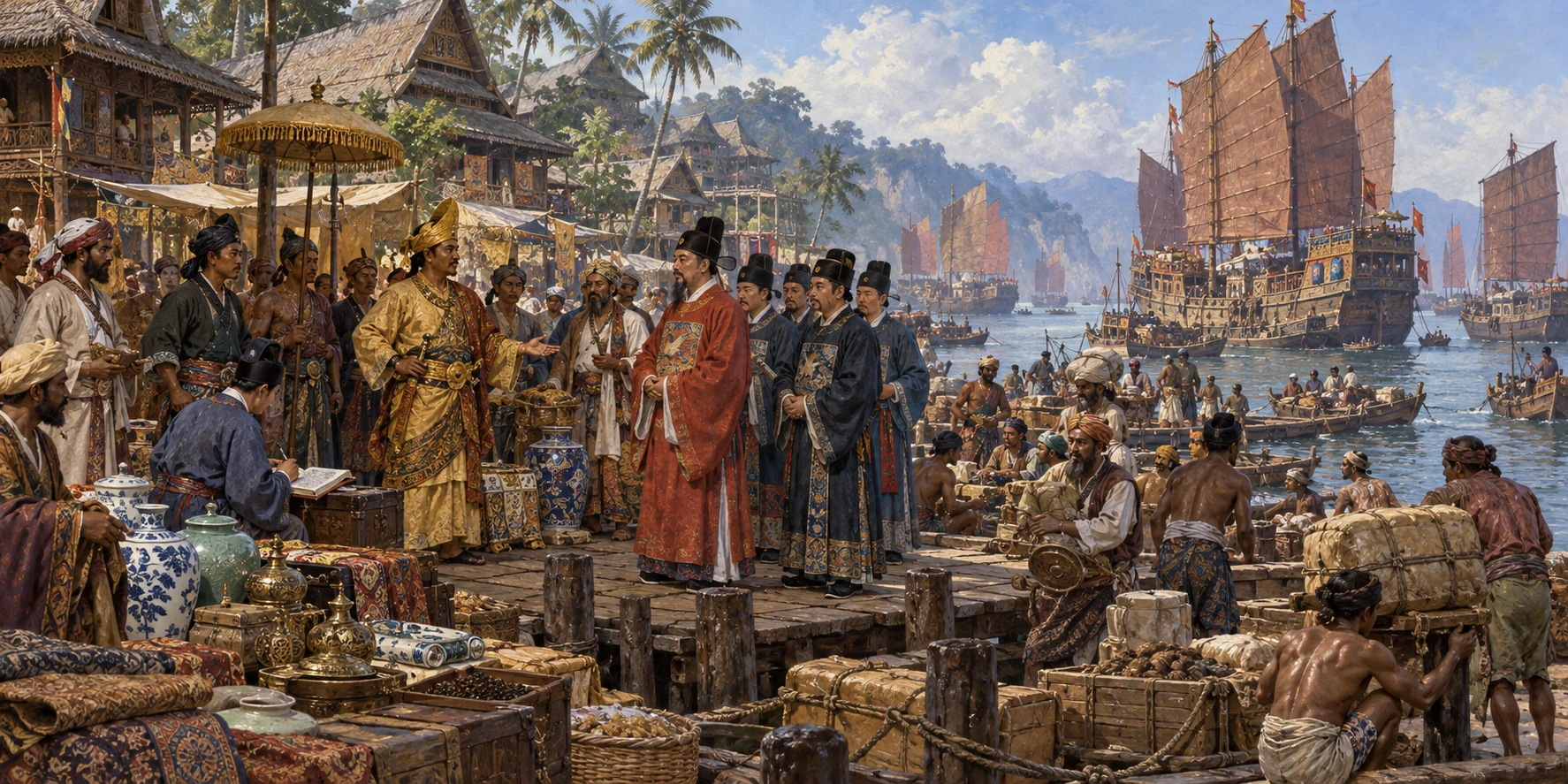
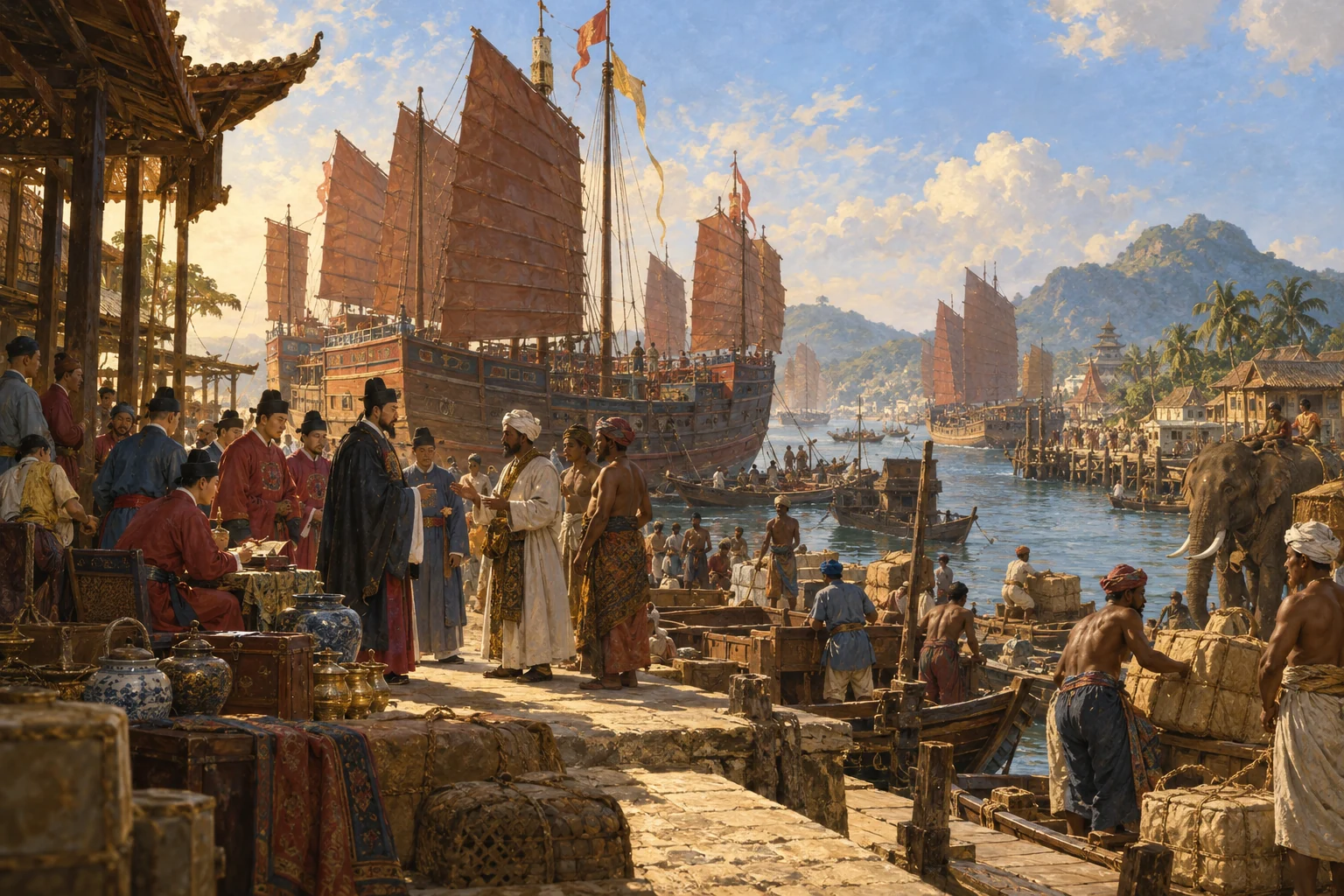
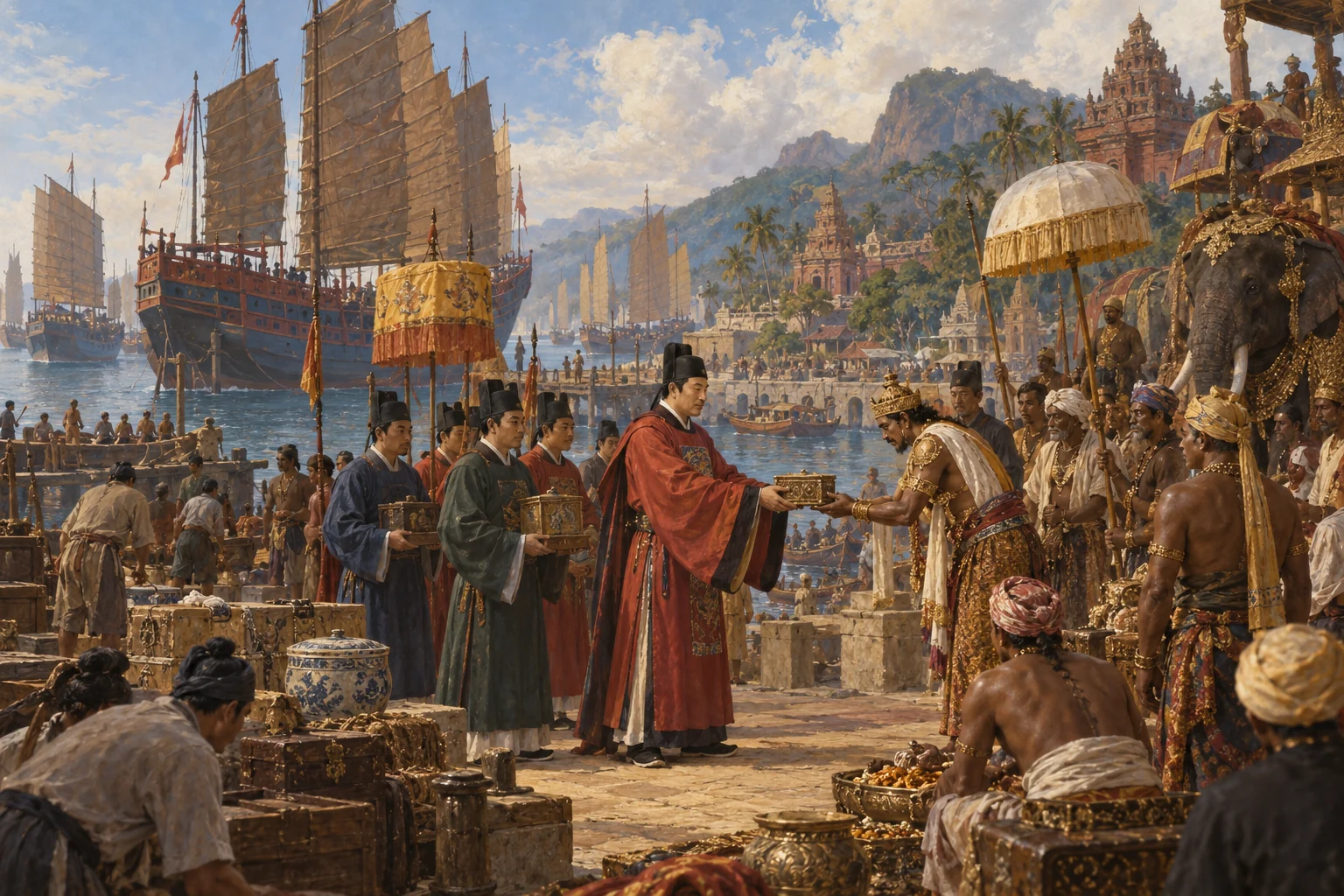
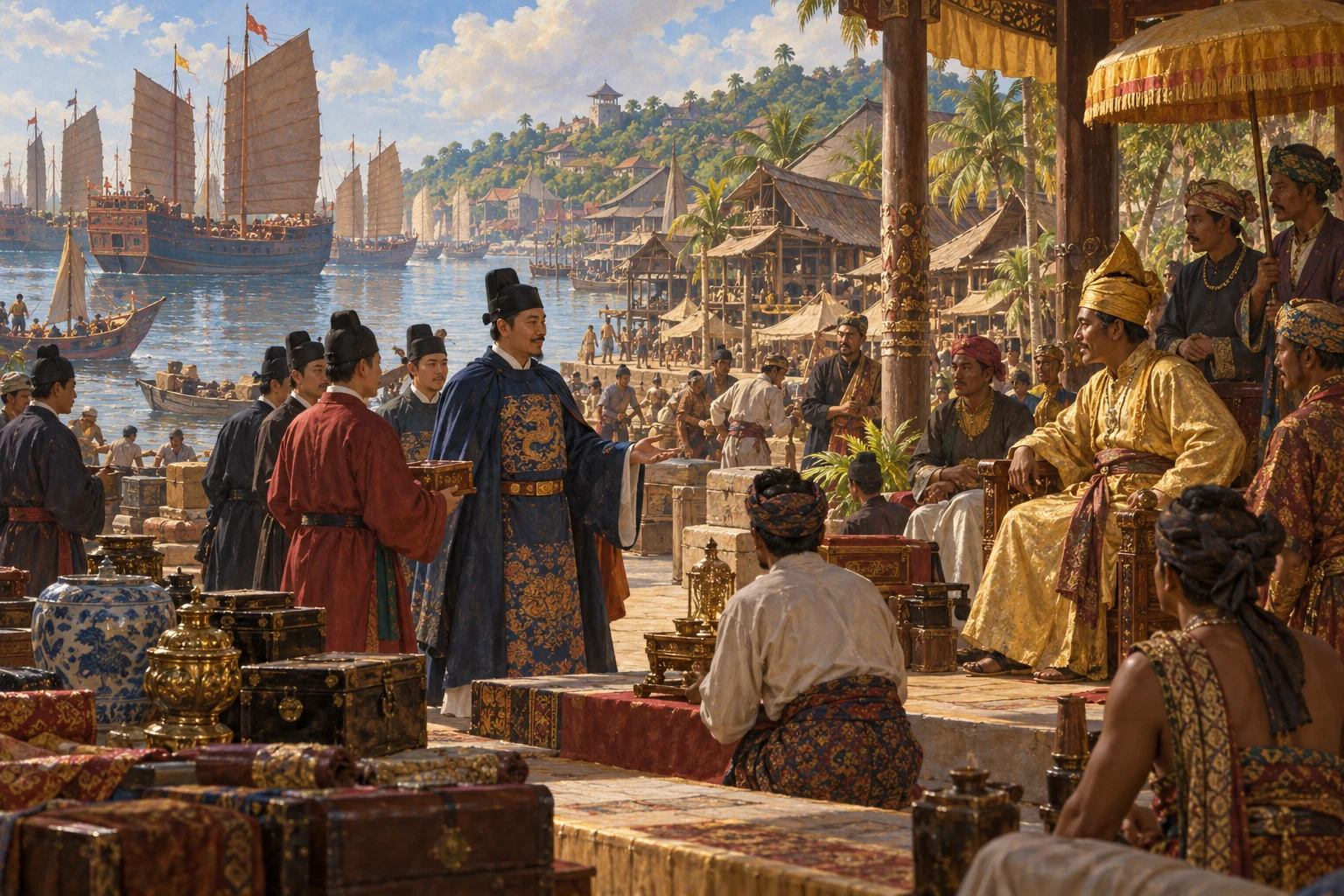
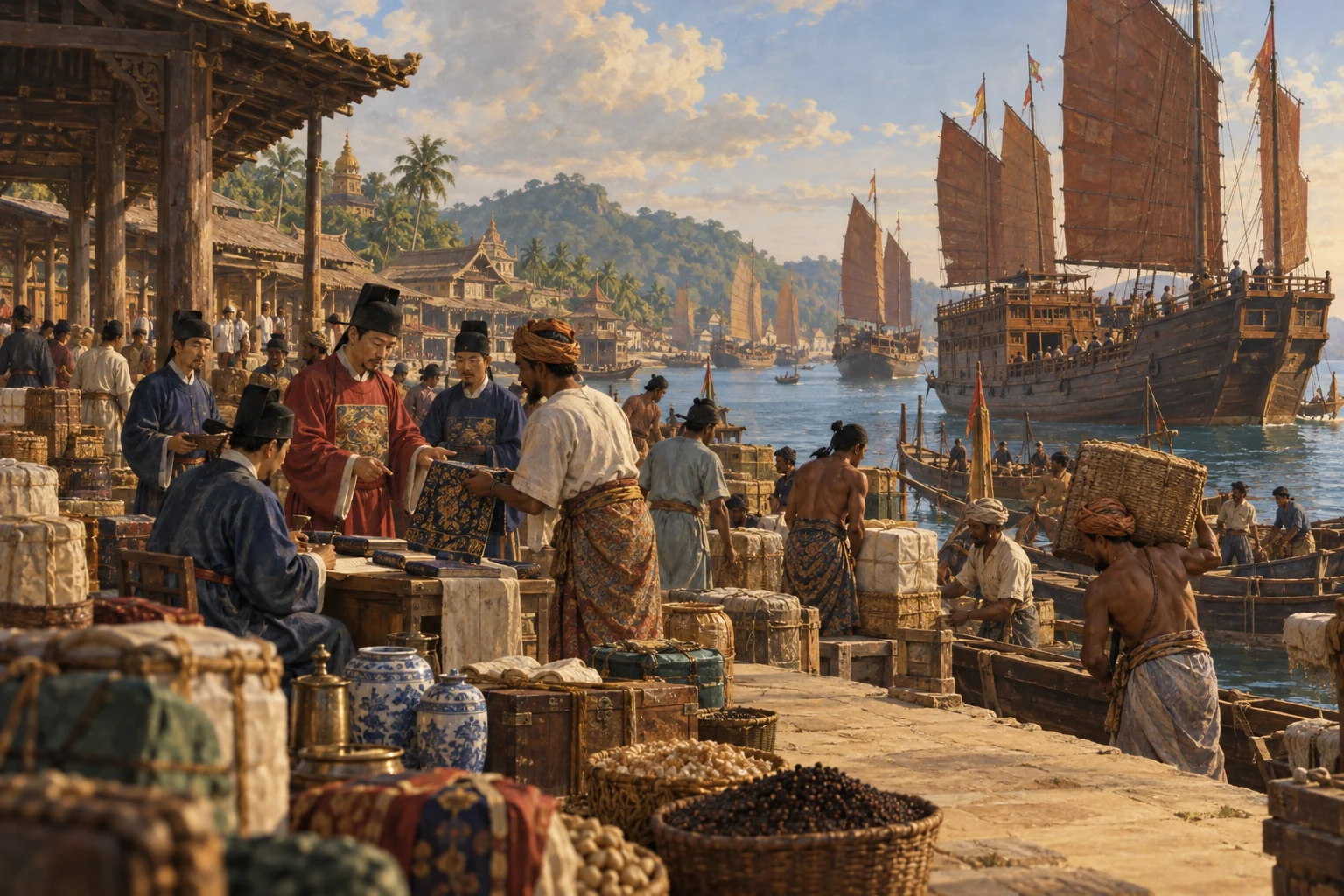
At Malacca, the narrow sea passage concentrates traffic between the Indian Ocean and the South China Sea. Local rulers and merchants have their own interests and diplomatic choices. The Ming fleet brings a powerful new relationship to this existing commercial world. The harbour is a meeting place, not merely a stepping stone on a Chinese route.
Historical dates and route context
Intermediate dates are reconstructed narrative anchors, not recorded arrivals. The marker follows a representative fleet route; detached squadrons are not individual tracks.
AI-generated reconstruction for Histlas, 2026. People, ships and settings are illustrative, not eyewitness records or exact likenesses.
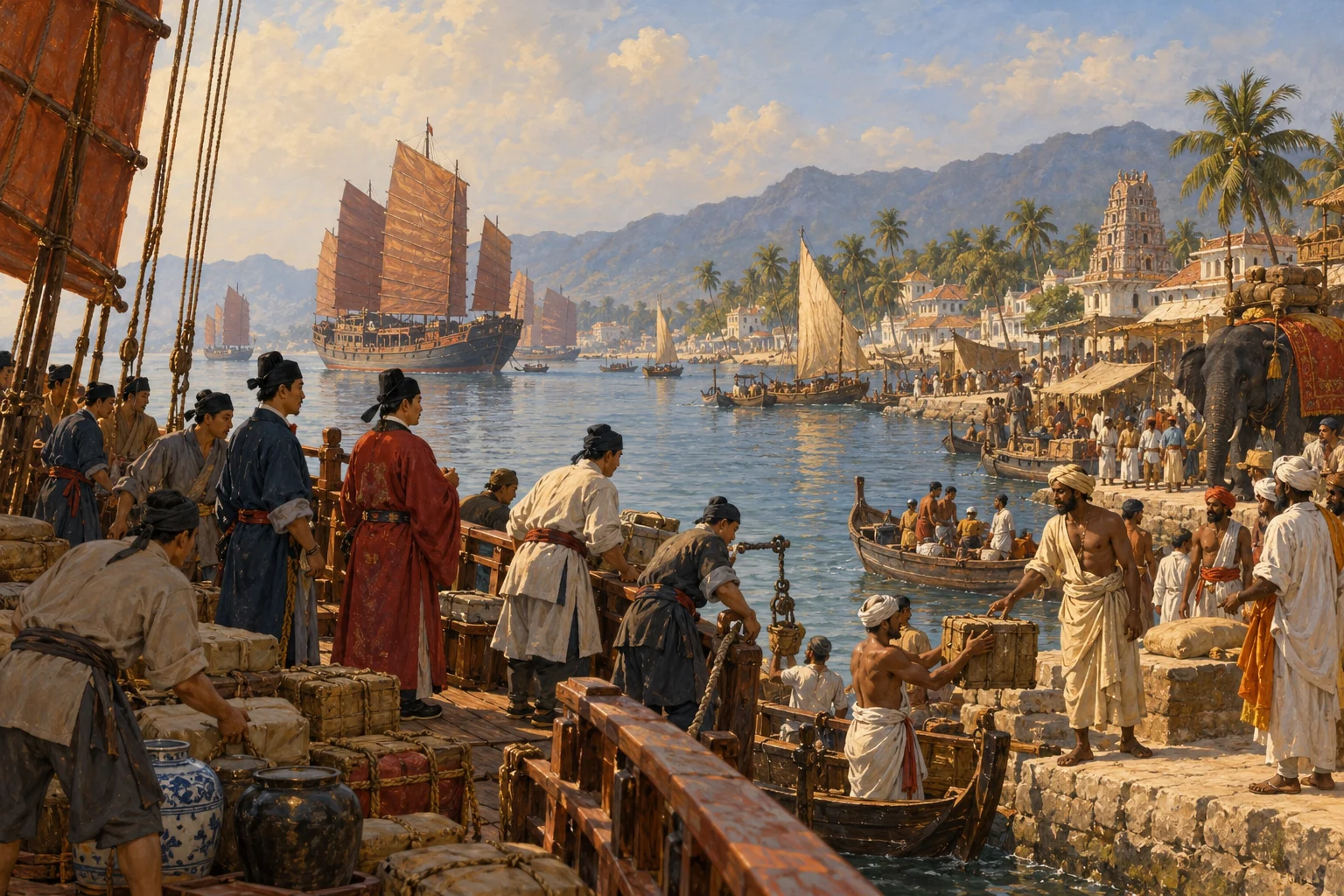
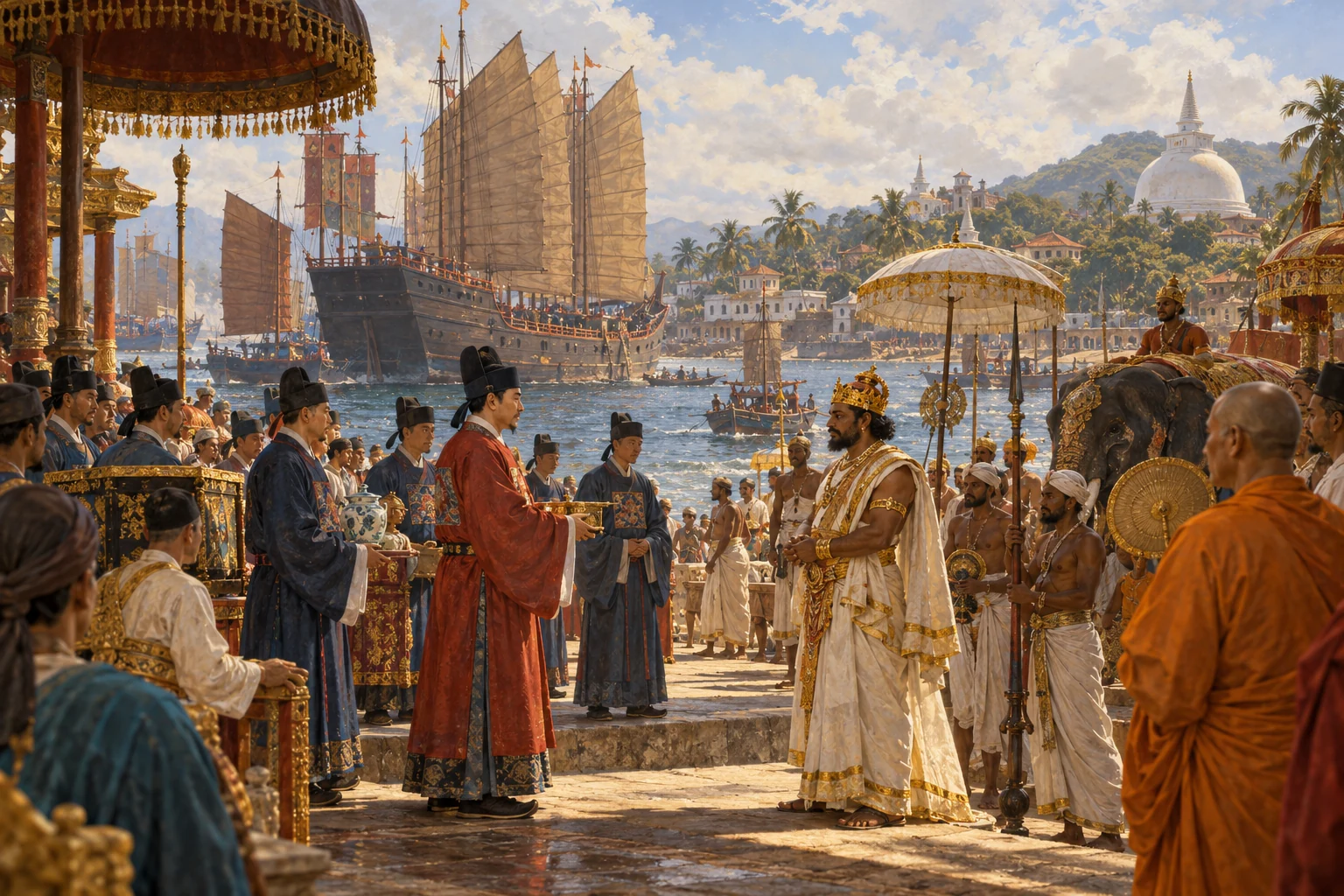
Beyond the straits, the route leads past northern Sumatra and Sri Lanka toward the Malabar coast. The crews depend on food, fresh water and communication with coastal communities. Their progress combines long passages with calls at familiar trading centres. The ocean connects these places, but it does not remove the risks of weather, disease or misunderstanding.
Historical dates and route context
Intermediate dates are reconstructed narrative anchors, not recorded arrivals. The marker follows a representative fleet route; detached squadrons are not individual tracks.
AI-generated reconstruction for Histlas, 2026. People, ships and settings are illustrative, not eyewitness records or exact likenesses.
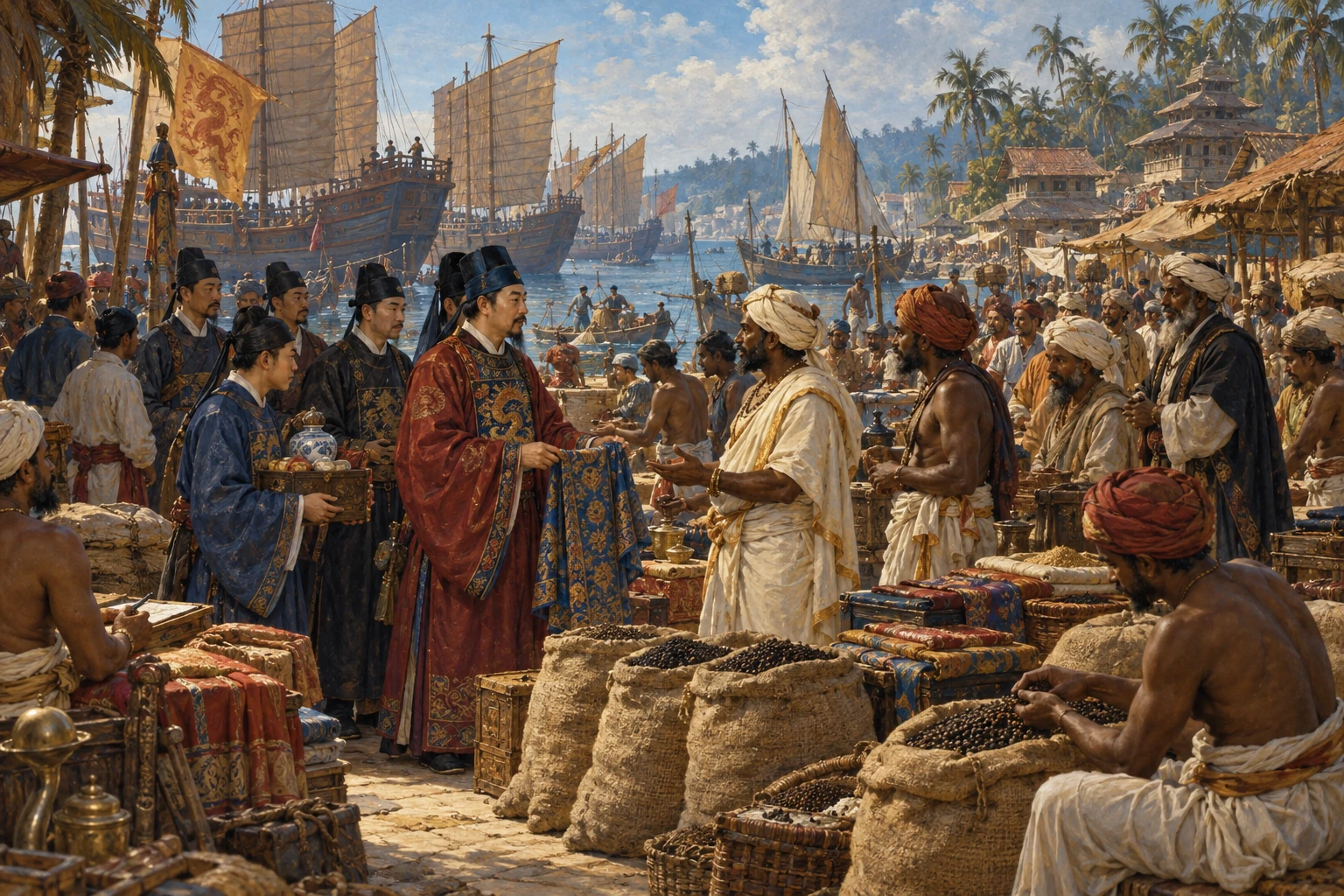
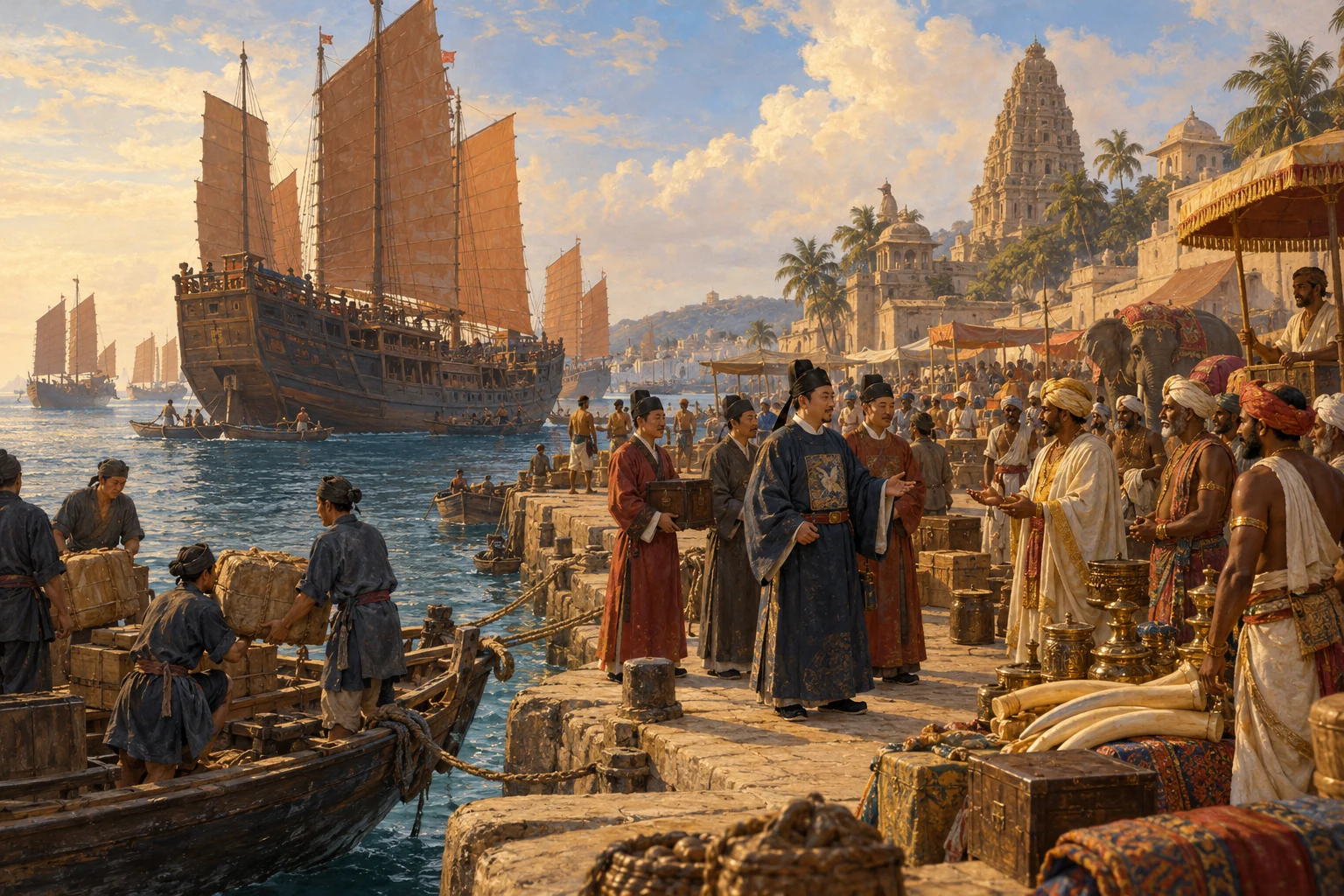
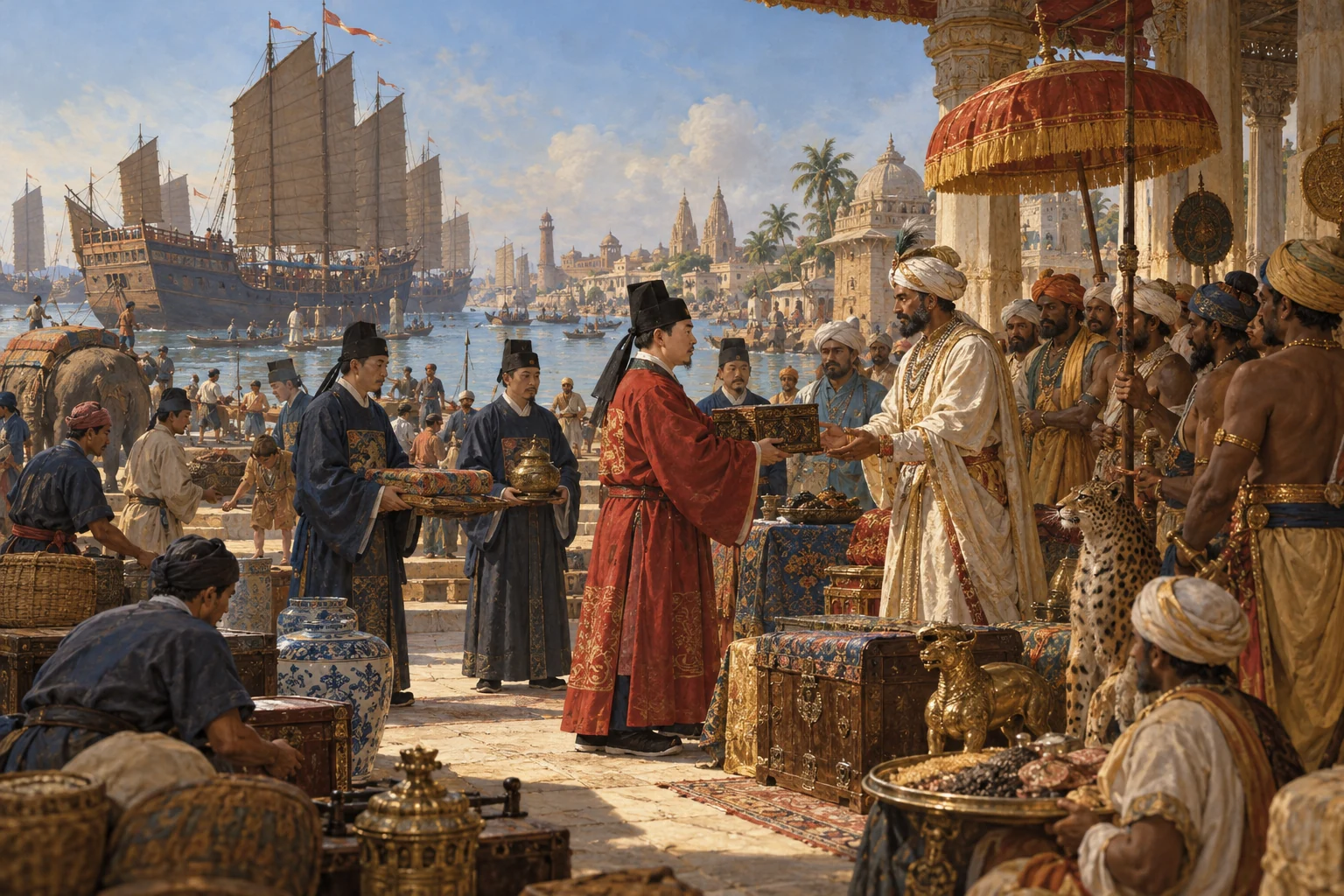
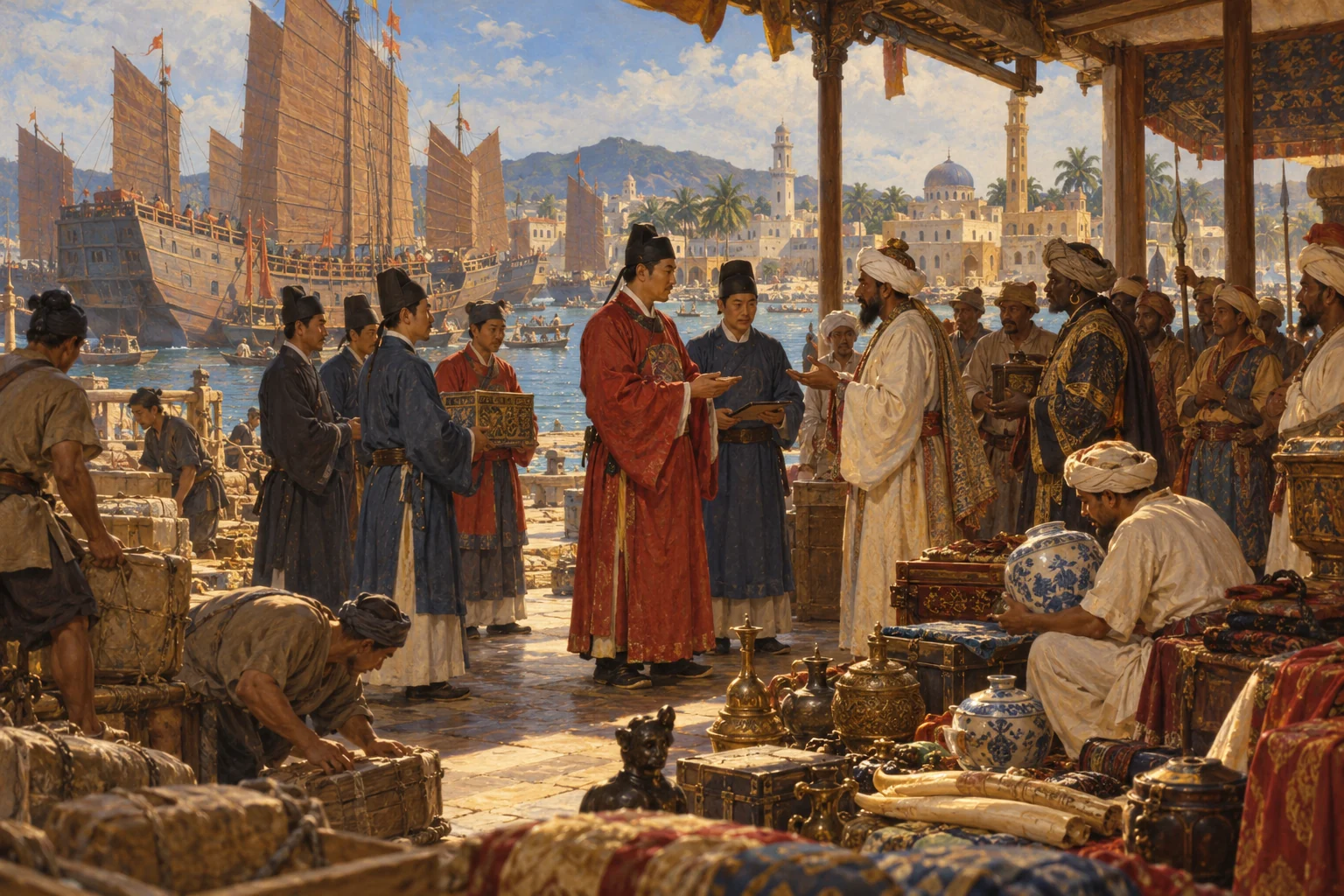
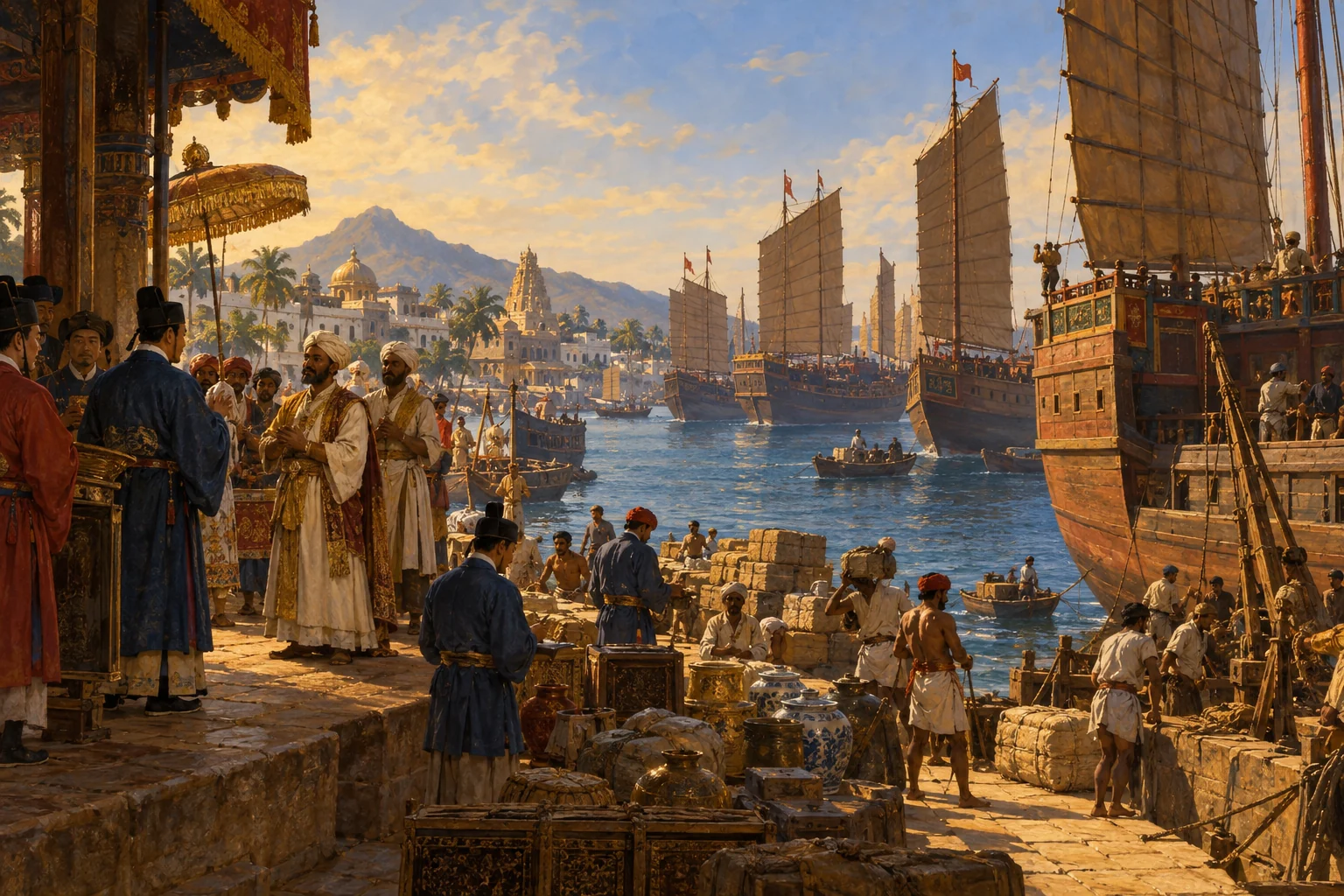
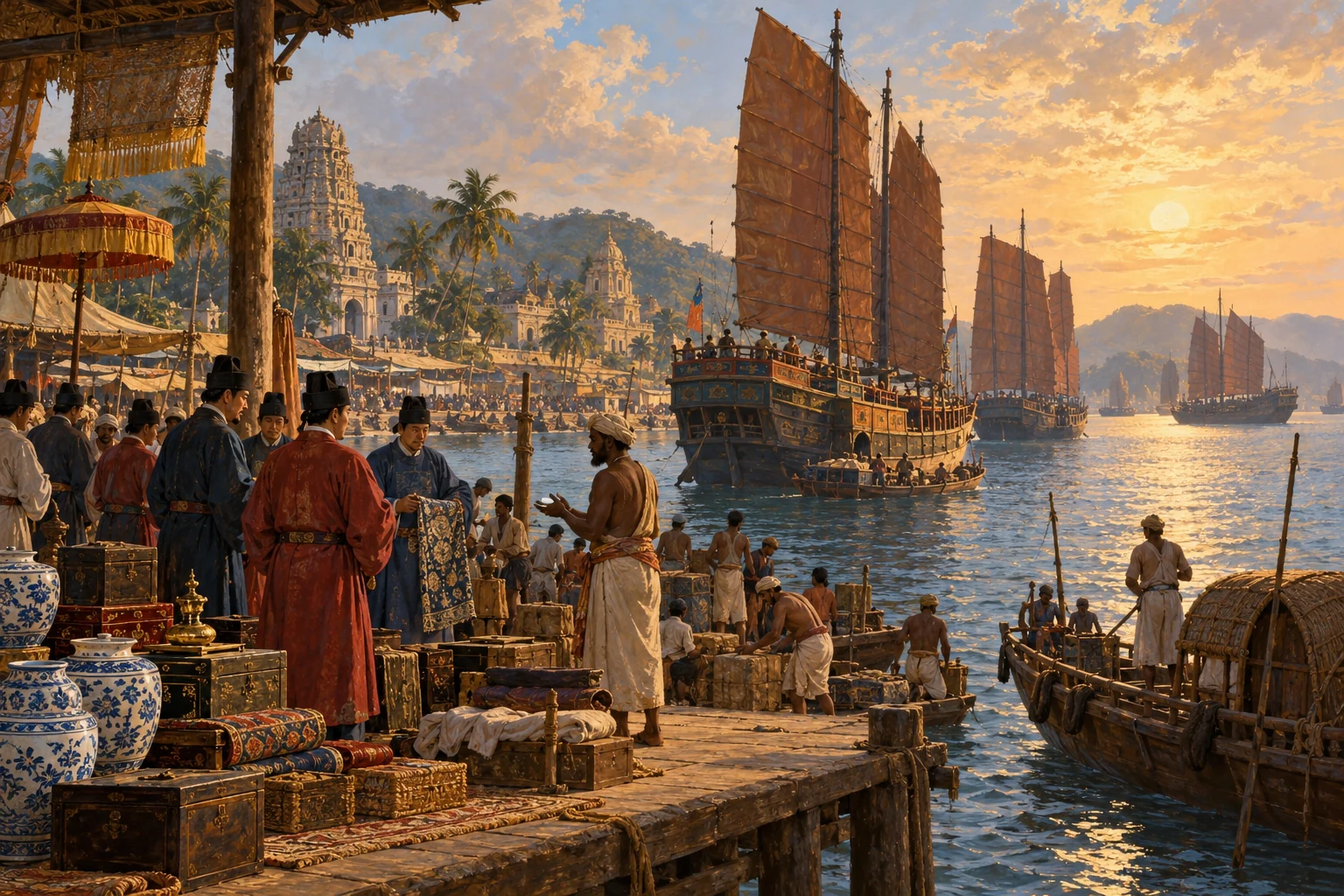
Calicut is a major Indian Ocean trading port. Pepper, textiles and other goods move through communities that are used to dealing with visitors from many lands. The fleet’s envoys negotiate within that world. The arrival matters because of the ships’ scale and imperial backing, not because the city or its trade had been unknown to everyone before Zheng He.
Historical dates and route context
Intermediate dates are reconstructed narrative anchors, not recorded arrivals. The marker follows a representative fleet route; detached squadrons are not individual tracks.
AI-generated reconstruction for Histlas, 2026. People, ships and settings are illustrative, not eyewitness records or exact likenesses.
The ships turn back toward China with the changing season. A return voyage is not simply the outward route played backwards: diplomacy, provisioning and wind conditions require fresh decisions. This first mission has established relationships that later fleets will revisit, while also showing that armed power can accompany exchange.
Historical dates and route context
Intermediate dates are reconstructed narrative anchors, not recorded arrivals. The marker follows a representative fleet route; detached squadrons are not individual tracks.
AI-generated reconstruction for Histlas, 2026. People, ships and settings are illustrative, not eyewitness records or exact likenesses.
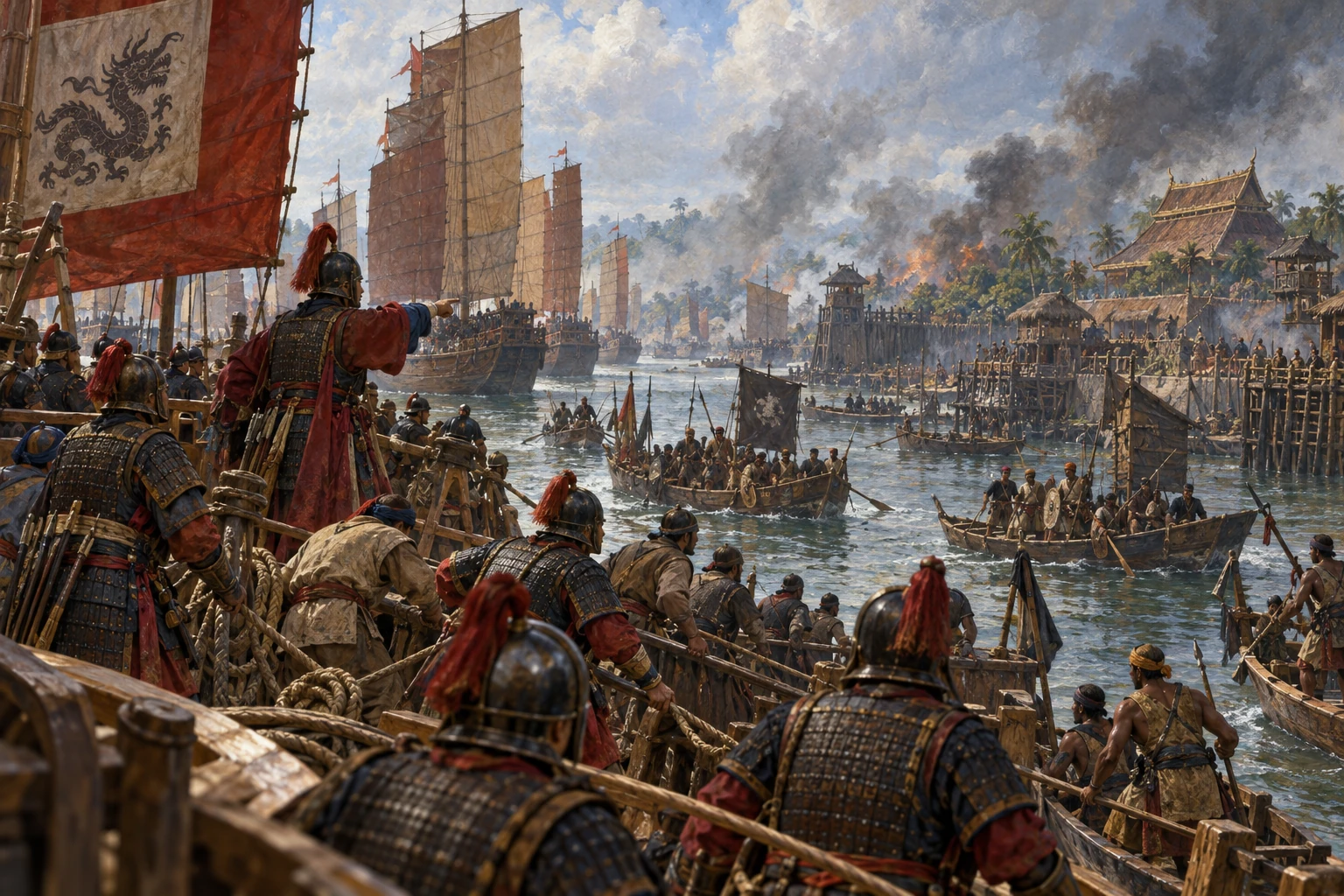
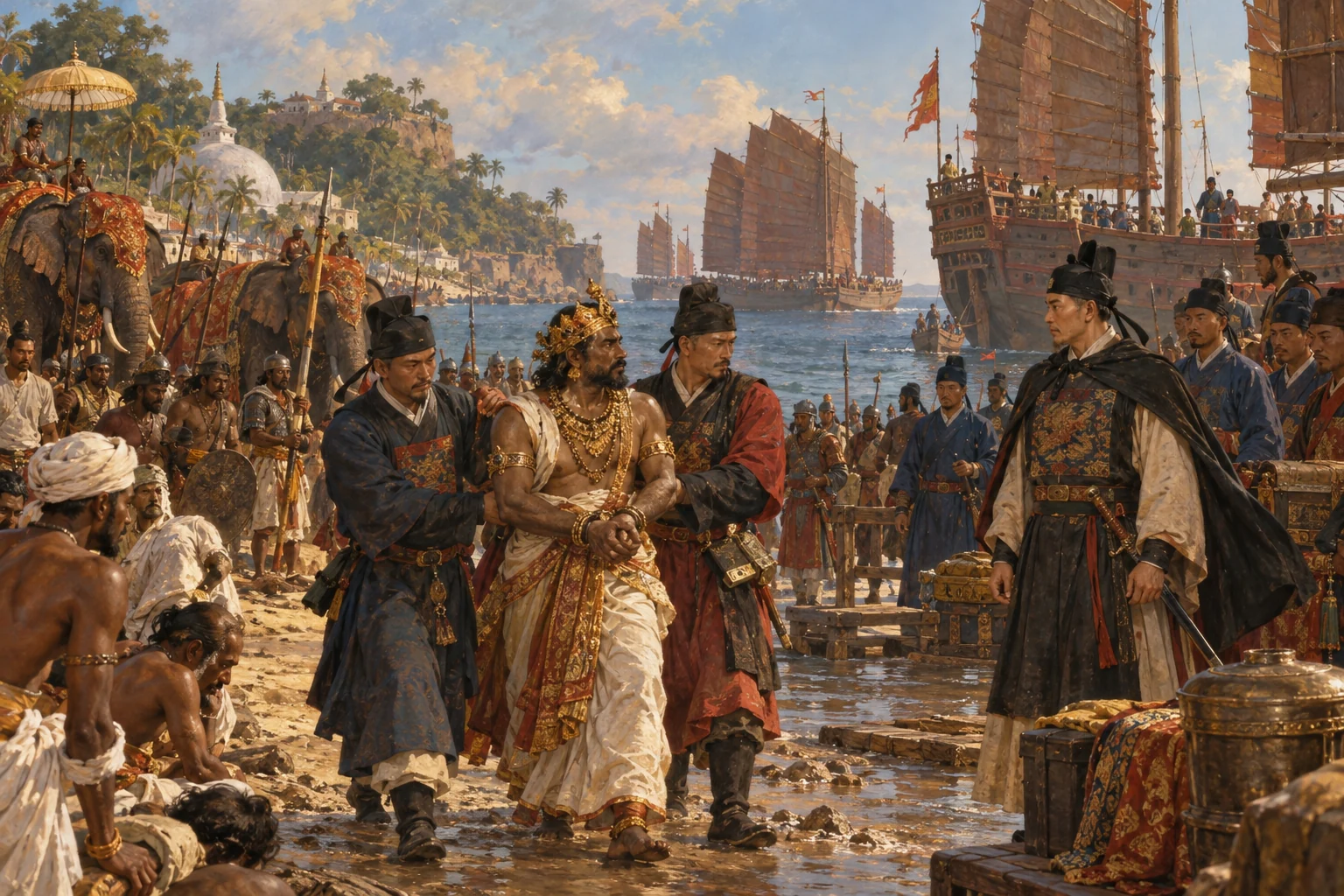
On the first mission’s return, the fleet confronts Chen Zuyi at Palembang and captures him. The fleet’s own inscriptions present this as the suppression of piracy; that is the victors’ account. The episode makes an important point about the voyages: gifts and diplomatic ceremony were backed by military force. This was not a purely peaceful sightseeing expedition.
Historical dates and route context
Retrospective scene at the first mission’s return. The conflict is dated broadly to 1407; no exact battle day or reconstructed detour is asserted.
AI-generated reconstruction for Histlas, 2026. People, ships and settings are illustrative, not eyewitness records or exact likenesses.
A second mission follows in 1407–1409, returning envoys and revisiting the Indian Ocean network. Sources differ over whether Zheng He personally accompanied this expedition. We follow the fleet rather than claim his exact position. The repeated voyage shows that the court is developing a programme of relationships, not relying on one spectacular departure.
Historical dates and route context
Intermediate dates are reconstructed narrative anchors, not recorded arrivals. The marker follows a representative fleet route; detached squadrons are not individual tracks.
AI-generated reconstruction for Histlas, 2026. People, ships and settings are illustrative, not eyewitness records or exact likenesses.
The ships return to the ports around the straits. Repeated visits can reinforce agreements, carry delegations and connect distant rulers with the Ming court. They also require continuing supplies and cooperation ashore. For the people of these ports, the fleet is one powerful participant in a wider maritime economy with many partners.
Historical dates and route context
Intermediate dates are reconstructed narrative anchors, not recorded arrivals. The marker follows a representative fleet route; detached squadrons are not individual tracks.
AI-generated reconstruction for Histlas, 2026. People, ships and settings are illustrative, not eyewitness records or exact likenesses.
The second fleet sails toward India along routes that merchants and pilots already understand. Familiarity does not make the journey automatic. Crews still need to judge the season, maintain their ships and negotiate their welcome. A voyage can last years even when its broad geographical path is already known.
Historical dates and route context
Intermediate dates are reconstructed narrative anchors, not recorded arrivals. The marker follows a representative fleet route; detached squadrons are not individual tracks.
AI-generated reconstruction for Histlas, 2026. People, ships and settings are illustrative, not eyewitness records or exact likenesses.
At the Indian ports, meetings, gifts and the movement of envoys strengthen the connections made by the first expedition. Ceremony gives these encounters a political meaning for the Ming court. Local rulers retain their own priorities. The records reveal exchanges between established societies, rather than one side creating the other’s history.
Historical dates and route context
Intermediate dates are reconstructed narrative anchors, not recorded arrivals. The marker follows a representative fleet route; detached squadrons are not individual tracks.
AI-generated reconstruction for Histlas, 2026. People, ships and settings are illustrative, not eyewitness records or exact likenesses.
The fleet sails home with news and visitors. Its second mission has taken roughly two years, with stops and waits as well as sailing. The court must assess what those journeys accomplish and whether to send another expedition. The next voyage will bring Zheng He back into a story where diplomacy and coercion are closely entwined.
Historical dates and route context
Intermediate dates are reconstructed narrative anchors, not recorded arrivals. The marker follows a representative fleet route; detached squadrons are not individual tracks.
AI-generated reconstruction for Histlas, 2026. People, ships and settings are illustrative, not eyewitness records or exact likenesses.
A third mission sails in 1409–1411. Zheng He commands this voyage, again crossing Southeast Asian and Indian Ocean waters. The repeated departures do not mean twenty-eight continuous years at sea: these are separate expeditions, with preparations and periods of service in China between them.
Historical dates and route context
Intermediate dates are reconstructed narrative anchors, not recorded arrivals. The marker follows a representative fleet route; detached squadrons are not individual tracks.
AI-generated reconstruction for Histlas, 2026. People, ships and settings are illustrative, not eyewitness records or exact likenesses.
Malacca becomes an important diplomatic partner. The fleet’s presence and exchanges with the Ming court affect the regional balance of power. The ruler’s relationship with China is useful locally as well as impressive at distant ceremonies. For Zheng He, cooperation here helps sustain the route through the straits.
Historical dates and route context
Intermediate dates are reconstructed narrative anchors, not recorded arrivals. The marker follows a representative fleet route; detached squadrons are not individual tracks.
AI-generated reconstruction for Histlas, 2026. People, ships and settings are illustrative, not eyewitness records or exact likenesses.
The ships cross toward Sri Lanka, a meeting point of sea routes and religious traditions. Envoys must communicate across differences in language, authority and belief. The fleet carries impressive gifts, but a large foreign armed expedition can also create fear and political friction.
Historical dates and route context
Intermediate dates are reconstructed narrative anchors, not recorded arrivals. The marker follows a representative fleet route; detached squadrons are not individual tracks.
AI-generated reconstruction for Histlas, 2026. People, ships and settings are illustrative, not eyewitness records or exact likenesses.
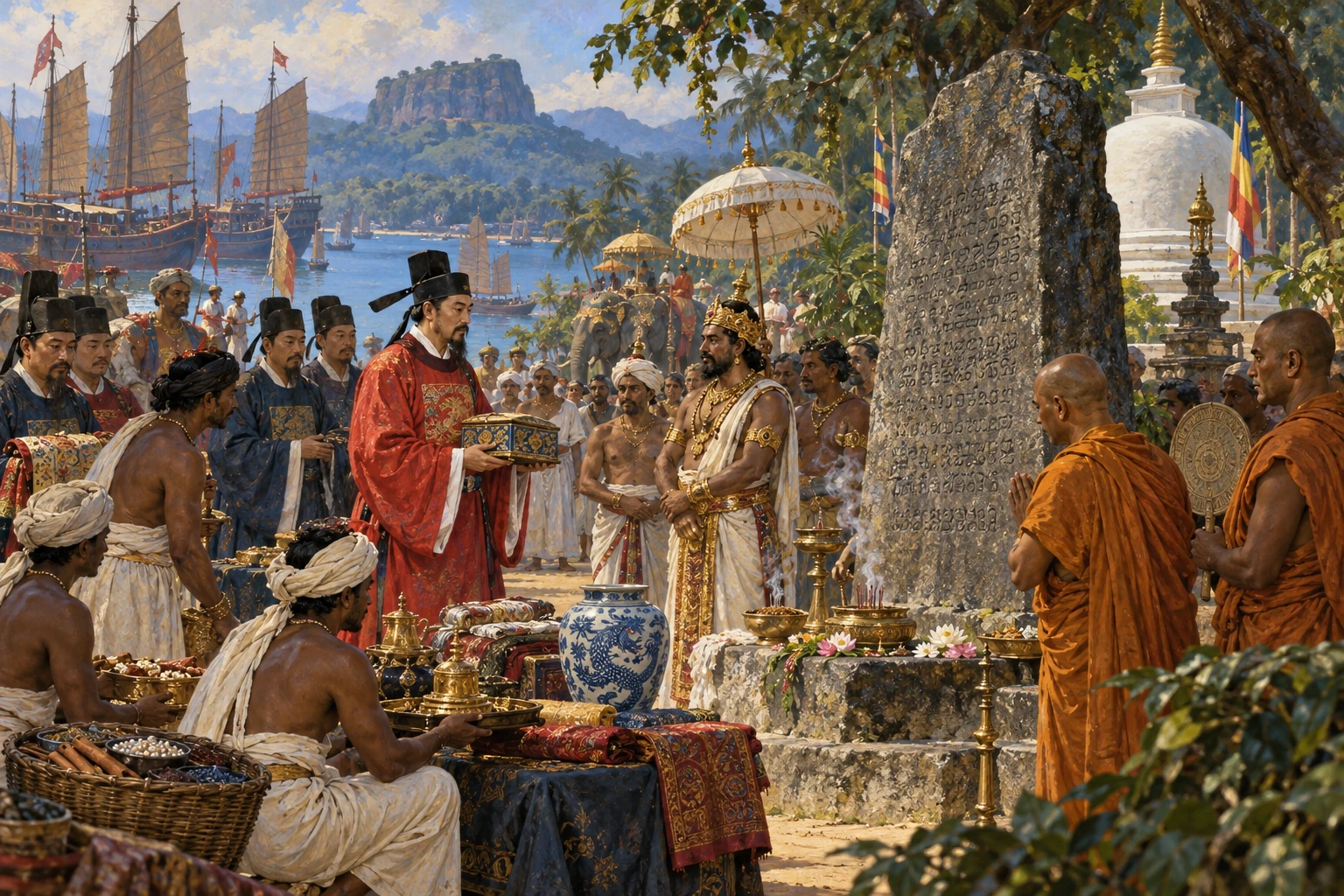
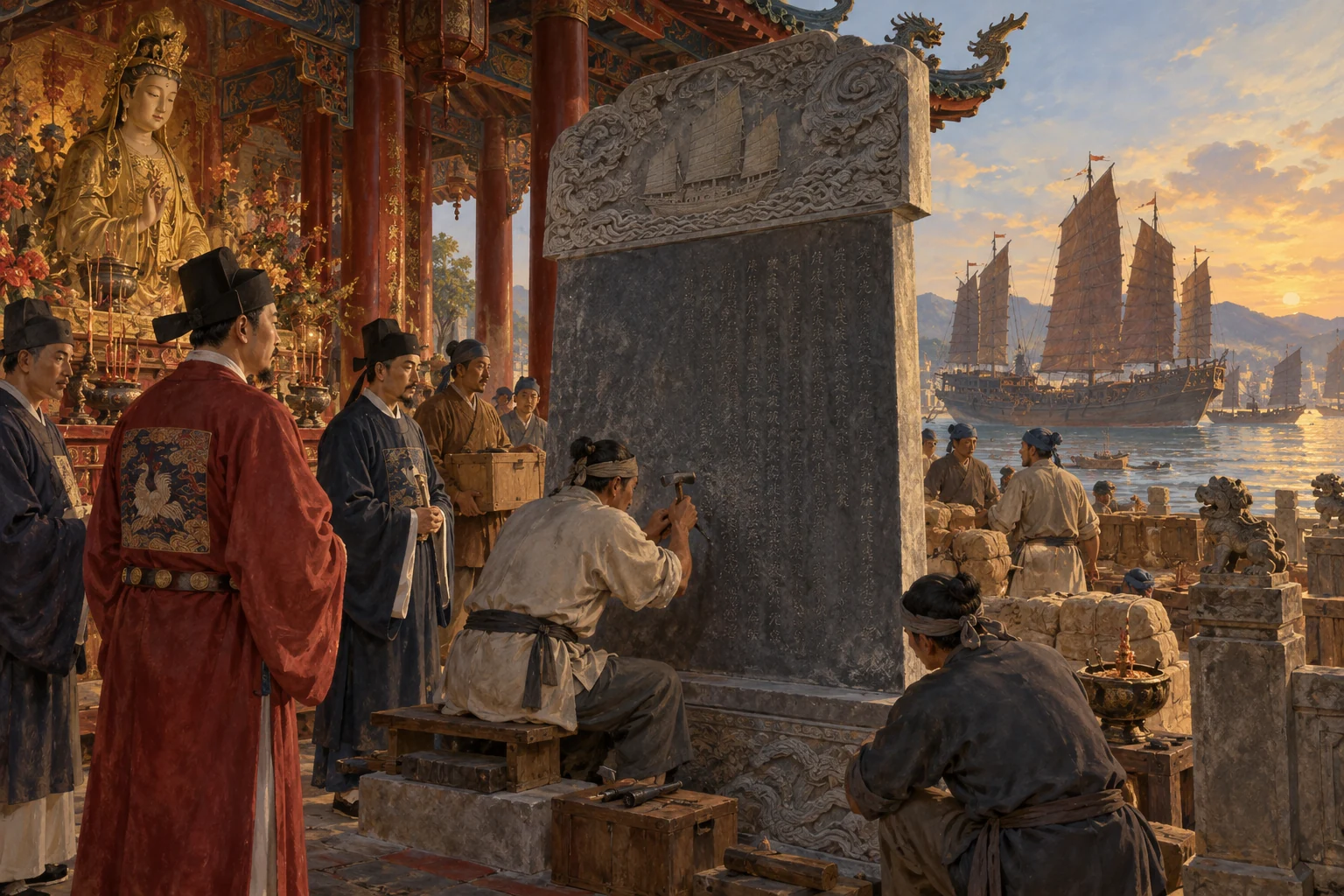
A stone tablet dated 1409 survives from the fleet’s contact with Sri Lanka. Its Chinese, Tamil and Persian texts refer to Buddhist, Hindu and Muslim religious traditions. The carved date is not a secure date for its installation at Galle. Even with that uncertainty, the tablet is a concrete witness to multilingual diplomacy and carefully chosen religious messages.
Historical dates and route context
Tablet dated 1409; installation timing is uncertain. Galle is the contextual locality, not a claim about the fleet’s exact anchorage on this narrative date.
AI-generated reconstruction for Histlas, 2026. People, ships and settings are illustrative, not eyewitness records or exact likenesses.
Relations in Sri Lanka also turn violent. Alakeshvara is captured after conflict with Zheng He’s forces and taken to China. The confrontation is usually placed in 1410–1411, but an exact battlefield day is not secure. The voyage again reveals the force behind the Ming court’s demand for recognition.
Historical dates and route context
Intermediate dates are reconstructed narrative anchors, not recorded arrivals. The marker follows a representative fleet route; detached squadrons are not individual tracks.
AI-generated reconstruction for Histlas, 2026. People, ships and settings are illustrative, not eyewitness records or exact likenesses.
The returning fleet carries Alakeshvara to the Ming court, where he is eventually permitted to return. Such events make the expeditions more than trading visits. Imperial judgement, local political struggles and military action can all travel aboard these ships. The next mission will reach farther west.
Historical dates and route context
Intermediate dates are reconstructed narrative anchors, not recorded arrivals. The marker follows a representative fleet route; detached squadrons are not individual tracks.
AI-generated reconstruction for Histlas, 2026. People, ships and settings are illustrative, not eyewitness records or exact likenesses.
After a pause, the fourth mission sails in 1413–1415. Its destination extends beyond the earlier Indian route to Hormuz at the Persian Gulf. Interpreters and specialists travel with the ships; among them is Ma Huan, whose writing will preserve descriptions of the societies encountered.
Historical dates and route context
Intermediate dates are reconstructed narrative anchors, not recorded arrivals. The marker follows a representative fleet route; detached squadrons are not individual tracks.
AI-generated reconstruction for Histlas, 2026. People, ships and settings are illustrative, not eyewitness records or exact likenesses.
A fleet needs more than a commander. Pilots, interpreters, sailors, soldiers and merchants make its encounters possible. Overseas knowledge can be as important as knowledge brought from China. Translation helps turn an arrival into a negotiation, and careful observation helps later readers understand the places beyond the harbour.
Historical dates and route context
Intermediate dates are reconstructed narrative anchors, not recorded arrivals. The marker follows a representative fleet route; detached squadrons are not individual tracks.
AI-generated reconstruction for Histlas, 2026. People, ships and settings are illustrative, not eyewitness records or exact likenesses.
Past Sri Lanka and the Malabar coast, the western leg takes the fleet toward Hormuz. The routes are part of an established commercial network. This extension increases the distance from China and the demands on supply and diplomacy, while making the fleet visible to another group of rulers and traders.
Historical dates and route context
Intermediate dates are reconstructed narrative anchors, not recorded arrivals. The marker follows a representative fleet route; detached squadrons are not individual tracks.
AI-generated reconstruction for Histlas, 2026. People, ships and settings are illustrative, not eyewitness records or exact likenesses.
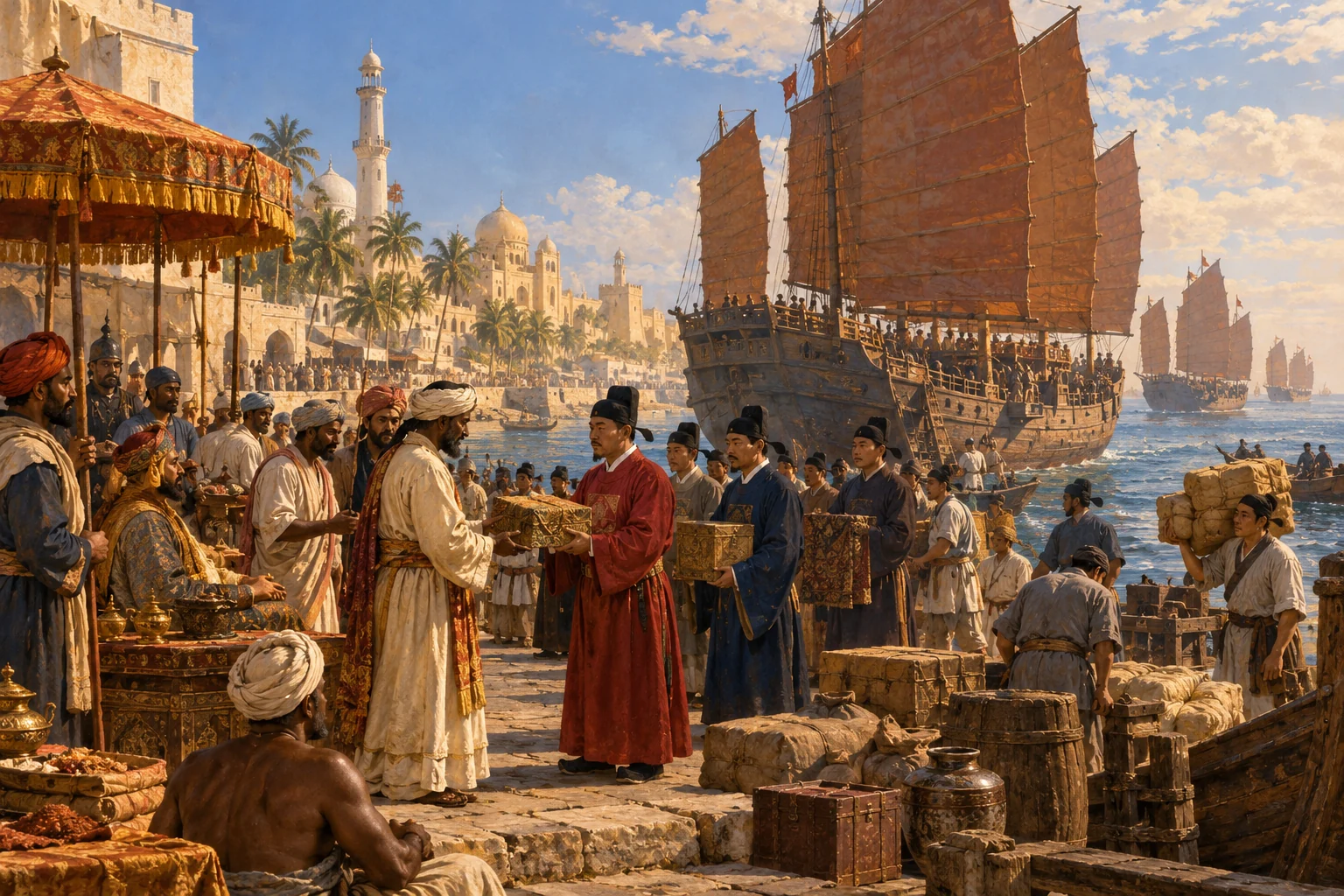
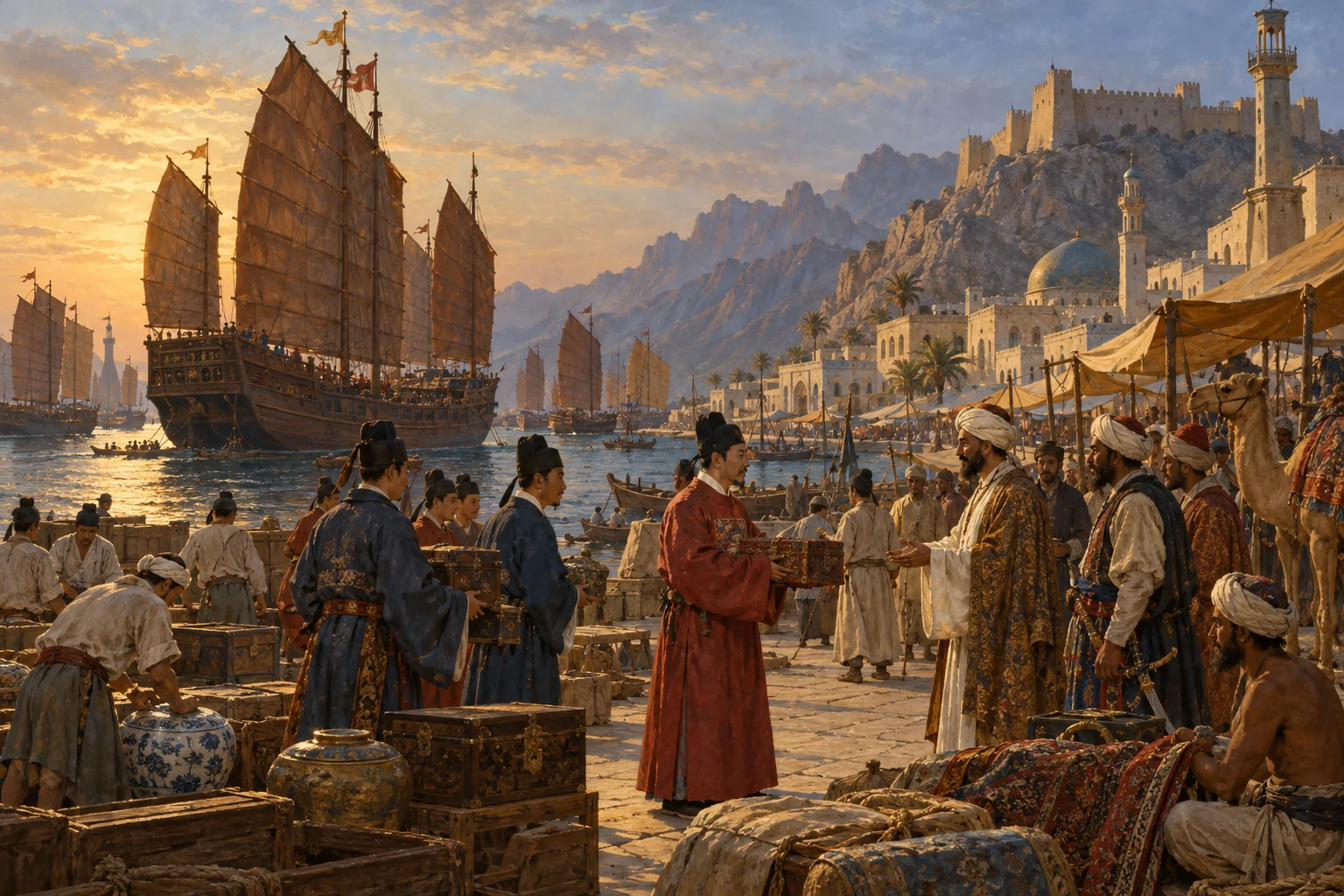
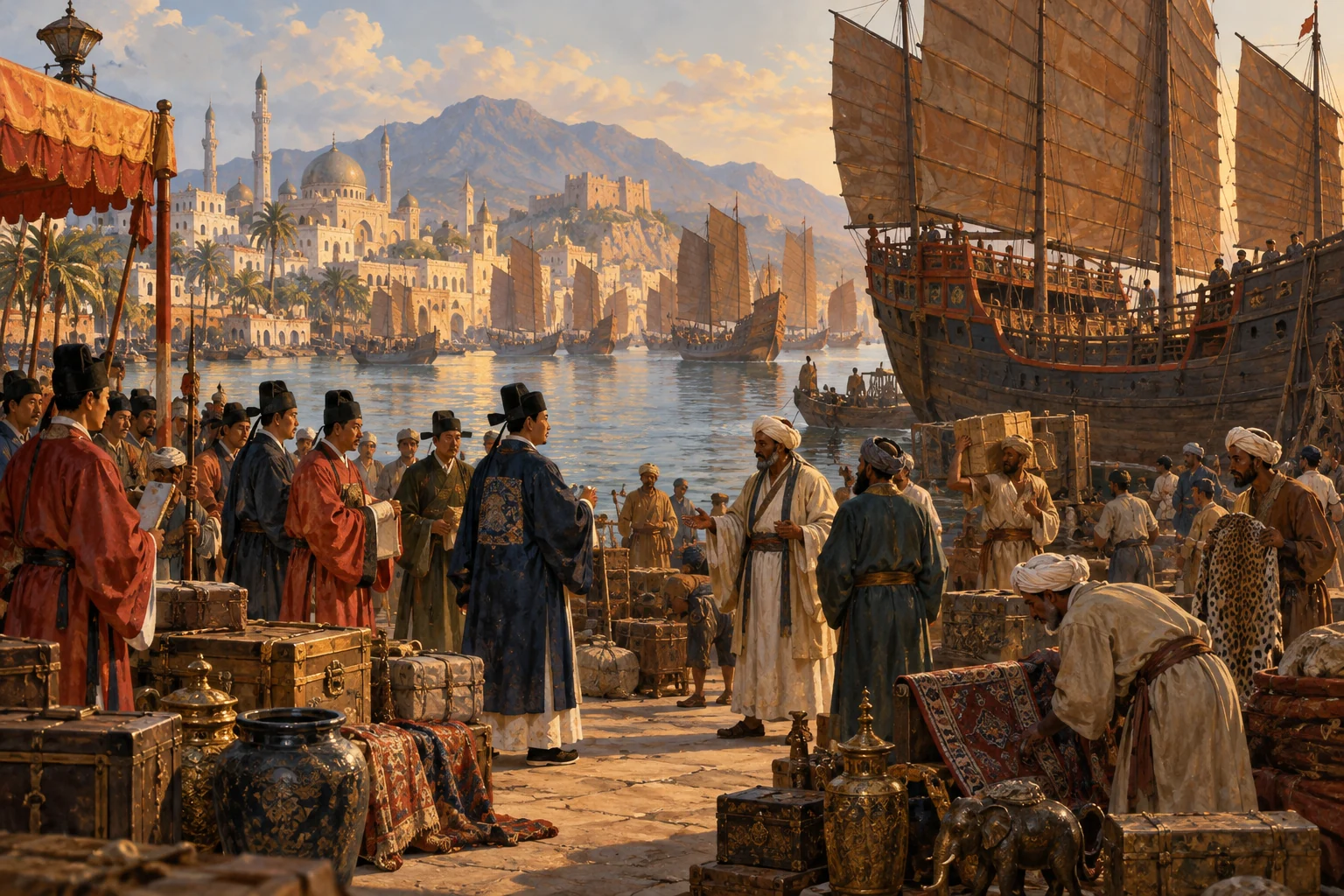
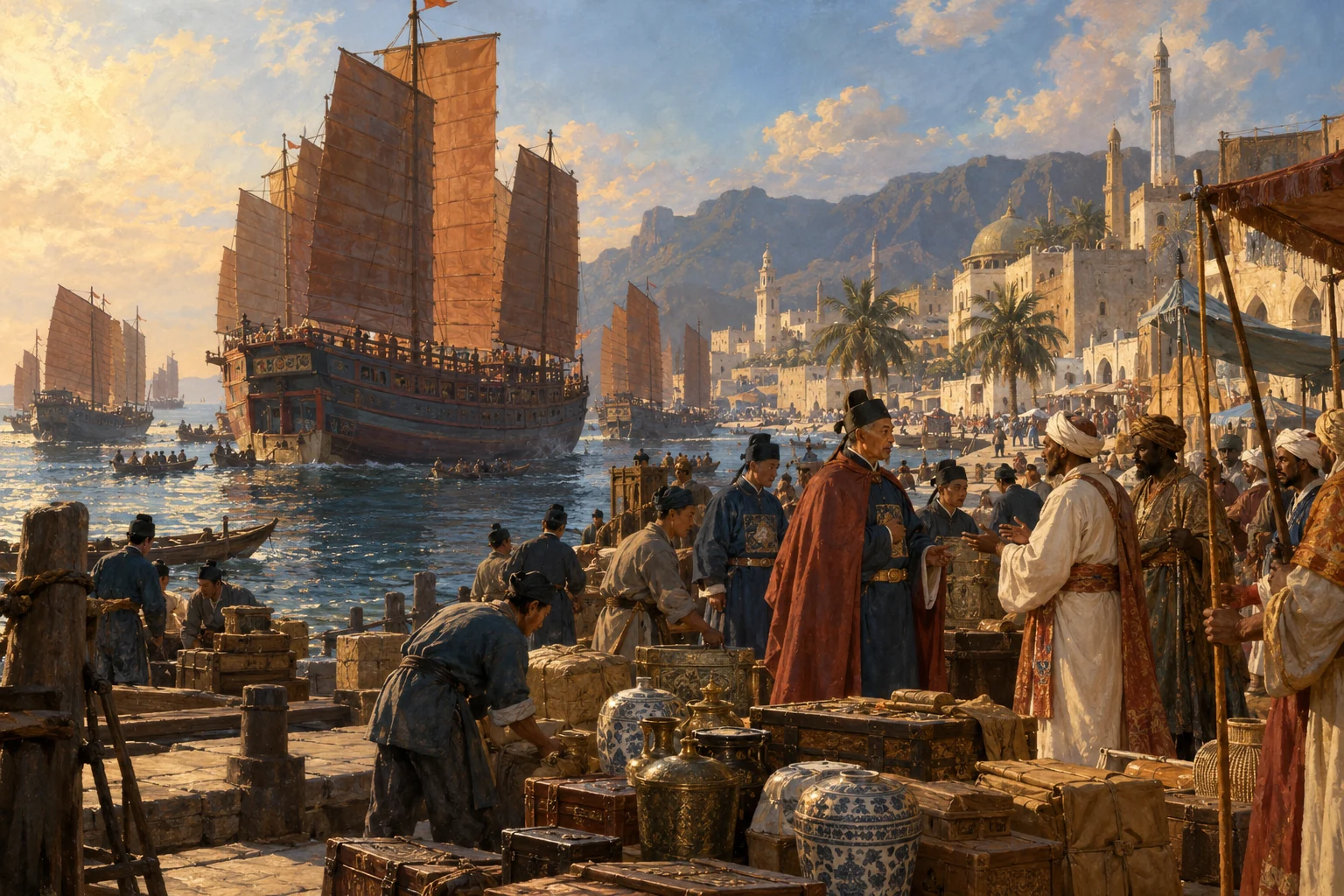
Hormuz stands at the entrance to the Persian Gulf, connecting sea trade with inland markets. Chinese envoys arrive among merchants who already handle goods from many regions. The mission presents imperial gifts and prestige in a place with its own wealth and strategic importance. Reaching it is a new stage for the programme, not the discovery of the Gulf.
Historical dates and route context
Intermediate dates are reconstructed narrative anchors, not recorded arrivals. The marker follows a representative fleet route; detached squadrons are not individual tracks.
AI-generated reconstruction for Histlas, 2026. People, ships and settings are illustrative, not eyewitness records or exact likenesses.
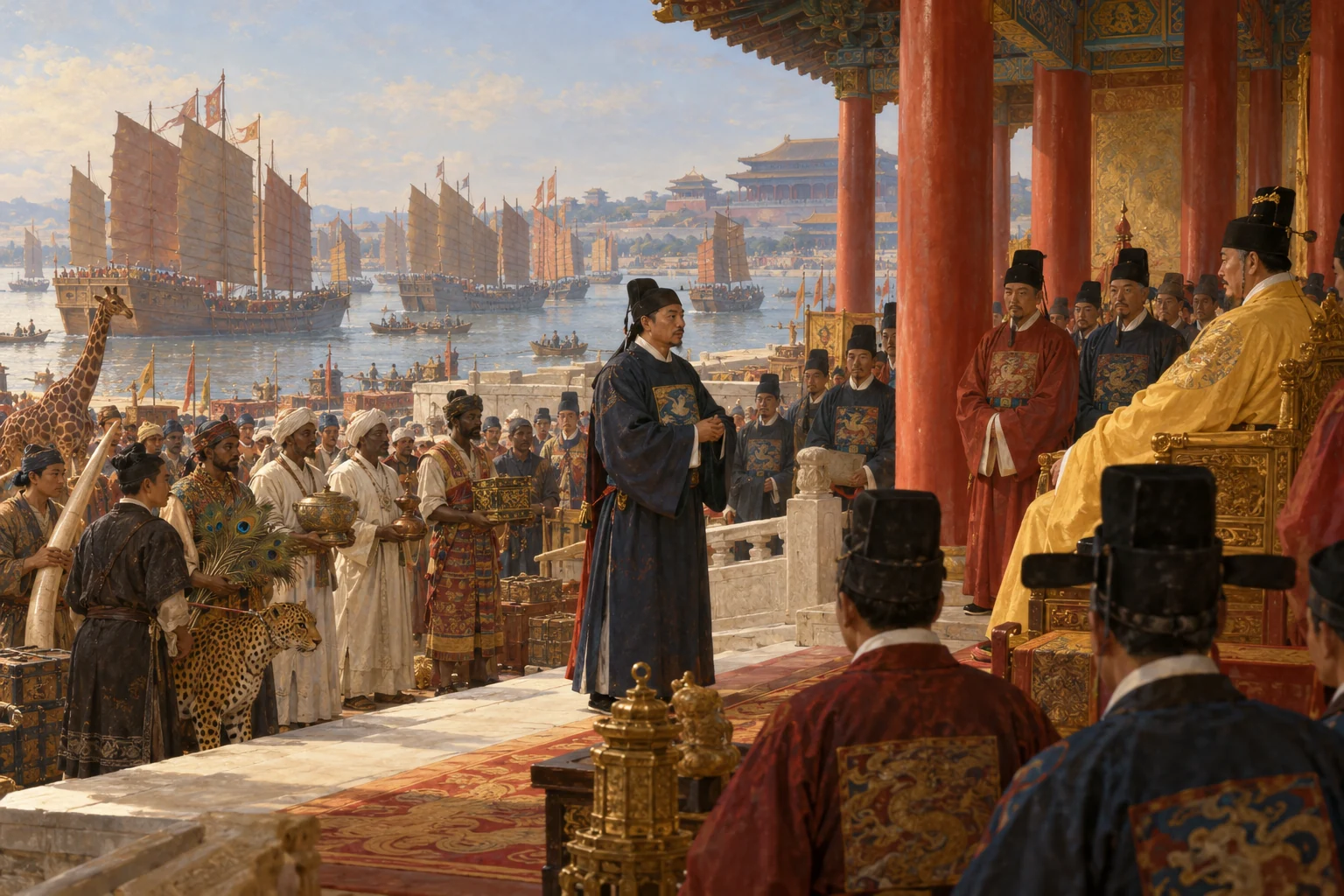
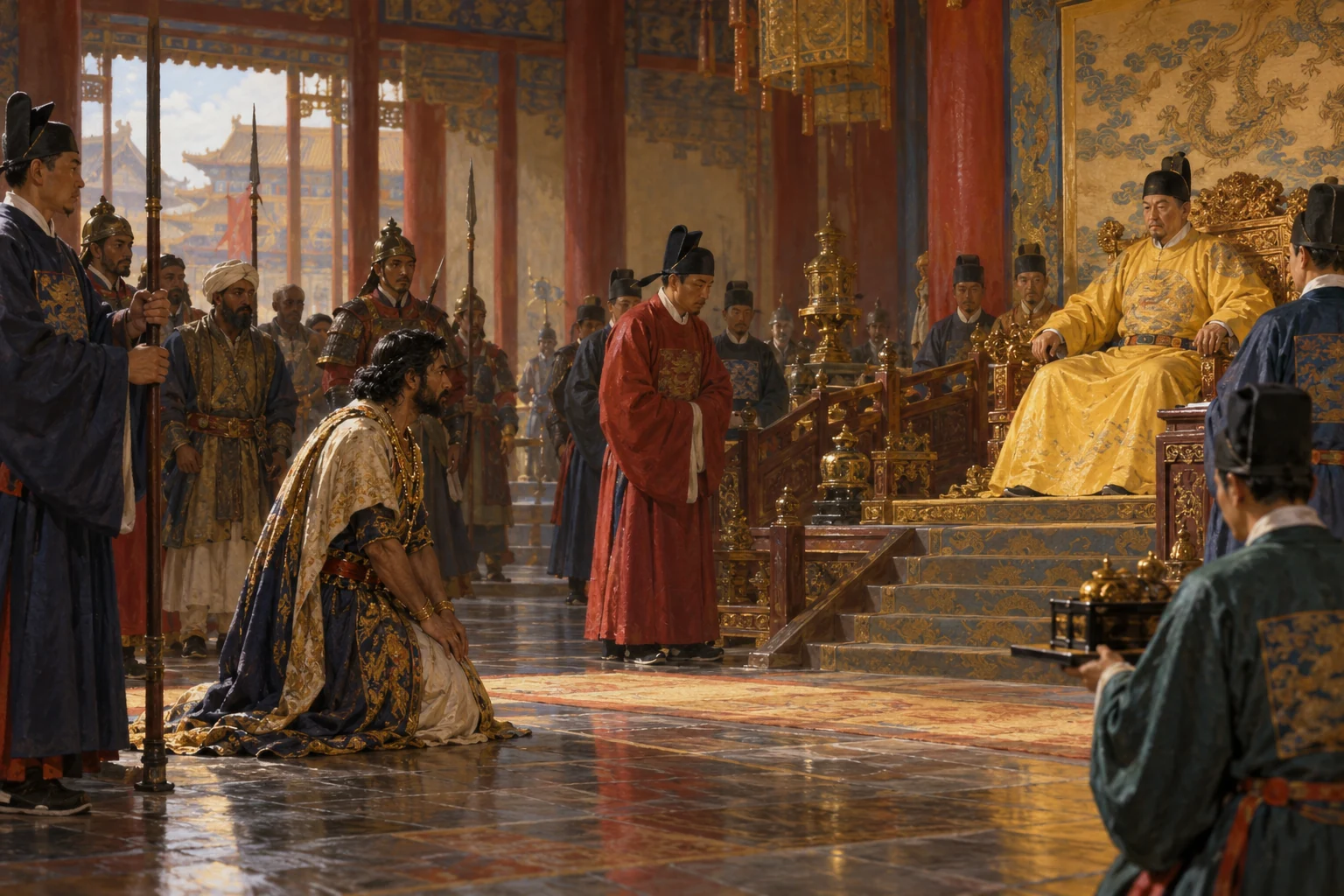
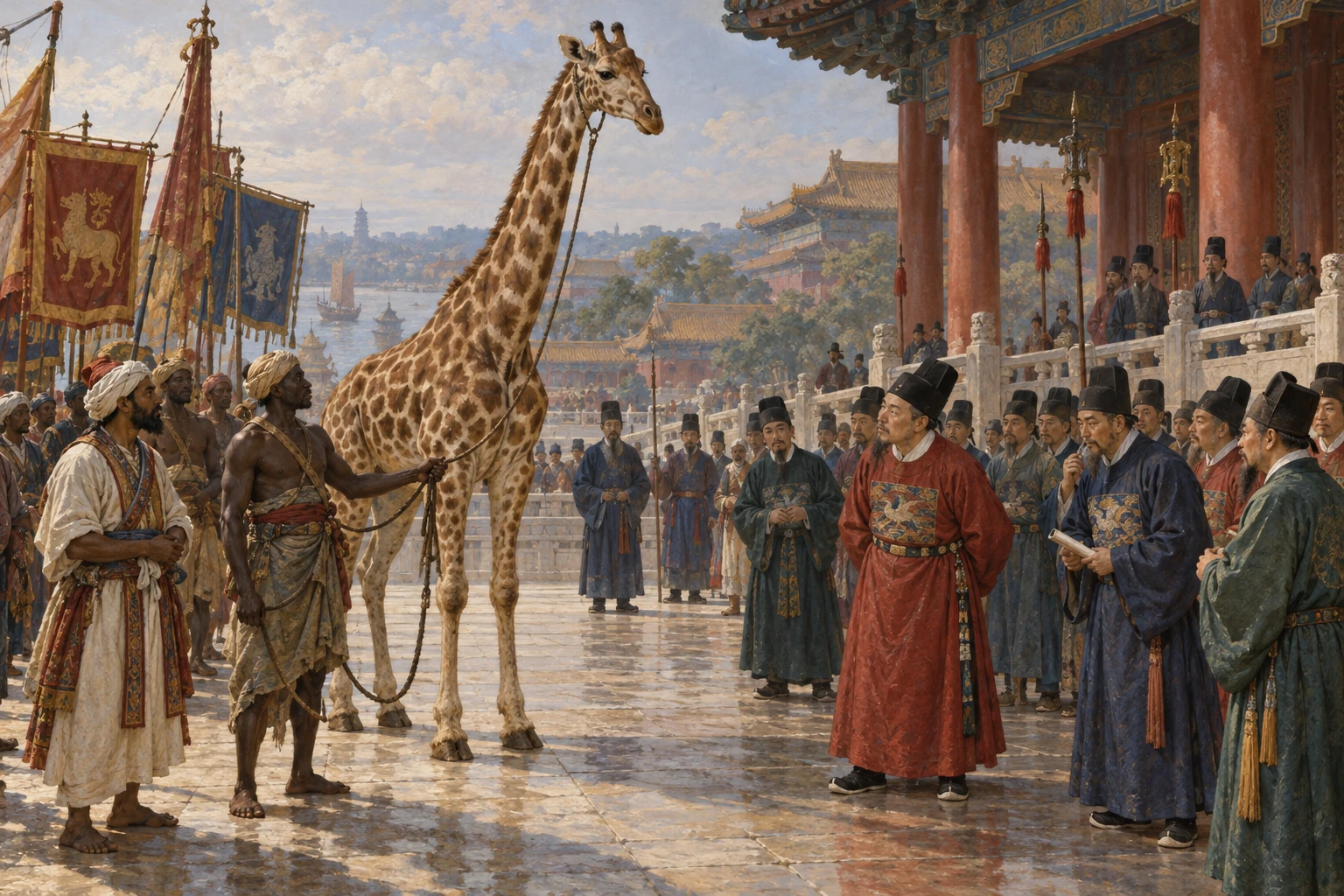
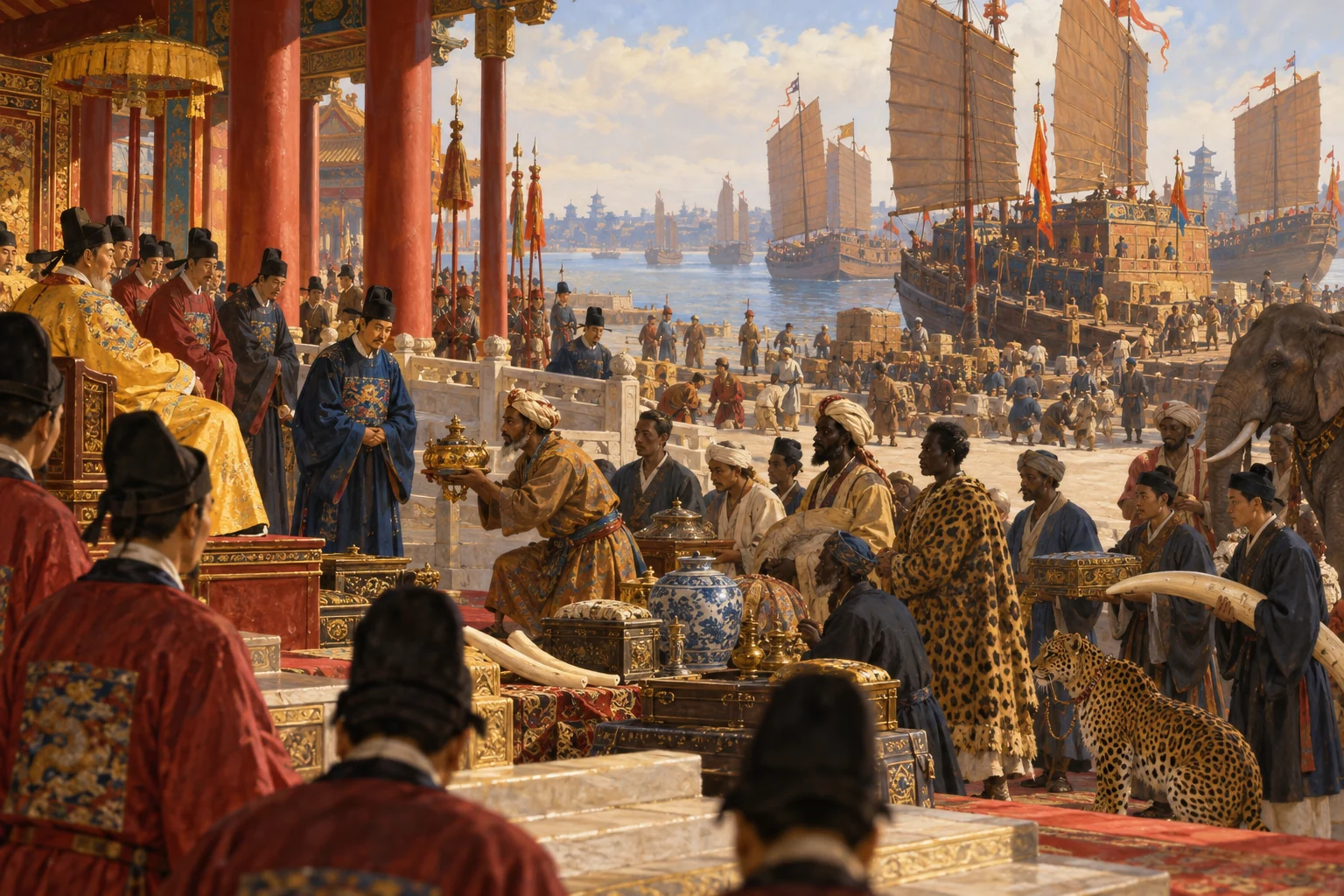
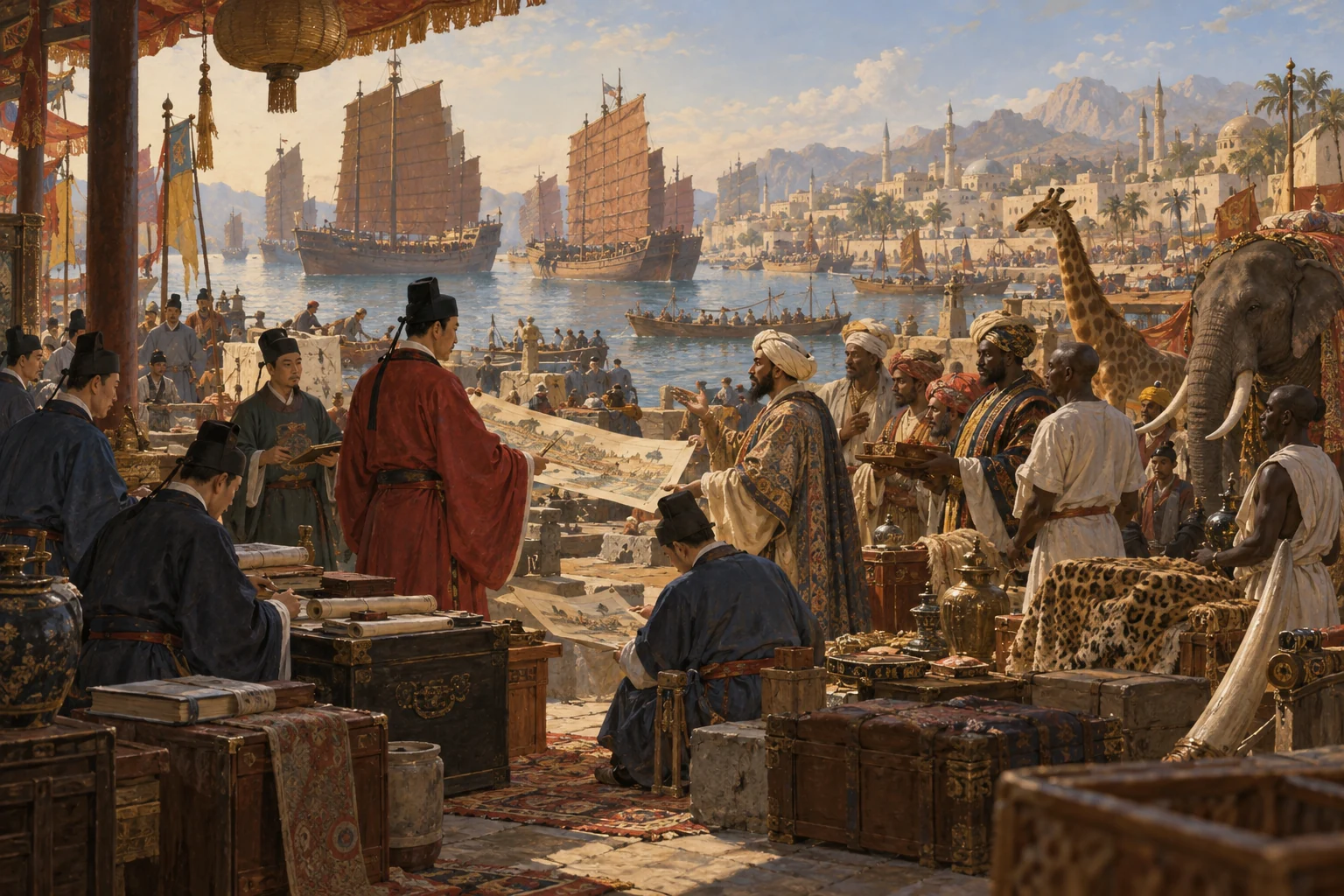
In 1414, a Bengal embassy presents the Ming court with a giraffe of East African origin. Some observers associate it with the auspicious qilin. The animal has travelled through existing networks before reaching China. The gift reaches China through diplomatic and trading networks linking East Africa with Bengal. The gift shows how diplomacy could turn distant things into symbols at court.
Historical dates and route context
The 1414 presentation is shown as a separate court scene, not the fleet’s position or a precisely dated personal encounter.
AI-generated reconstruction for Histlas, 2026. People, ships and settings are illustrative, not eyewitness records or exact likenesses.
The fleet heads back toward China. Ma Huan’s later account records commodities, customs and everyday life, giving readers more than a list of destinations. These are observations and reports gathered through travel and translation. Ma Huan draws on travel, translation and reports from others, preserving knowledge gathered by many people.
Historical dates and route context
Intermediate dates are reconstructed narrative anchors, not recorded arrivals. The marker follows a representative fleet route; detached squadrons are not individual tracks.
AI-generated reconstruction for Histlas, 2026. People, ships and settings are illustrative, not eyewitness records or exact likenesses.
The fifth mission, in 1417–1419, returns foreign envoys and reaches the western Indian Ocean and East African coast. The fleet builds on more than a decade of experience. Ports familiar from earlier voyages form part of the way, while separate squadrons allow the programme to cover more than one route.
Historical dates and route context
Intermediate dates are reconstructed narrative anchors, not recorded arrivals. The marker follows a representative fleet route; detached squadrons are not individual tracks.
AI-generated reconstruction for Histlas, 2026. People, ships and settings are illustrative, not eyewitness records or exact likenesses.
At Hormuz, another visit renews contacts before the fleet’s wider western movements. Keeping these relationships active requires repeated gifts, meetings and transport of delegations. Ships also need repair and provisions. The surviving records do not give an exact timetable for every port.
Historical dates and route context
Intermediate dates are reconstructed narrative anchors, not recorded arrivals. The marker follows a representative fleet route; detached squadrons are not individual tracks.
AI-generated reconstruction for Histlas, 2026. People, ships and settings are illustrative, not eyewitness records or exact likenesses.
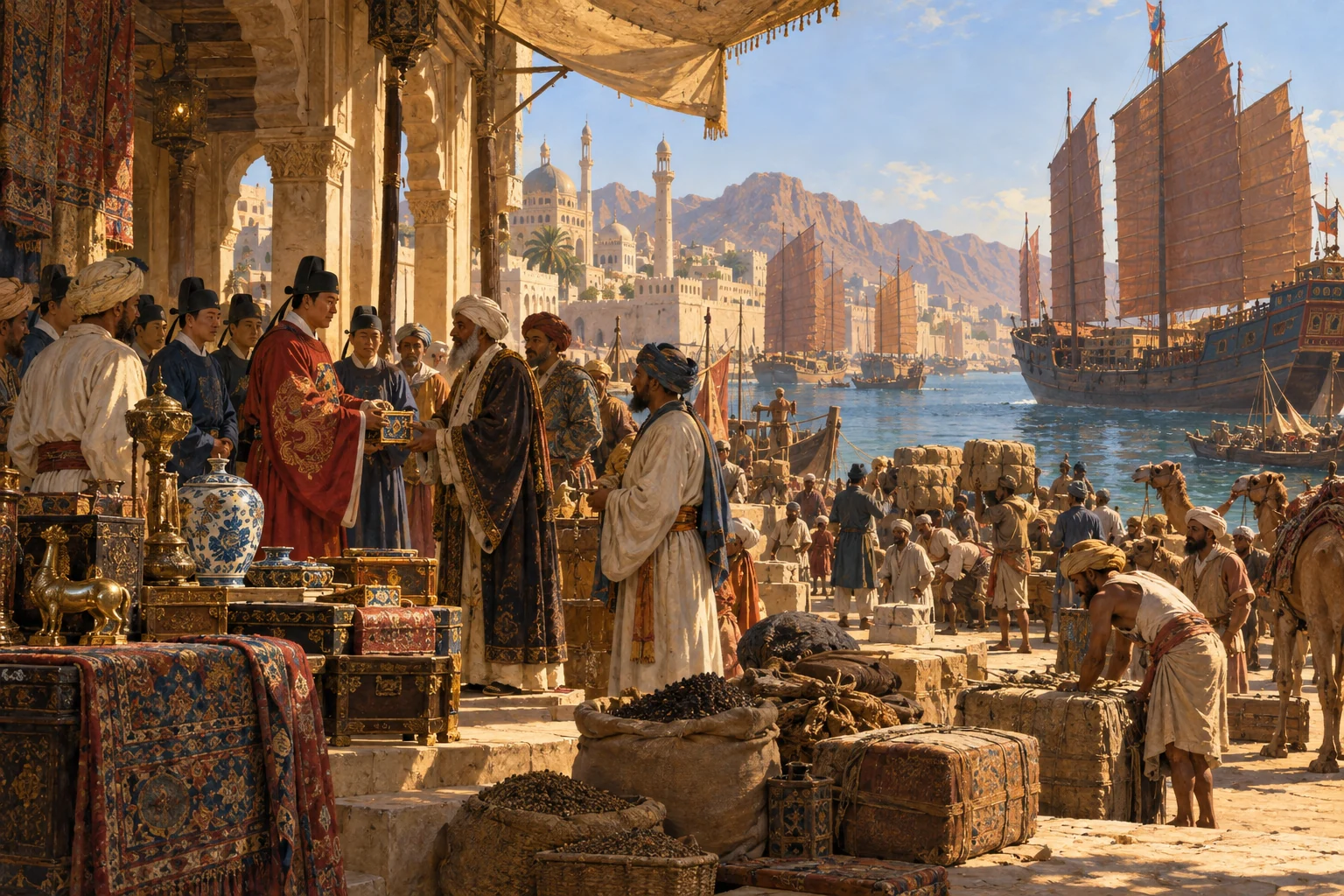
The route turns around Arabia toward Aden, a port at the approach to the Red Sea. The ships are entering another part of the same connected trading world. Local expertise, seasonal winds and the work of interpreters help determine where they can go and how they are received.
Historical dates and route context
Intermediate dates are reconstructed narrative anchors, not recorded arrivals. The marker follows a representative fleet route; detached squadrons are not individual tracks.
AI-generated reconstruction for Histlas, 2026. People, ships and settings are illustrative, not eyewitness records or exact likenesses.
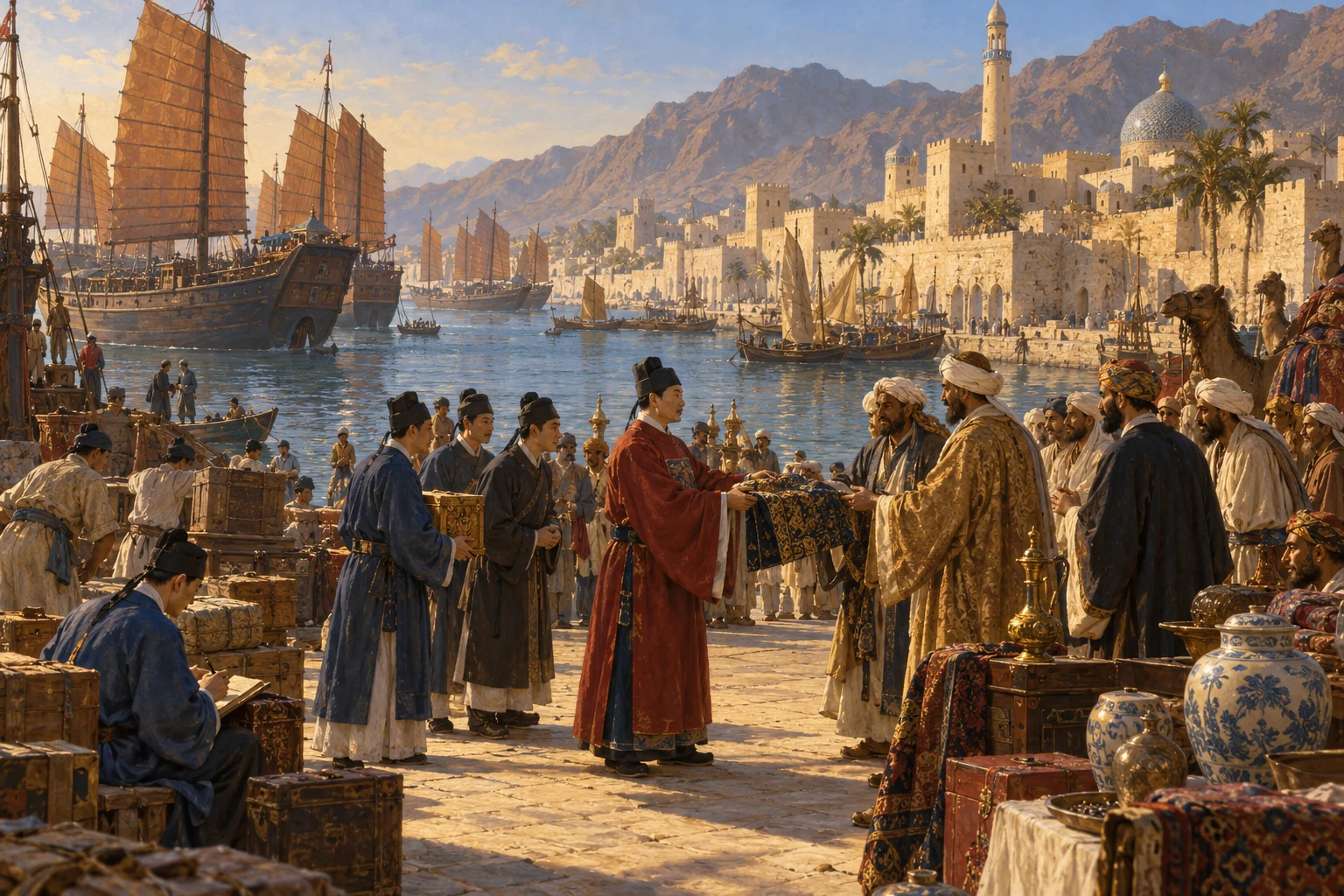
Aden links Indian Ocean shipping with the Red Sea and nearby land routes. Diplomacy here is part of a network reaching far beyond one harbour. It is also a reminder that the expedition’s destinations had long histories of trade and exchange before Chinese ships appeared in such numbers.
Historical dates and route context
Intermediate dates are reconstructed narrative anchors, not recorded arrivals. The marker follows a representative fleet route; detached squadrons are not individual tracks.
AI-generated reconstruction for Histlas, 2026. People, ships and settings are illustrative, not eyewitness records or exact likenesses.
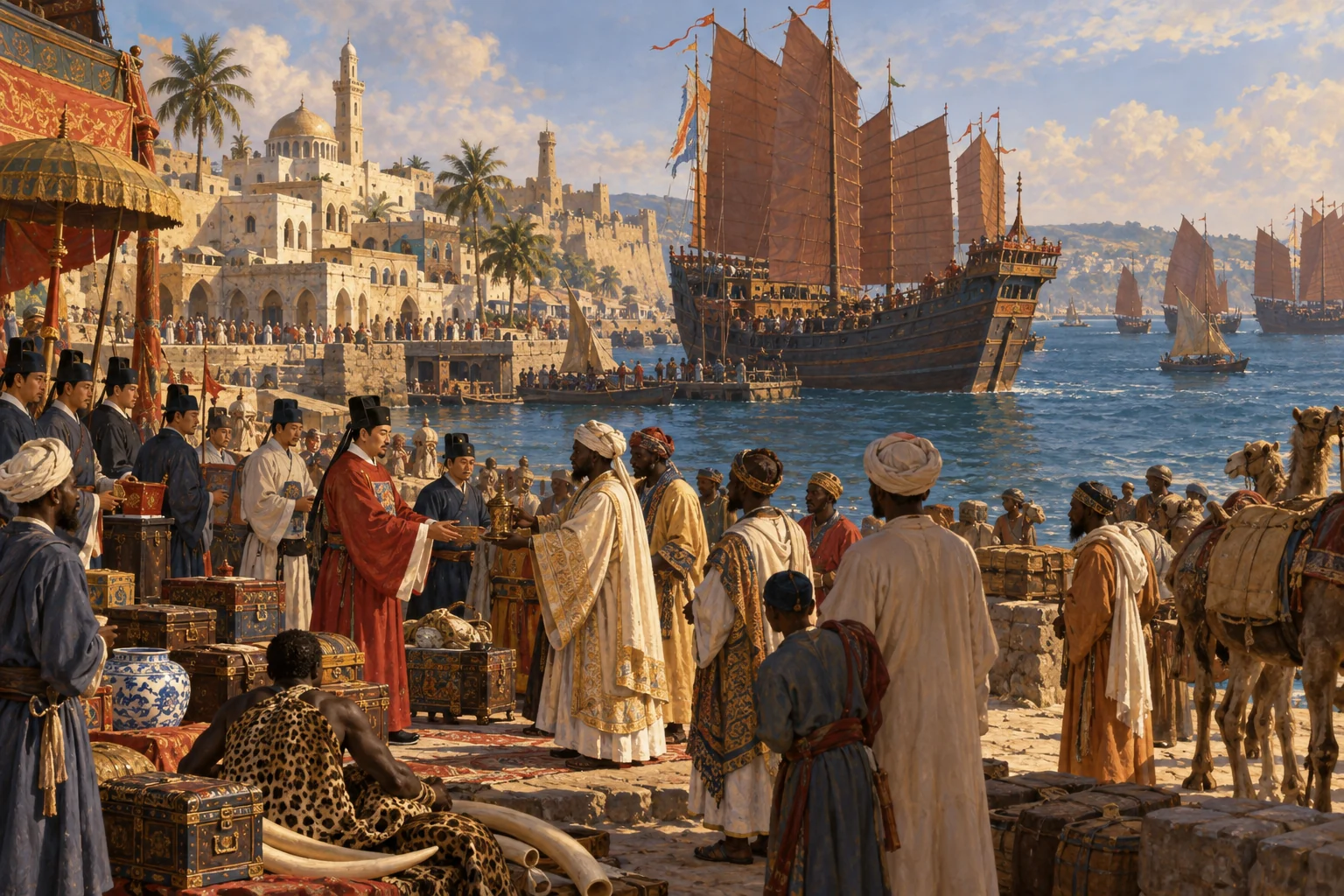
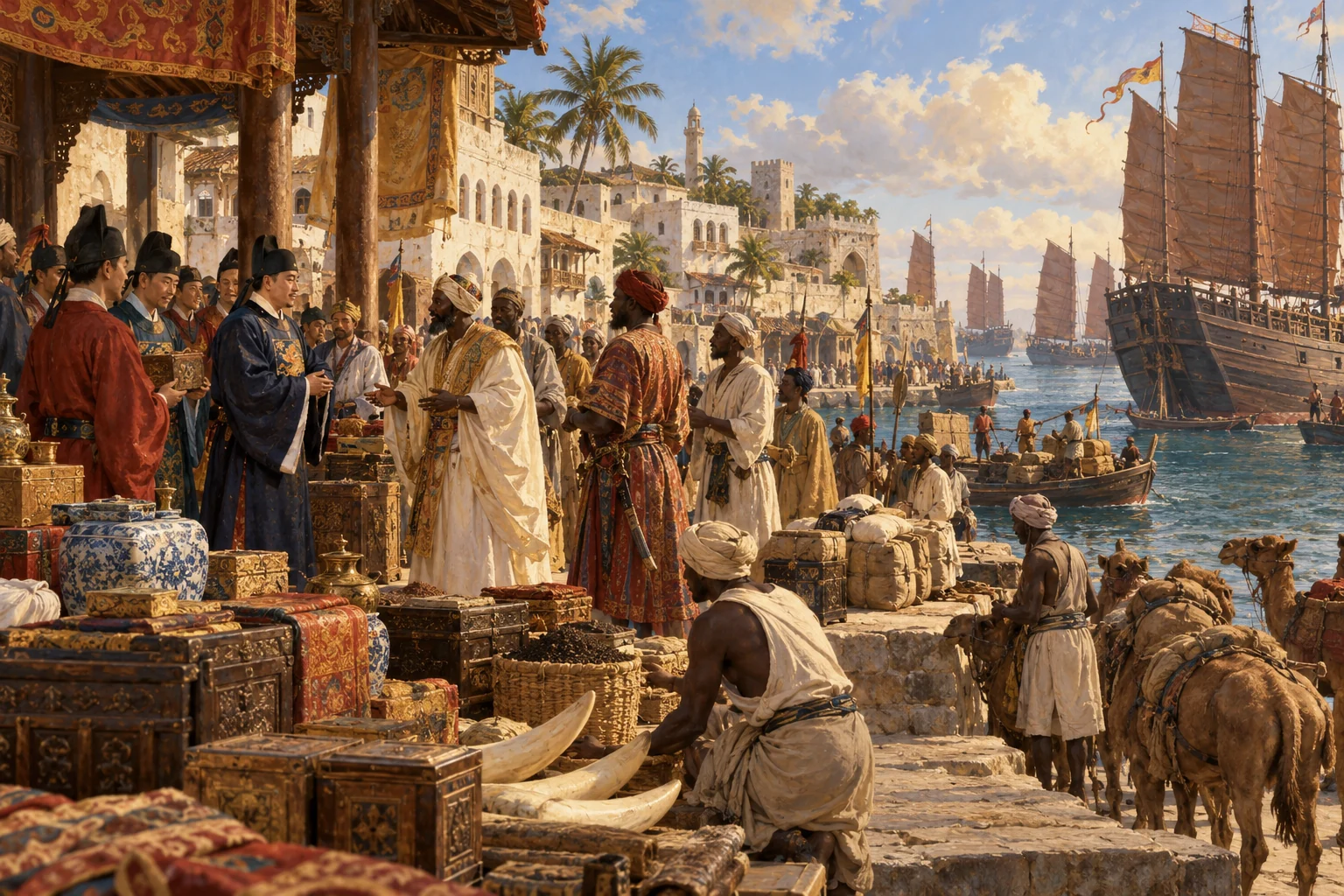
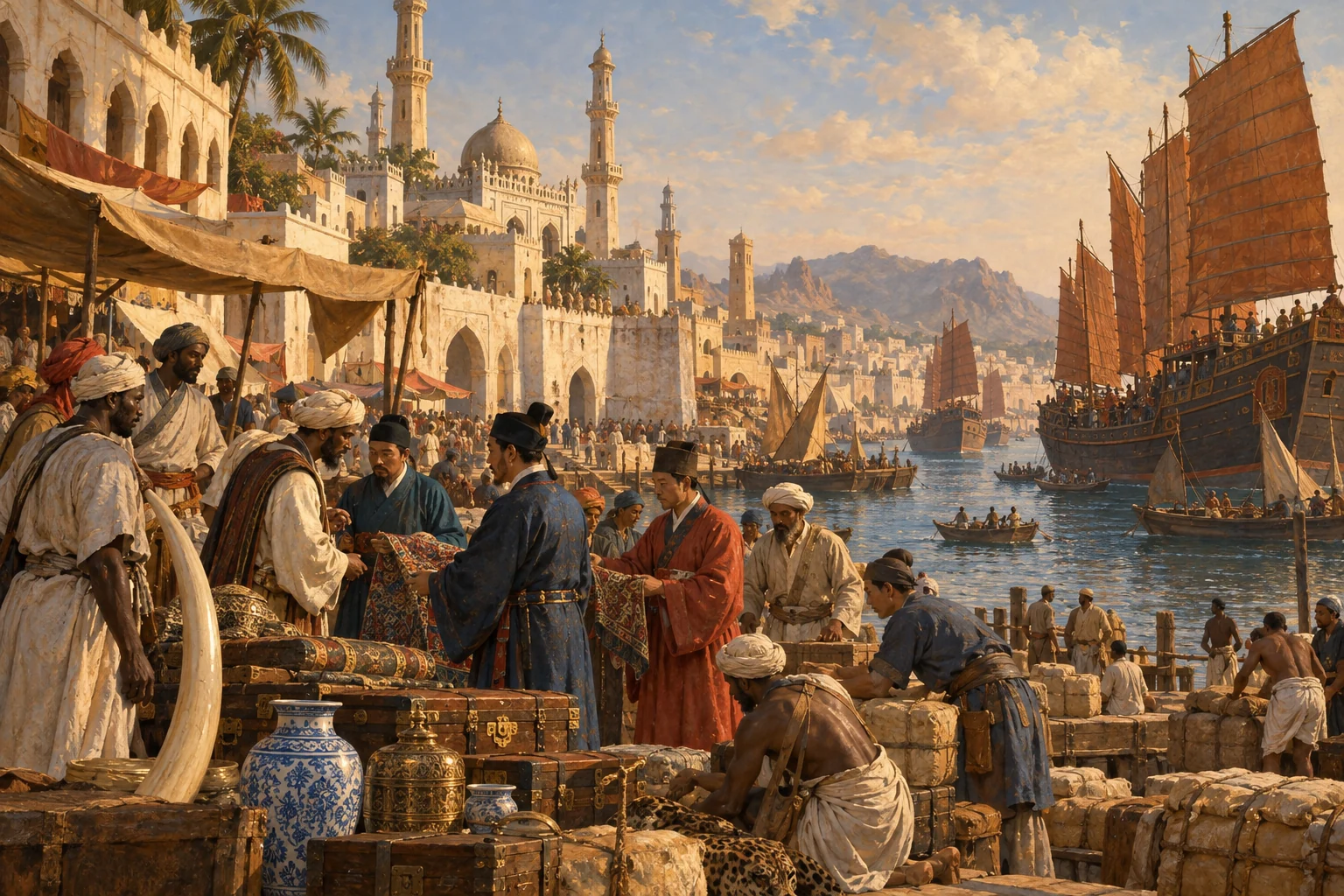
Fleet squadrons reach East African trading ports, including Mogadishu, Barawa and Malindi. Different squadrons visit different ports; Zheng He does not personally accompany every branch of the expedition. The coast’s merchants and rulers are experienced participants in Indian Ocean exchange.
Historical dates and route context
Intermediate dates are reconstructed narrative anchors, not recorded arrivals. The marker follows a representative fleet route; detached squadrons are not individual tracks.
AI-generated reconstruction for Histlas, 2026. People, ships and settings are illustrative, not eyewitness records or exact likenesses.
The East African ports connect inland products with overseas markets. Encounters with the Ming fleet involve local rulers, envoys, merchants and sailors with their own goals. These visits expand the diplomatic programme’s reach.
Historical dates and route context
Intermediate dates are reconstructed narrative anchors, not recorded arrivals. The marker follows a representative fleet route; detached squadrons are not individual tracks.
AI-generated reconstruction for Histlas, 2026. People, ships and settings are illustrative, not eyewitness records or exact likenesses.
The fleet turns back across the ocean toward India and Southeast Asia. The return combines sailing, resupply and diplomacy, governed by the seasons. Even a familiar route remains a major undertaking when it begins thousands of kilometres from home. The expedition reaches China in 1419.
Historical dates and route context
Intermediate dates are reconstructed narrative anchors, not recorded arrivals. The marker follows a representative fleet route; detached squadrons are not individual tracks.
AI-generated reconstruction for Histlas, 2026. People, ships and settings are illustrative, not eyewitness records or exact likenesses.
In 1421–1422, another expedition carries foreign envoys home and revisits the western network. Ships separate into squadrons. Zheng He returns before all the branch movements are complete, while other squadrons continue their missions after the admiral has returned.
Historical dates and route context
Intermediate dates are reconstructed narrative anchors, not recorded arrivals. The marker follows a representative fleet route; detached squadrons are not individual tracks.
AI-generated reconstruction for Histlas, 2026. People, ships and settings are illustrative, not eyewitness records or exact likenesses.
Years of voyages have made the straits a recurring stage in the fleet’s missions. The programme depends on those continuing links, and on people who can coordinate ships, provisions and delegations. The scale of the enterprise is impressive, but its work is still made of many practical exchanges at individual ports.
Historical dates and route context
Intermediate dates are reconstructed narrative anchors, not recorded arrivals. The marker follows a representative fleet route; detached squadrons are not individual tracks.
AI-generated reconstruction for Histlas, 2026. People, ships and settings are illustrative, not eyewitness records or exact likenesses.
The mission continues through India toward the Arabian and East African ports. Separate squadrons make the itinerary more complicated than one line. The fleet’s reach extends beyond the admiral’s own travels.
Historical dates and route context
Intermediate dates are reconstructed narrative anchors, not recorded arrivals. The marker follows a representative fleet route; detached squadrons are not individual tracks.
AI-generated reconstruction for Histlas, 2026. People, ships and settings are illustrative, not eyewitness records or exact likenesses.
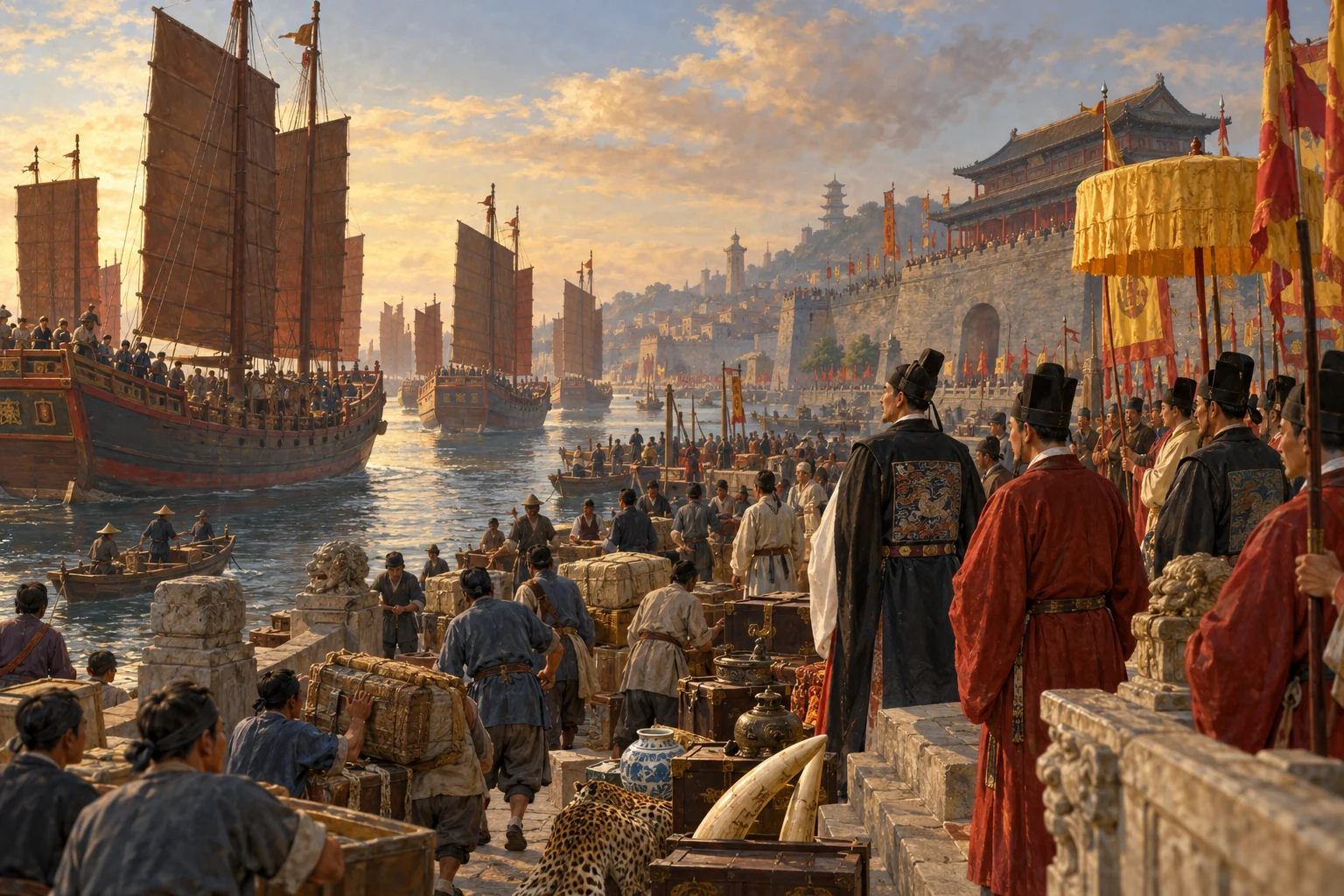
The returning ships bring people, gifts and reports from different parts of the network. Those arrivals help the court display its reach. They also cost money and resources. Whether to keep sending such expeditions is a political decision, not a question answered simply by the ships’ ability to sail.
Historical dates and route context
Intermediate dates are reconstructed narrative anchors, not recorded arrivals. The marker follows a representative fleet route; detached squadrons are not individual tracks.
AI-generated reconstruction for Histlas, 2026. People, ships and settings are illustrative, not eyewitness records or exact likenesses.
The mission’s ships return in 1422. Seven expeditions across twenty-eight years will become the familiar summary, but a long interruption now lies ahead. The fleet is a state programme; a change in the court can matter as much as a change in the wind.
Historical dates and route context
Intermediate dates are reconstructed narrative anchors, not recorded arrivals. The marker follows a representative fleet route; detached squadrons are not individual tracks.
AI-generated reconstruction for Histlas, 2026. People, ships and settings are illustrative, not eyewitness records or exact likenesses.
Yongle dies in 1424. His successor, Hongxi, halts the large overseas expeditions as imperial priorities change. Cost, political rivalry and other demands on the state help explain the pause. The ships’ story cannot be separated from the rulers and officials who decide whether to fund them.
Historical dates and route context
Intermediate dates are reconstructed narrative anchors, not recorded arrivals. The marker follows a representative fleet route; detached squadrons are not individual tracks.
AI-generated reconstruction for Histlas, 2026. People, ships and settings are illustrative, not eyewitness records or exact likenesses.
The Xuande emperor authorises another major mission in 1430. Nearly a decade has passed since the previous fleet returned. Preparation must begin again: ships, crews, supplies and diplomatic instructions. The revival shows that the earlier interruption was a policy decision, not the sudden disappearance of maritime knowledge.
Historical dates and route context
Intermediate dates are reconstructed narrative anchors, not recorded arrivals. The marker follows a representative fleet route; detached squadrons are not individual tracks.
AI-generated reconstruction for Histlas, 2026. People, ships and settings are illustrative, not eyewitness records or exact likenesses.
The final major expedition sails in 1431. Zheng He is now around sixty, and the programme has a long institutional memory. The fleet revisits many established destinations rather than seeking an entirely new ocean. Its crews again rely on seasonal passage, port cooperation and the work of specialists.
Historical dates and route context
Intermediate dates are reconstructed narrative anchors, not recorded arrivals. The marker follows a representative fleet route; detached squadrons are not individual tracks.
AI-generated reconstruction for Histlas, 2026. People, ships and settings are illustrative, not eyewitness records or exact likenesses.
Before this last mission, inscriptions record earlier voyages and honour the protection of the sea goddess Tianfei. These texts give us the fleet’s own account of its achievements, including diplomacy and the use of force. They are valuable primary evidence, but they also promote an imperial view of events.
Historical dates and route context
Intermediate dates are reconstructed narrative anchors, not recorded arrivals. The marker follows a representative fleet route; detached squadrons are not individual tracks.
AI-generated reconstruction for Histlas, 2026. People, ships and settings are illustrative, not eyewitness records or exact likenesses.
The ships sail through Southeast Asia toward India and the western ocean. Branch missions can reach beyond the commander’s own itinerary. Delegations and separate crews carry the mission to places beyond Zheng He’s own itinerary.
Historical dates and route context
Intermediate dates are reconstructed narrative anchors, not recorded arrivals. The marker follows a representative fleet route; detached squadrons are not individual tracks.
AI-generated reconstruction for Histlas, 2026. People, ships and settings are illustrative, not eyewitness records or exact likenesses.
At the Persian Gulf and western Indian Ocean ports, the fleet renews connections built over decades. Diplomacy, gifts and the movement of envoys remain central. Crews provision their vessels and prepare for the next seasonal passage. Merchants and rulers link these harbours to a wider world through goods, languages and knowledge.
Historical dates and route context
Intermediate dates are reconstructed narrative anchors, not recorded arrivals. The marker follows a representative fleet route; detached squadrons are not individual tracks.
AI-generated reconstruction for Histlas, 2026. People, ships and settings are illustrative, not eyewitness records or exact likenesses.
Ships and delegations move across the western network before the return to China. The routes and accounts preserve knowledge gathered by many people, including interpreters such as Ma Huan. The story belongs to those crews and the societies they encountered, as well as to the admiral whose name is remembered.
Historical dates and route context
Intermediate dates are reconstructed narrative anchors, not recorded arrivals. The marker follows a representative fleet route; detached squadrons are not individual tracks.
AI-generated reconstruction for Histlas, 2026. People, ships and settings are illustrative, not eyewitness records or exact likenesses.
The final fleet turns home, reaching China in 1433. Zheng He’s death is often dated to that year, but a later date and different circumstances are also reported. The surviving evidence does not settle exactly when or where he died. The crews bring home the records and experience of a remarkable series of missions.
Historical dates and route context
Intermediate dates are reconstructed narrative anchors, not recorded arrivals. The marker follows a representative fleet route; detached squadrons are not individual tracks.
AI-generated reconstruction for Histlas, 2026. People, ships and settings are illustrative, not eyewitness records or exact likenesses.
The great state expeditions end after this last mission, but maritime trade and travel do not vanish. Political and fiscal choices change the court’s programme. The voyages leave diplomatic records, inscriptions and accounts of an already connected ocean. Their legacy is the extraordinary scale of Ming engagement with that world, not the invention of the sea routes themselves.
Historical dates and route context
Intermediate dates are reconstructed narrative anchors, not recorded arrivals. The marker follows a representative fleet route; detached squadrons are not individual tracks.